










Entertainment Network (India) EBITDA rises 9.5% in Q2 FY27
Key highlights
- Entertainment Network (India) reported Q2 FY27 consolidated revenue of ₹117 crore, including ₹3 crore from international operations.
- Domestic revenue was ₹114 crore, down 16.1% year on year in Q2 FY27.
- Management cited EBITDA of ₹11.3 crore, up 9.5% year on year, supported by cost measures and lower digital losses.
- Digital contributed about 29% of domestic revenue, while radio contributed about 53% in Q2 FY27.
powered by IRIS
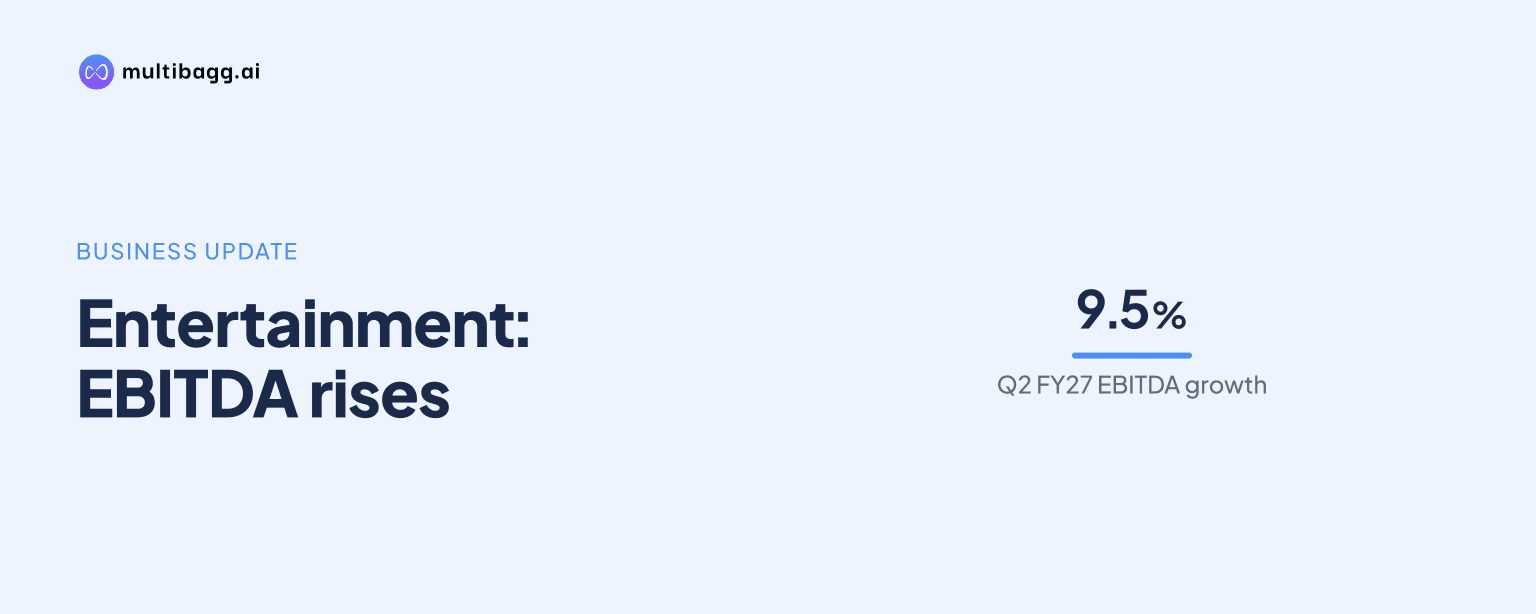
Entertainment Network (India) Limited reported ₹117 crore in consolidated revenue for Q2 FY27, while EBITDA increased 9.5% year on year to ₹11.3 crore despite weaker advertising demand and a 16.1% decline in domestic revenue. The result highlights the benefit of cost controls and lower losses in its digital business during a softer quarter for radio advertising.
Know Entertainment Network (India) inside out
Results, valuation, peers and who's buying, in one view.
Why did ENIL's Q2 FY27 revenue decline?
ENIL's domestic revenue declined 16.1% year on year to ₹114 crore in Q2 FY27 as subdued advertising demand affected its radio operations. The company said a later festive calendar also shifted a part of advertising and event-related business into the third quarter, reducing revenue booked during the September-quarter period.
Consolidated revenue was ₹117 crore, including ₹3 crore from international operations. Management described the quarter as mixed, with the difficult demand environment affecting the top line while internal efficiency measures supported operating profitability. The Q2 earnings call was held on November 4, 2026, after the company announced its quarterly results.
The timing effect around the festive season was relevant because advertisers and event clients can schedule campaigns around festivals and major consumer spending periods. ENIL said that some such activity moved from the second quarter into Q3 FY27. The company did not provide a quantified estimate of the revenue that shifted between quarters.
How did ENIL improve EBITDA despite lower revenue?
ENIL improved EBITDA through structural cost measures, continued cost rationalisation, operating efficiencies and lower digital-business losses. Management cited EBITDA of ₹11.3 crore, up 9.5% year on year, even as domestic revenue contracted.
The company’s operating expenditure declined faster than revenue in the detailed Q2 financial summary. Standalone operating expenditure fell 18.2% year on year to ₹102.39 crore, while standalone total income declined 16.1% to ₹113.65 crore. This cost movement helped protect operating performance during a period of lower advertising sales.
The wider consolidated financial summary reported EBITDA of ₹12.05 crore, up 5.9% year on year, while the earnings-call commentary referred to ₹11.3 crore and 9.5% growth. The latter figures correspond with the company’s standalone operating performance presentation. Investors should therefore distinguish between management’s standalone EBITDA reference and the consolidated financial figures.
What was the contribution from radio, digital and other businesses?
Radio remained ENIL’s largest domestic revenue stream, contributing about 53% of domestic revenue in Q2 FY27. Digital contributed about 29%, while events and other businesses accounted for the remaining share, according to management’s revenue-mix commentary.
The higher digital contribution is important in the context of ENIL’s stated diversification effort. Management said digital’s share of domestic revenue increased from 23.3% to 29.0%. The company also reported that digital revenue rose 4.6% year on year and that digital EBITDA losses narrowed 23.3%.
The mix indicates that ENIL is seeking to reduce its dependence on traditional radio advertising by building digital, events and other revenue sources. However, radio still forms more than half of domestic revenue, meaning the business remains exposed to broader advertising demand conditions.
Got a follow-up? Ask IRIS
What do the quarterly results show about ENIL's financial position?
ENIL’s Q2 results show better operating control but a wider consolidated net loss. Consolidated net loss widened to ₹4.85 crore from ₹4.09 crore in the comparable prior-year quarter, according to the earnings summary, despite the increase in EBITDA.
At the standalone level, the net loss was ₹3.88 crore, compared with ₹3.57 crore a year earlier. The figures show that higher operating profitability did not translate into a lower quarterly net loss. The source material does not provide a detailed reconciliation for every item below EBITDA.
The investor presentation also reported consolidated cash of ₹371 crore as of September 30, 2026. This is a balance-sheet data point investors may track alongside the operating recovery, particularly as the company continues to invest in and manage losses from its digital operations.
What does the Q2 performance mean for investors and the media sector?
For investors, ENIL’s Q2 FY27 performance shows a split between weak revenue conditions and improved operating efficiency. The 16.1% decline in domestic revenue reflects pressure on advertising demand, while the 9.5% EBITDA increase cited by management demonstrates the effect of cost actions and a lower digital loss base.
For advertisers and the broader radio sector, the delayed festive calendar illustrates how campaign timing can affect quarterly revenue recognition. ENIL has said that some advertising and event revenue moved into Q3 FY27, but it has not provided a Q3 revenue forecast or a formal outlook for advertising demand.
The digital revenue mix is another relevant operating marker. A 29% share of domestic revenue gives the segment greater relevance to the company’s overall performance, although the available information also confirms that digital continued to report EBITDA losses in the quarter. The lower loss level supported consolidated profitability, but the segment’s future financial contribution will depend on revenue growth and cost discipline.
Conclusion
ENIL reported a challenging Q2 FY27 for revenue, with consolidated revenue at ₹117 crore and domestic revenue down 16.1% year on year. Still, cost rationalisation, operating efficiencies and lower digital losses enabled an EBITDA increase, demonstrating that the company’s profitability actions partly offset the effect of softer radio advertising demand.
The next key factor to watch is Q3 FY27, when ENIL expects advertising and event business affected by the later festive calendar to be reflected. Investors will also monitor whether digital maintains its 29% domestic-revenue share, whether digital losses continue to narrow, and how advertising demand develops across the company’s radio business.