










ENIL targets selective event growth as competition pressures margins
Key highlights
- ENIL conducts more than 200 events annually across 63 markets.
- ENIL reported Rs 20 crore of event-related non-radio revenue in the reported quarter, excluding digital.
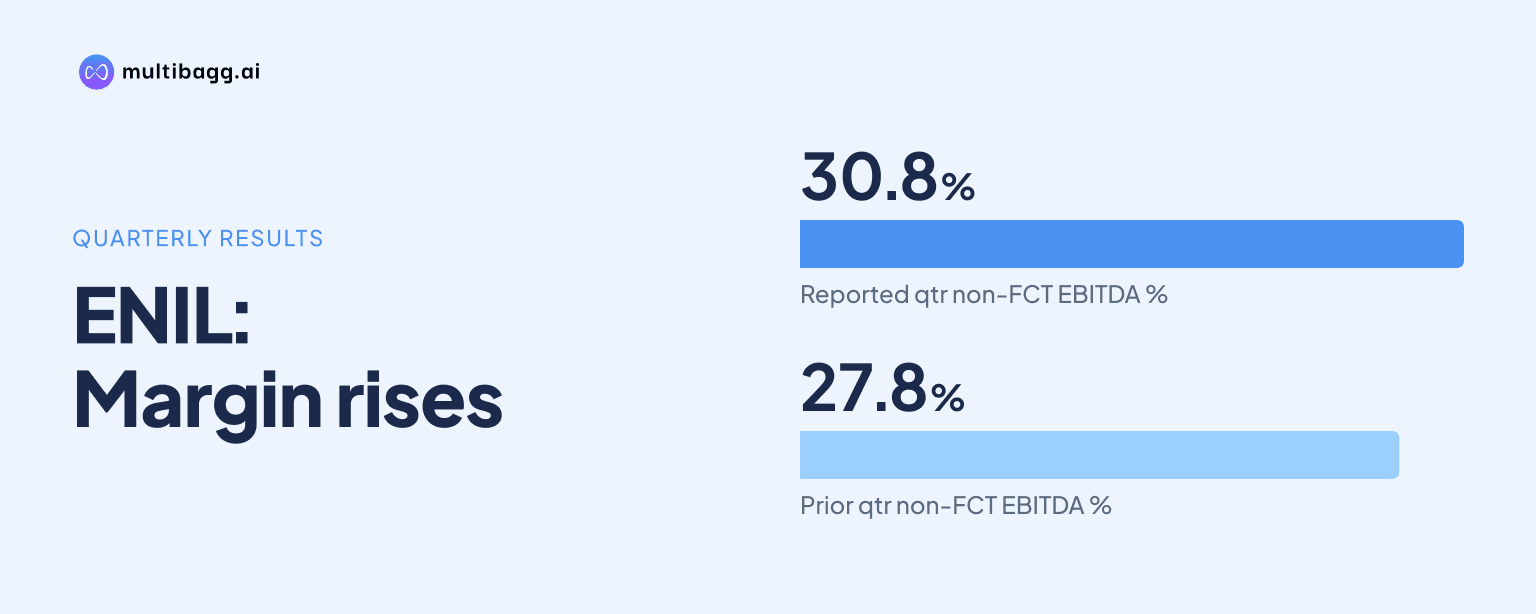
- ENIL’s non-FCT EBITDA margin rose to 30.8% from 27.8% in the corresponding previous-year quarter.
- Management estimates non-radio margins are about one-fourth to one-fifth of radio margins.
powered by IRIS
In the reported quarter, Entertainment Network (India) Limited said it would select event projects for profitability despite conducting more than 200 events annually across 63 markets, because event margins remain below radio’s and competition increased over the past six to nine months. Management estimated non-radio margins at about one-fourth to one-fifth of radio margins.
Know Entertainment Network (India) inside out
Results, valuation, peers and who's buying, in one view.
How large is ENIL’s event business footprint?
ENIL conducts more than 200 events a year across 63 markets, and management said it has operated in events for about 10 years. The company cited its radio brands, group brand and local-market presence as factors supporting event execution, while noting that consumer interest in concerts and other out-of-home experiences has increased over the past two to three years.
The event business generated Rs 20 crore of non-radio revenue in the reported quarter, excluding digital, compared with radio revenue of about Rs 60 crore after a decline of roughly 12%. Events were therefore smaller than radio in the quarter, although they form part of ENIL’s effort to broaden revenue beyond its established broadcast business.
Radio represented about 53% of ENIL’s domestic revenue and digital represented 29%, leaving events and other operations to provide the balance. Management said radio’s full-year contribution could fall below 50%, but it did not disclose a full-year event-revenue target, an event-margin target or a planned increase in the annual event count.
Why is ENIL selecting event projects instead of chasing revenue?
ENIL will pick and choose event opportunities because management said its operating approach is to pursue profitable growth rather than revenue at subdued margins. The policy follows increased competition in the past six, eight or nine months from television companies, news channels and internet businesses entering the events market.
Management said ENIL is participating in growth in events and is considering specific investment in the business, but it must weigh additional revenue against the margin outcome of each project. The company did not specify a minimum margin, investment amount or number of additional events that would trigger expansion across its 63 markets.
The reported quarter was also affected by the festival calendar. Management said some events shifted into Q3 because Diwali occurred later than in the prior year, moving activity out of the reported period. It said the overall festive-period picture was encouraging, but the quarterly event revenue cannot be assessed without accounting for that timing shift.
How do ENIL’s event margins compare with radio margins?
ENIL said event margins will not match radio margins, and management estimated that non-radio margins are about one-fourth to one-fifth of radio margins. This creates a portfolio issue for the company: radio has historically carried higher margins but faced weaker advertising demand, while non-radio activities can grow with a lower margin contribution.
Management rejected the suggestion that events had previously been more profitable than radio. It said concerts have the lowest margins within the event category, while non-concert events have better economics. Even in that comparison, management said traditional media businesses such as radio and print generally produce better margins than events.
The non-FCT business reported an earnings before interest, tax, depreciation and amortisation, or EBITDA, margin of 30.8% in the quarter, up from 27.8% in the corresponding quarter of the previous year. That 3-percentage-point increase shows an improvement in reported non-FCT profitability, but management did not separately disclose an EBITDA margin for events alone.
Got a follow-up? Ask IRIS
What did the reported quarter show about ENIL’s mix?
ENIL reported EBITDA of Rs 11.3 crore, up 9.5% from the corresponding quarter a year earlier despite softer revenue conditions. Management attributed the increase to structural cost measures, continued cost rationalisation, improved operating efficiency and a reduction in digital losses, rather than to a broad-based recovery in advertising or events.
Radio fixed commercial time, or FCT, revenue fell 12.6% in the quarter, while inventory utilisation was about 70%, down roughly 6%. Management said effective rates were flat and put ENIL’s radio market share at about 25%, illustrating the subdued advertising environment affecting the segment that supplied 53% of domestic revenue.
Digital EBITDA losses declined 23.3% to Rs 7.5 crore from Rs 9.8 crore in the corresponding previous-year quarter. Digital’s share of domestic revenue rose to 29% from 23%, while management said Gaana and Digital Solutions were its two major digital businesses and did not combine their profitability with event operations.
What could determine ENIL’s event growth in coming quarters?
ENIL sees event-business growth in coming quarters and years, but management said margins will remain below those of traditional radio. Its stated plan is therefore to expand where project economics permit, rather than to set a disclosed target for revenue, margins or event volume beyond the more than 200 events it already conducts annually.
Management said there were signs of improvement in the advertising environment in Q3, but it gave no formal guidance for the second half. A recovery in advertising would matter to the Rs 60 crore radio business reported for the quarter, while the delayed Diwali events could change the quarter-on-quarter comparison for the Rs 20 crore non-radio business.
Consolidated cash stood at Rs 371.5 crore as of September 30, 2026, compared with Rs 424 crore in March 2026 and Rs 409 crore in June 2026. Management attributed the reduction to vendor advances for upcoming events, a dividend and technology capital expenditure in digital, and described the cash movement as cyclical or seasonal.
Conclusion
ENIL’s event strategy is to use its network of more than 200 annual events in 63 markets while protecting profitability rather than maximising project volume. The approach reflects management’s view that event margins are structurally below radio margins, with non-radio margins estimated at roughly one-fourth to one-fifth of radio margins, and that newer competitors are adding pressure.
The next measure to watch is Q3, when management expects the Diwali-related event shift to affect comparisons, alongside whether non-FCT profitability remains near the reported 30.8% EBITDA margin. Investors can also monitor whether vendor advances linked to events reverse after the September 30, 2026 cash balance of Rs 371.5 crore.