










Euro Pratik working-capital days rose to 202 during FY26
Key highlights
- Euro Pratik reported 202 working-capital days in FY26, compared with 168 days in FY25.
- Inventory rose to Rs 143.9 crore at September 2026 from Rs 122.4 crore at March 2026.
- Trade receivables increased to Rs 105.8 crore at September 2026 from Rs 97.6 crore at March 2026.
- A Rs 31 crore working-capital outflow reduced H1FY27 net operating cash to Rs 23 crore.
powered by IRIS
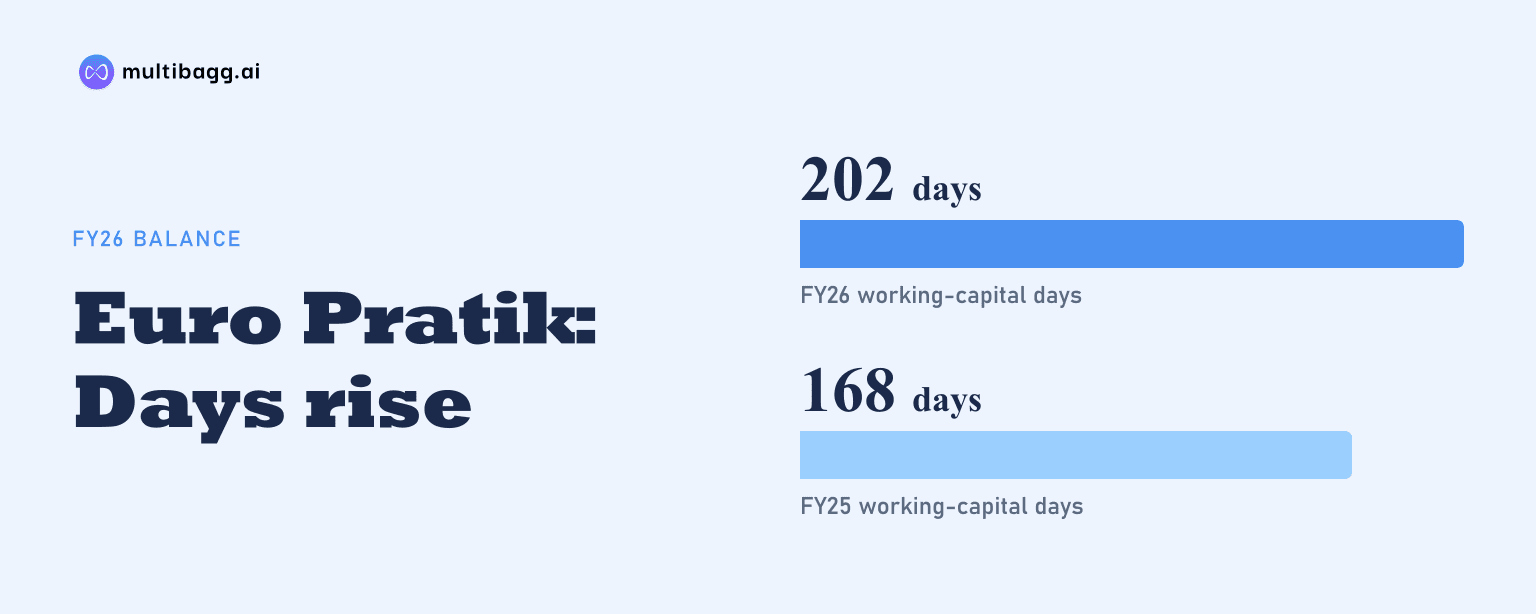
Euro Pratik Sales Ltd reported 202 working-capital days in FY26, up from 168 in FY25, while a Rs 41.9 crore working-capital outflow reduced net cash from operating activities to Rs 40.7 crore. Inventory and trade receivable balances increased, and Uro Veneer World was consolidated from December 1, 2025.
Know Euro Pratik Sales inside out
Results, valuation, peers and who's buying, in one view.
Why did Euro Pratik working-capital days reach 202?
Euro Pratik’s working-capital days rose by 34 days to 202 in FY26 from 168 in FY25, following increases from 119 in FY23 and 138 in FY24. The presentation does not disclose the calculation formula or allocate the increase line by line, but it reports higher inventory and receivable balances alongside the change in working-capital days.
Inventory stood at Rs 122.4 crore at March 2026, compared with Rs 96.2 crore at March 2025 and Rs 35.6 crore at March 2024. Trade receivables were Rs 97.6 crore at March 2026, compared with Rs 95.8 crore a year earlier and Rs 44.4 crore at March 2024. Together, the two balances were Rs 220 crore at FY26 end, against Rs 192 crore in FY25.
The FY26 comparison also reflects a consolidation change. Uro Veneer World was integrated from December 1, 2025, with four months of its profit and loss included in FY26 and its balance sheet consolidated as of March 31, 2026. The FY26 balance-sheet ratio therefore includes Uro Veneer World on a basis not applied to the earlier reported periods.
How did Euro Pratik inventory and receivables change by September 2026?
Euro Pratik’s inventory increased by Rs 21.5 crore to Rs 143.9 crore at September 2026, while trade receivables rose by Rs 8.2 crore to Rs 105.8 crore. The combined balance reached Rs 249.7 crore, up Rs 29.7 crore from March 2026, during H1FY27 when revenue from operations was Rs 219 crore.
Cash and cash equivalents declined to Rs 8.4 crore at September 2026 from Rs 16.4 crore at March 2026. Investments increased to Rs 19.9 crore from Rs 14.2 crore, while other financial assets declined to Rs 32.2 crore from Rs 34 crore. Those movements accompanied the Rs 29.7 crore increase in inventory and receivables.
Total current liabilities decreased to Rs 58.4 crore at September 2026 from Rs 63.3 crore at March 2026. Current borrowings fell from Rs 8.5 crore to Rs 3.7 crore, while dues to creditors other than micro and small enterprises increased from Rs 7.9 crore to Rs 15 crore. The presentation does not disclose a September 2026 working-capital-days ratio, leaving 202 days as the latest reported annual measure.
Got a follow-up? Ask IRIS
What happened to Euro Pratik operating cash flow?
Euro Pratik generated Rs 23 crore of net cash from operating activities in the six months ended September 2026 after a Rs 31 crore working-capital outflow and Rs 8.8 crore of direct taxes paid. Operating profit before working-capital changes was Rs 62.8 crore, so the working-capital movement reduced cash generated from operations to Rs 31.8 crore before tax payments.
For FY26, the Rs 41.9 crore working-capital outflow reduced cash generated from operations to Rs 68.6 crore from Rs 110.5 crore of operating profit before working-capital changes. After Rs 27.9 crore of direct taxes, net operating cash was Rs 40.7 crore. This was an improvement from the Rs 30.6 crore net operating cash outflow in FY25, when working-capital changes absorbed Rs 114.6 crore.
The September 2026 cash-flow statement also shows Rs 33.4 crore of investing outflow and Rs 2.4 crore of financing inflow. Cash and cash equivalents consequently fell by Rs 8 crore in H1FY27, from an opening balance of Rs 16.4 crore to Rs 8.4 crore. The cash decrease occurred while Euro Pratik reported profit before tax of Rs 61 crore for H1FY27.
How did Euro Pratik profits and returns move as working capital rose?
Euro Pratik’s FY26 revenue from operations increased to Rs 335 crore from Rs 284.2 crore in FY25, while profit after tax rose to Rs 77.2 crore from Rs 75.7 crore. Over the longer reported period, return on capital employed declined to 43.5% in FY26 from 61.4% in FY23, while return on equity declined to 27.8% from 47.7%.
FY26 earnings before interest, tax, depreciation and amortisation, or EBITDA, rose to Rs 121.2 crore from Rs 107.8 crore in FY25. EBITDA margin declined to 35.3% from 36.9%, and profit after tax margin declined to 22.5% from 25.9%. Gross profit margin moved differently, increasing to 47.8% in FY26 from 45.5% in FY25.
In H1FY27, revenue from operations rose to Rs 219 crore from Rs 161.1 crore in H1FY26, while net operating cash was Rs 23 crore. Consolidated gross profit margin declined to 41.7% from 46.5%, and EBITDA margin declined to 29.6% from 33.8%. Separately, Euro Pratik reported a 36% H1FY27 EBITDA margin for its Euro Pratik and Glorio Decor core business, calculated using Euro Pratik Sales Ltd and its wholly owned subsidiary Glorio Decor Private Ltd.
Conclusion
Euro Pratik reported rising revenue and profit alongside a larger balance in inventory and receivables. Working-capital days increased from 119 in FY23 to 202 in FY26, and the FY26 working-capital outflow was Rs 41.9 crore. In H1FY27, inventory and receivables increased by another Rs 29.7 crore from March 2026 while cash and cash equivalents decreased by Rs 8 crore.
What to watch next is the effect of Uro Veneer World’s December 1, 2025 integration on comparison of consolidated working-capital and cash-flow measures. The source discloses four months of its FY26 profit and loss but a fully consolidated March 31, 2026 balance sheet, which affects like-for-like interpretation of the FY26 figures against earlier periods.