










Garware Technical Fibres Q2 profit rises 83% to ₹58.6 crore
Key highlights
- Garware Technical Fibres reported Q2 FY27 consolidated PAT of ₹58.6 crore, up 83.1% year-on-year.
- Consolidated net sales increased 33.0% year-on-year to ₹462.6 crore in Q2 FY27.
- EBITDA rose 65.3% to ₹80.0 crore, while EBITDA margin expanded to 17.3% from 13.9%.
- Half-year FY27 PAT increased 44.6% to ₹123.0 crore on net sales growth of 32.1% to ₹945.0 crore.
powered by IRIS
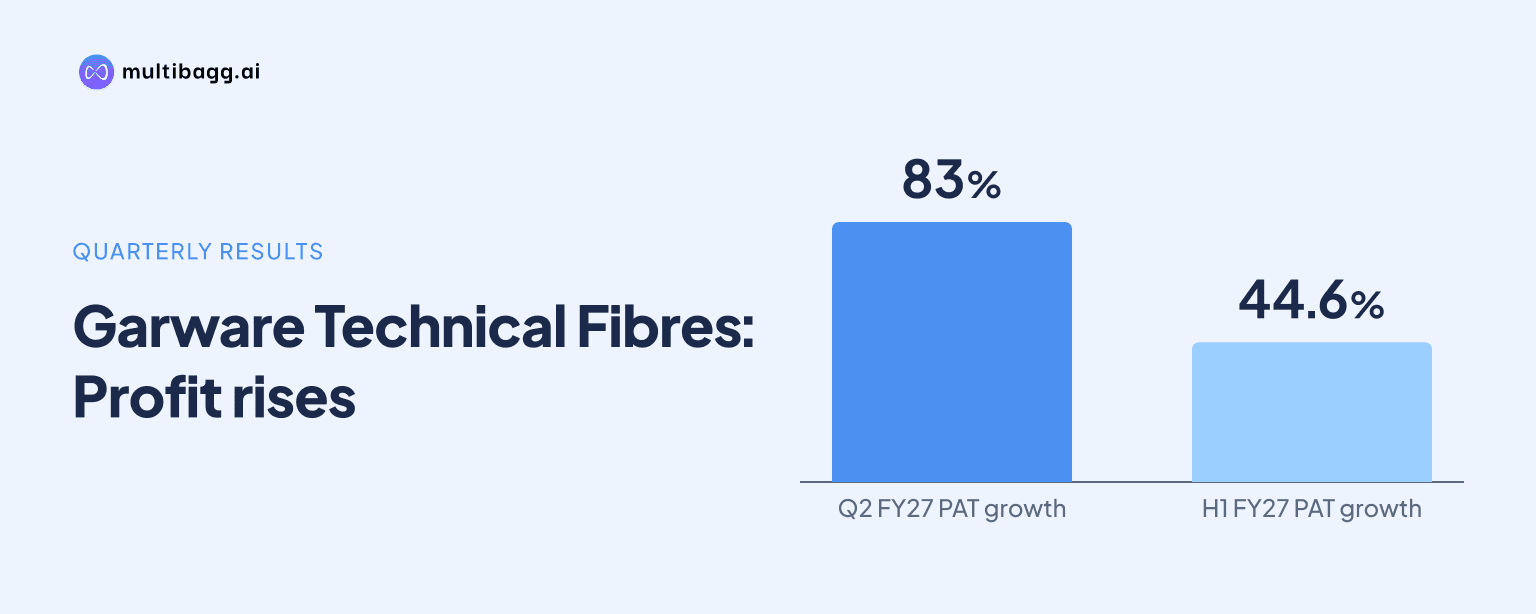
Garware Technical Fibres Limited reported consolidated net profit of ₹58.6 crore for Q2 FY27, up 83.1% year-on-year, while net sales increased 33.0% to ₹462.6 crore. The September-quarter performance was supported by Salmon Aquaculture, USA Sports, Geosynthetics, value-added ropes and continued domestic-market growth.
Know Garware Technical Fibres inside out
Results, valuation, peers and who's buying, in one view.
What did Garware Technical Fibres report for Q2 FY27?
Garware Technical Fibres reported consolidated profit after tax of ₹58.6 crore for the quarter ended September 30, 2026, compared with ₹32.0 crore in Q2 FY26. Consolidated net sales rose to ₹462.6 crore from ₹347.9 crore a year earlier, and profit before tax increased 66.8% to ₹76.1 crore from ₹45.7 crore.
Earnings per share increased to ₹6.00 in Q2 FY27 from ₹3.22 in the corresponding quarter of the previous financial year. The board approved the unaudited standalone and consolidated results for the quarter and half year ended September 30, 2026, at its meeting on October 29, 2026.
The reported consolidated total income for the quarter was ₹471.6 crore, while revenue from operations or net sales was ₹462.6 crore. These are separate financial statement measures, with total income including items beyond net sales. The company also reported consolidated total comprehensive income of ₹66.4 crore for the quarter.
Which businesses drove Garware Technical Fibres' quarterly growth?
Garware Technical Fibres said growth during the quarter was led by robust performance in its Salmon Aquaculture and USA Sports businesses, together with sustained expansion in the domestic market. Chairman and Managing Director Vayu Garware said the company delivered strong operational performance, with profit growth of about 83% over Q2 FY26.
The company also identified Geosynthetics and value-added ropes as contributors to the quarter's performance. Management said the geosynthetics business continued to grow profitably, while value-added ropes delivered results across international and domestic markets.
These businesses are relevant because they serve specialised applications rather than only conventional commodity markets. The company manufactures technical textile and synthetic cordage products for Indian and overseas customers, making performance in export-oriented businesses and the domestic market important components of its consolidated results.
How did operating profitability change in the September quarter?
Operating profitability improved as EBITDA increased 65.3% year-on-year to ₹80.0 crore in Q2 FY27 from ₹48.4 crore in Q2 FY26. The EBITDA margin expanded to 17.3% from 13.9%, an improvement of 3.4 percentage points.
The rise in profit before tax was lower than the increase in profit after tax, but both measures grew faster than net sales. Profit before tax rose 66.8%, compared with 33.0% growth in net sales, while PAT increased 83.1%. The reported figures indicate improved operating leverage during the quarter.
Garware Technical Fibres nevertheless said higher raw-material prices and elevated freight costs on international routes created inflationary pressure. The company said it addressed these costs through price increases, procurement measures and operational efficiencies. It did not provide a quantified quarterly impact of these measures in the results highlights.
Got a follow-up? Ask IRIS
What was Garware Technical Fibres' half-year financial performance?
Garware Technical Fibres reported consolidated net sales of ₹945.0 crore for the six months ended September 30, 2026, an increase of 32.1% from ₹715.1 crore in the year-earlier period. Half-year PAT rose 44.6% to ₹123.0 crore from ₹85.1 crore.
Consolidated profit before tax for the first half rose 40.0% to ₹162.5 crore, compared with ₹116.0 crore in the corresponding period of FY26. Half-year earnings per share increased to ₹12.56 from ₹8.57, a gain of 46.5%.
The company also reported improvement in free cash flow and return on capital employed during the first half compared with the corresponding period last year. No separate figures for these indicators were included in the supplied results highlights, so their magnitude cannot be assessed from the announcement.
What do the Q2 results mean for investors and operations?
The Q2 numbers show that Garware Technical Fibres grew both sales and profitability despite input-cost and logistics pressures. The increase in EBITDA margin to 17.3% provides a direct operating indicator alongside the higher PAT, while the 33% sales growth reflects the contribution of the businesses named by management.
For investors, the results provide updated financial evidence on the company's business mix across aquaculture, sports, geosynthetics, ropes and domestic markets. The announcement did not disclose a new transaction, capital-raising plan, dividend decision or change in guidance. As a result, the available update is focused on the quarter's operating and financial performance.
For customers and industry operations, management's comments point to continued cost pressures in raw materials and international freight. The company's stated response was to use pricing, procurement and efficiency actions, rather than to indicate any disruption to production or supply.
Conclusion
Garware Technical Fibres Limited delivered higher consolidated sales, operating profit and net profit in Q2 FY27. Net sales reached ₹462.6 crore and PAT rose to ₹58.6 crore, with management attributing the performance to Salmon Aquaculture, USA Sports, Geosynthetics, value-added ropes and domestic-market growth.
The next results update will show whether the company can sustain growth while managing raw-material inflation and elevated international freight costs. Investors will also monitor the performance of the businesses cited by management and the company's reported progress in free cash flow and return on capital employed.