










Gaudium new IVF hubs target break-even within six months
Key highlights
- Gaudium said a standard IVF hub requires about Rs 2.5 crore of capital expenditure.
- Gaudium expects a new hub to break even in three to six months at roughly five to six cycles.
- Gaudium targets 25 cycles for a new hub within 1-1.5 years and capital payback in 1.5-2 years.
- Gaudium's Q2 FY27 EBITDA margin was 36%, down from 43.4% in Q2 FY26 amid rollout and marketing costs.
powered by IRIS
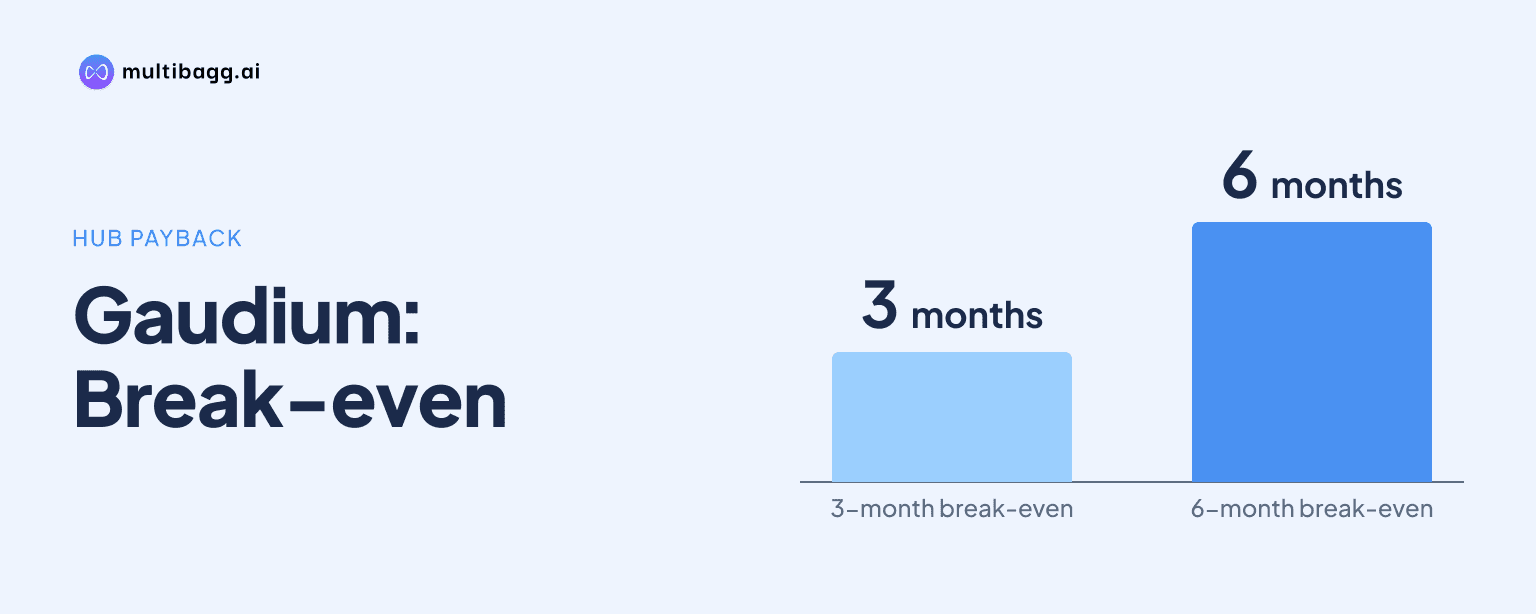
On its November 16, 2026 earnings call, Gaudium IVF and Women Health Limited said a new IVF hub costing about Rs 2.5 crore can break even in three to six months at roughly five cycles, recover its capital in 1.5 to two years and reach 25 cycles within 1-1.5 years.
Know Gaudium IVF and Women Health inside out
Results, valuation, peers and who's buying, in one view.
What does a new Gaudium hub cost?
Gaudium said a typical new hub requires about Rs 2.5 crore of capital expenditure, with Rs 1.5 crore allocated to the laboratory and operation theatre, or OT, and the balance used to develop the centre. Management said it is generally seeking a site of about 3,000 square feet, although actual properties may range from 2,800 to 3,500 square feet depending on the city.
The company described this as an indicative template rather than a fixed cost for every location. Its Gaudium Women Hospital project in Lucknow, approved by the board in June, is a separate and larger project with an estimated cost of up to Rs 15 crore on a 30-year land lease, with commercialisation expected in financial year (FY) 2028-29. The Rs 2.5 crore estimate therefore applies to the standard IVF hub model, rather than necessarily to hospital-format expansion.
How quickly do Gaudium hubs reach break-even?
Gaudium said a new hub generally starts breaking even at about five to six cycles, and Dr. Manika Khanna put the expected break-even period at three to six months. The South Extension hub had completed around 15 cycles by the second-quarter (Q2) FY27 call, while Gurugram had booked its first cycle, providing early indicators from the two recently launched hubs.
The timeline includes costs that begin before patient volumes build. Management said doctors and embryologists receive one month of training before a hub opens, so their salaries start ahead of revenue, while marketing activity also begins during this period. These upfront costs, launch expenses and clinical hiring contributed to consolidated earnings before interest, tax, depreciation and amortisation (EBITDA) margin falling to 36% in Q2 FY27 from 43.4% in Q2 FY26.
Management gave two related capital-payback estimates. Rakesh Sharma said Gaudium was targeting about 1.5 years, while Dr. Khanna described a 1.5-to-two-year range during the same discussion. The call did not provide a centre-level profit-and-loss statement, so it did not disclose the revenue, margin or cash-flow assumptions behind the five-cycle break-even point and payback range.
What revenue can Gaudium hubs generate after ramp-up?
Gaudium said a stabilised Tier 2 city centre could generate about Rs 60 lakh to Rs 1 crore, while a metro-centre estimate was about Rs 1.5 crore to Rs 2 crore. These ranges were provided in response to a question about a stabilised centre, but management did not state whether they represented monthly or annual revenue. The call therefore does not support a precise revenue-to-capex calculation.
The difference reflects management’s view that mature cycle capacity depends on city type and population. It said larger hubs in Delhi, Mumbai and Bengaluru can handle up to 100-120 cycles with existing infrastructure, while a Tier 2 centre doing 30 cycles would be at its best level. Mumbai was completing 50-70 cycles a month, Bengaluru 30-40 cycles and Kashmir about 25 cycles at the time of the call.
Across the network, Gaudium reported 889 pickup cycles in Q2 FY27. Management described these as unique patients who may subsequently undergo embryo transfer. Average revenue per patient was Rs 3.07 lakh in Q2 FY27 and Rs 3.19 lakh in the first half (H1) FY27, compared with Rs 2.58 lakh in H1 FY26. Management said volume, rather than price, was the larger contributor to growth.
Got a follow-up? Ask IRIS
How is Gaudium funding its hub rollout?
Gaudium had used Rs 13.5 crore for new centres from its fresh-issue proceeds as of September 30, 2026. It had raised Rs 90 crore through the fresh issue, of which Rs 50.7 crore had been deployed, including Rs 18.1 crore for repayment of borrowings, Rs 11.4 crore for general corporate purposes and Rs 7.7 crore for issue expenses. Unutilised proceeds including interest stood at Rs 39.9 crore.
The company also reported Rs 20.5 crore of cash and cash equivalents and Rs 39.5 crore of unutilised initial public offering proceeds in fixed deposits on September 30, 2026. Borrowings were Rs 4.8 crore and consolidated debt to equity was 0.03 times. Management called the balance sheet debt-light and said the expansion plan was fully funded, while also disclosing the cash, proceeds and borrowings supporting that view.
Gaudium plans to open 10 centres in FY27. It said two new hubs were live and a third was ready, while five of the seven remaining locations had been identified: Lucknow, Kolkata, Guwahati, Surat and Hyderabad. Management also said rollout over the next 18-24 months would keep reported earnings exposed to initial fixed costs and launch spending as each hub ramps up.
What is the near-term effect of expansion on Gaudium margins?
Gaudium’s Q2 FY27 revenue rose 17.9% year on year to Rs 37.4 crore, but EBITDA declined to Rs 13.5 crore from Rs 13.8 crore and the margin contracted by 737 basis points to 36%. Management attributed the movement to South Extension and Gurugram rollout costs, clinical-team hiring before volumes arrive, and higher marketing spending across both new and established hubs.
For H1 FY27, revenue increased 14.7% to Rs 56.8 crore from Rs 49.5 crore, while EBITDA declined to Rs 15.9 crore from Rs 19 crore and the margin fell to 28% from 38.3%. Management estimated it could maintain historical margins by the end of the year, while acknowledging temporary pressure during each launch. Existing centres were growing roughly 28% across Mumbai, Delhi and Bengaluru, although the overall average was about 22% after operations were temporarily halted during Patna’s relocation.
Conclusion
Gaudium’s disclosed hub model is based on about Rs 2.5 crore of capital expenditure, break-even at roughly five cycles and an expected three-to-six-month path to operating break-even. Its projected 1.5-to-two-year capital payback depends on reaching 25 cycles within 1-1.5 years, while management’s disclosed revenue ranges indicate a higher ceiling for metro hubs than Tier 2 centres.
The next measure to watch is execution against the FY27 plan for 10 new centres and Gaudium’s Rs 130 crore revenue guidance. Management said H2 contributes the larger share of annual revenue and Q4 is typically its strongest quarter, but it also expects rollout expenses and initial fixed costs to continue during the planned 18-24 month expansion period.