










Godrej Consumer Products Limited prioritises profit growth
Key highlights
- GCPL expects commodity inflation in Q3 to be mildly higher than in Q2.
- GCPL retained FY27 guidance for double-digit consolidated revenue and EBITDA growth.
- Management estimated a high-single-digit inflation impact across its India and Indonesia portfolio.
- Indonesia sales grew 20% and underlying volume grew 8%, partly helped by weather conditions.
powered by IRIS
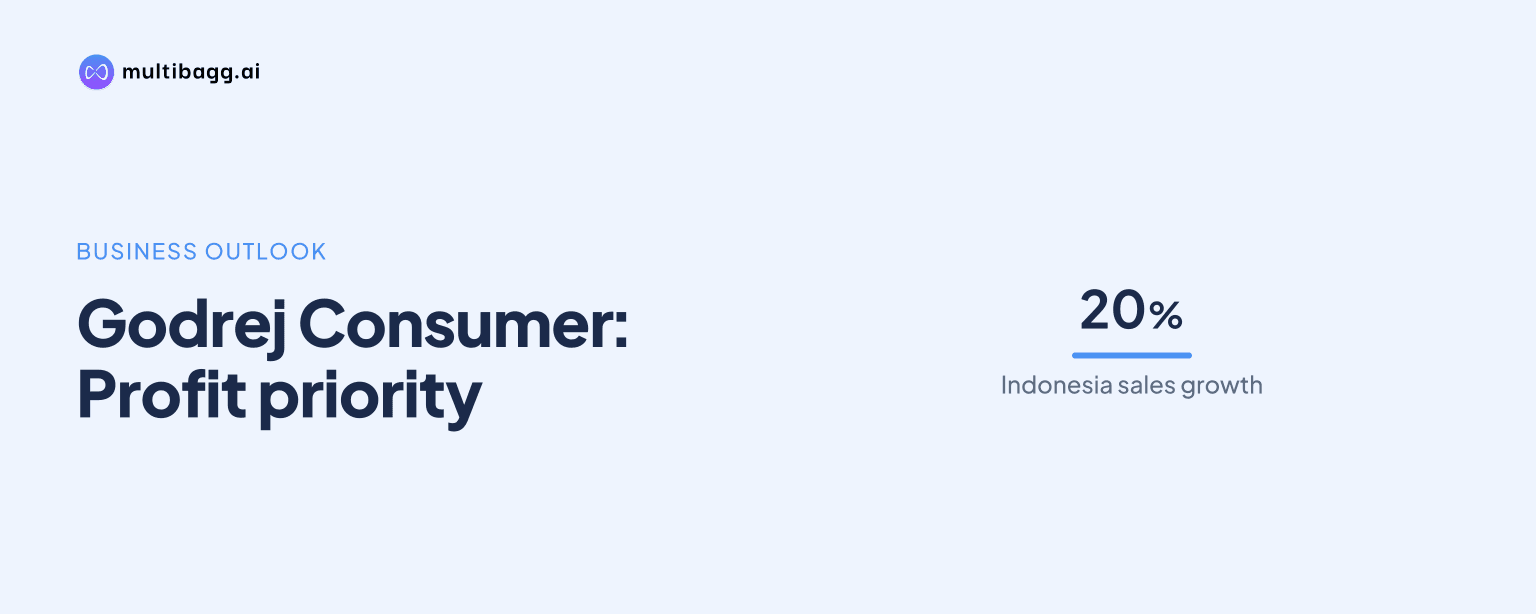
GCPL says it will prioritise year-on-year consolidated earnings before interest, tax, depreciation and amortisation (EBITDA) growth over EBITDA margin percentage as commodity inflation is expected to be mildly higher in Q3 than Q2. Management retained its FY27 target of double-digit consolidated revenue and EBITDA growth while planning further pricing in soaps and liquid detergents.
Know Godrej Consumer Products inside out
Results, valuation, peers and who's buying, in one view.
Why is GCPL prioritising profit growth over EBITDA margins?
GCPL is prioritising year-on-year EBITDA growth because management said preserving an EBITDA percentage is not the right objective during very sharp commodity-cost increases. Management expects commodity inflation to be mildly higher in Q3 than in Q2, after a period of relief was followed by renewed increases. Its stated aim is to maintain EBITDA growth at the consolidated level.
The cost pressure spans crude-linked derivatives, palm oil and other commodity inputs. Management described this as one of the highest inflationary impacts in many years and estimated that the impact across its India and Indonesia portfolio was approximately high single digit. Its response combines stringent pricing, a cost-savings programme and optimisation of media and trade investment.
GCPL retained its FY27 framework of high-single-digit underlying volume growth for the stand-alone business and double-digit consolidated revenue and EBITDA growth. Management said first-half revenue was running ahead of plan and that it had confidence of exceeding the plan in certain areas. It identified double-digit underlying volume growth and profit growth, rather than a margin percentage, as its measure of outperformance.
Will commodity inflation rise further in Q3?
GCPL expects commodity inflation to be mildly higher in Q3 than in Q2. Management said commodities had provided some relief before rising again, leaving Q3 at slightly more elevated levels. It did not provide a numerical forecast for palm oil, crude-linked derivatives or any other individual input.
The expected Q3 increase is why management plans further calibrated pricing in soaps and liquid detergents. It said margins in both categories remain below normative levels despite price increases already taken by GCPL and the wider industry. Management characterised pricing as occurring in rounds when input costs rise sharply.
GCPL also said higher costs can reduce wholesale and other channel inventories, alongside the effect of increased shelf prices. In soaps, this inventory adjustment has been visible particularly in larger stock-keeping units. Management did not disclose a specific India EBITDA margin or consolidated EBITDA margin target for Q3.
Which GCPL categories face the biggest pricing and inventory effects?
GCPL said soaps face the clearest price-volume recalibration and trade-inventory correction, while detergents continue to grow in line with prior trend lines. An analyst cited 8% value growth in Personal Care, and management said soap inventory corrections had weighed on the category. The correction was more pronounced in larger stock-keeping units, where trade inventory had built up.
Hair colour provided a contrast within Personal Care. Management said hair colour had a very good quarter for market-share gains, while soaps were dealing with pricing and inventory adjustments. The 8% Personal Care value-growth discussion therefore did not indicate that every product line in the segment was experiencing the same pressure.
GCPL clarified that detergent sales had not slowed versus their earlier trajectory. It said Fab was performing extremely well, while Ezee was entering its season with good early traction. Management also cited industry formalisation and a shift from powders to liquids as factors supporting detergent growth over the last couple of quarters.
Household insecticides, or HI, were described as satisfactory from a second-half seasonal perspective. In Indonesia, sales grew 20% and underlying volume grew 8%, although management said better weather conditions and higher mosquito infestation provided a benefit. In India, management said it was not concerned about HI seasonality and expected gains in other portfolio areas to offset soap-specific disruption.
Got a follow-up? Ask IRIS
How will GCPL manage demand while taking more pricing?
GCPL plans to combine calibrated pricing, cost savings and advertising efficiency to manage demand while recovering higher costs. Management said it had increased the salience of digital investment and achieved a higher return on investment, while seeking to keep share of voice range-bound. It did not quantify the planned price increase in soaps or liquid detergents.
Advertising optimisation is part of the approach in India. An analyst said stand-alone advertising and promotion spending had declined for seven consecutive quarters, including 7% in Q1 and 17% in Q2. Management attributed the reduction in roughly equal measure to lower category media spending in soaps and detergents and to better reach at lower cost after a media-agency change and improved practices.
In soaps and detergents, GCPL said it was balancing price actions and above-the-line advertising because the broader category was also reducing media activity amid inflation. In the rest of the portfolio, management is seeking more reach for lower cost. It also said its move towards influencers and digital advertising should build top-percentile capabilities over the next few quarters, without setting a spending-share target.
The pricing programme is accompanied by product and distribution actions. Godrej Spic, GCPL's toilet cleaner, moved nationally after meeting repeat-purchase milestones and its action standard in Tamil Nadu. In pet care, management said it had observed initial acceptance and category learnings, but plans to provide a clearer assessment of the business and its milestones in the next quarter.
Conclusion
GCPL's position is that the expected Q3 rise in commodity inflation should be assessed through year-on-year consolidated EBITDA growth rather than through EBITDA margin percentage alone. Further pricing in soaps and liquid detergents, combined with savings and advertising efficiency, is intended to protect profit growth while detergent momentum and hair-colour market-share gains continue to offset soap-specific adjustments.
The next update will show whether further pricing holds demand in soaps and liquid detergents and whether the company continues to deliver the broad Q2 growth shape in India. Management has also said it expects to provide a clearer pet-care update next quarter, while its FY27 targets remain high-single-digit stand-alone underlying volume growth and double-digit consolidated revenue and EBITDA growth.