










GE Power India Q2 Income Rises 11.6% to ₹342.5 Crore
Key highlights
- GE Power India reported Q2 FY27 total income from continuing operations of ₹342.5 crore, up 11.6% year-on-year.
- Revenue from operations increased 10.9% year-on-year to ₹311.2 crore in Q2 FY27.
- Consolidated net profit was ₹27.7 crore, down 14.5% year-on-year from ₹32.4 crore.
- Order backlog stood at ₹1,527.3 crore, down 16.3% year-on-year, while Core Services orders grew 38%.
powered by IRIS
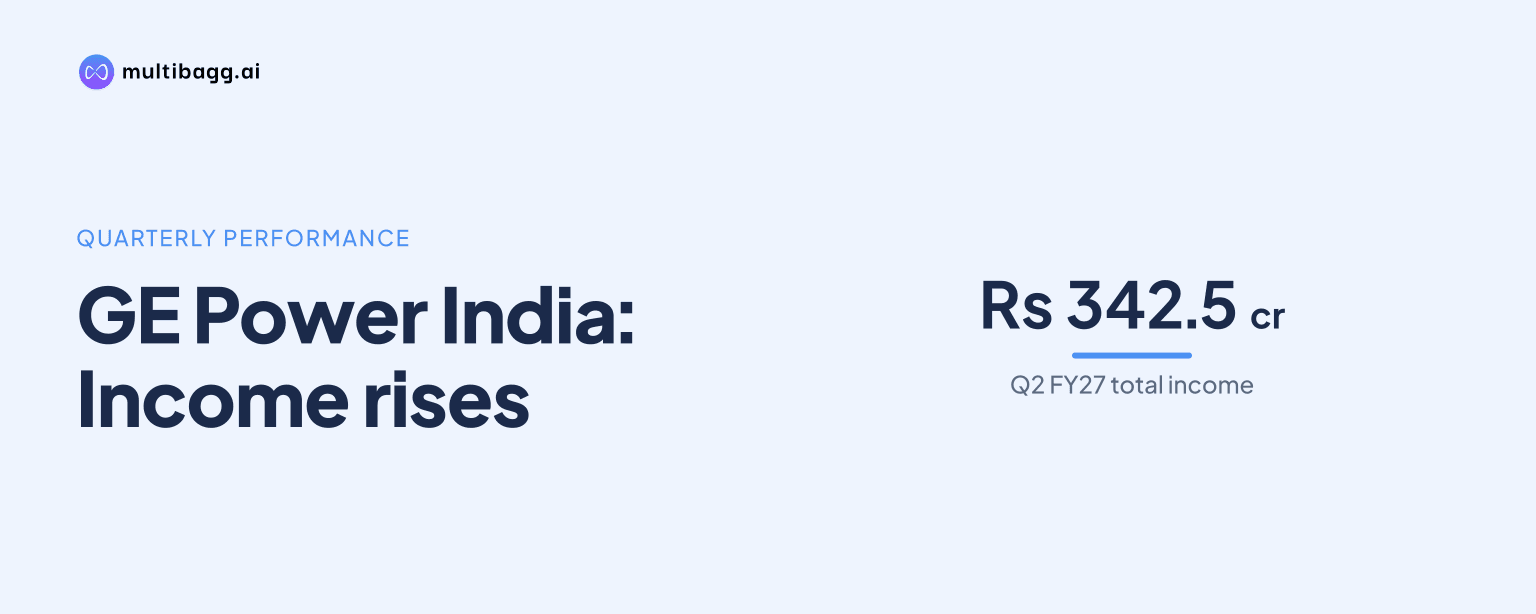
GE Power India Limited reported total income from continuing operations of ₹342.5 crore in Q2 FY27, an 11.6% year-on-year increase, while consolidated net profit declined to ₹27.7 crore from ₹32.4 crore as the quarter included losses from discontinued operations. The results cover the July-September 2026 period.
Know GE Power India inside out
Results, valuation, peers and who's buying, in one view.
What did GE Power India report in Q2 FY27?
GE Power India reported revenue from operations of ₹311.2 crore for the quarter ended September 30, 2026, compared with ₹280.5 crore in the corresponding quarter of FY26. Total income from continuing operations, including other income, rose to ₹342.5 crore from ₹307.0 crore a year earlier.
The company disclosed profit before tax from continuing operations, before exceptional items, of ₹53.0 crore, compared with ₹46.1 crore in Q2 FY26. Net profit from continuing operations was ₹49.8 crore. The reported standalone net profit was ₹32.8 crore after accounting for a ₹17 crore loss from discontinued Durgapur operations.
On a consolidated basis, GE Power India reported net profit of ₹27.7 crore, down 14.5% year-on-year from ₹32.4 crore. Consolidated earnings per share were ₹4.11, compared with ₹4.81 in the year-earlier quarter.
How did revenue and profit compare with earlier periods?
GE Power India's revenue increased 10.9% year-on-year and was marginally higher than the ₹308.7 crore reported in Q1 FY27. The revenue performance indicates that business activity remained higher than the previous year's July-September quarter.
Operating profit, or EBITDA, was ₹30.6 crore, up 9.6% from ₹28.0 crore in Q2 FY26. However, EBITDA declined from ₹44.7 crore in Q1 FY27. The operating margin was 9.8%, compared with 10.0% a year earlier and 14.5% in the preceding quarter.
Profit before tax rose 14.9% year-on-year from ₹46.1 crore, but was lower than ₹68.8 crore in Q1 FY27. The sequential change in operating profit and margins shows that the improvement in revenue did not translate into a similar quarter-on-quarter profit performance.
Why did reported profit differ from continuing-operations profit?
The difference arose because the company's continuing operations and discontinued operations are presented separately in the results. GE Power India recorded a standalone net profit from continuing operations of ₹49.8 crore, but a ₹17 crore loss from the discontinued Durgapur operations reduced standalone net profit to ₹32.8 crore.
This distinction is important for investors reading the quarterly numbers. Income and profit generated by the ongoing business are not identical to the final reported profit after the impact of discontinued operations. The consolidated result also includes the financial effect of the discontinued business, resulting in net profit of ₹27.7 crore.
The company reported standalone basic earnings per share of ₹4.87, against ₹4.53 in Q2 FY26. This standalone measure differs from the consolidated EPS of ₹4.11 because the two statements use different reporting scopes.
Got a follow-up? Ask IRIS
What does the order backlog indicate for GE Power India?
GE Power India's period-end order backlog stood at ₹1,527.3 crore, down 16.3% year-on-year. The backlog represents orders available for execution and is a relevant indicator of the company's work pipeline in the heavy electrical equipment and power-services business.
At the same time, the company said Core Services orders grew 38% year-on-year. Management cited positive momentum in Core Services, international expansion and operational profitability, and said it remained committed to building on this progress in the coming quarters.
The two data points show a mixed order picture. Growth in Core Services orders supports activity in that segment, while the lower total backlog means the aggregate order book at the end of the quarter was below the level of a year earlier. The results statement does not provide a numerical order-inflow figure for the quarter.
How does the Q2 result matter for investors?
For investors, the quarter showed double-digit growth in revenue and total income, alongside higher year-on-year profit before tax from continuing operations. These gains were offset in the final consolidated profit comparison by losses from discontinued operations and by lower operating profitability than in Q1 FY27.
GE Power India operates in the heavy electrical equipment sector, where order execution, services demand and the pace of fresh order inflows can affect quarterly financial performance. The reported 9.8% EBITDA margin was slightly below the year-earlier level and materially below the preceding quarter, making margins an important measure to track alongside revenue.
The company announced the unaudited standalone and consolidated results for the quarter and half year ended September 30, 2026, following a board meeting on November 13, 2026. The Q2 FY27 results statement was published on November 14, 2026.
Conclusion
GE Power India's Q2 FY27 performance was marked by 11.6% growth in total income from continuing operations to ₹342.5 crore and a 10.9% rise in revenue to ₹311.2 crore. Continuing-operations profit improved year-on-year, but losses from discontinued Durgapur operations reduced reported standalone and consolidated net profit.
Investors will watch whether Core Services order growth translates into a larger overall backlog, and whether operating margins recover from the 9.8% level reported in Q2. Management has identified services, international expansion and profitability as focus areas for the coming quarters, while the results leave the pace of total order-book rebuilding unresolved.