










GNG Electronics Q2 PAT rises to ₹56.35 crore as cash flow turns negative
Key highlights
- GNG Electronics reported Q2 FY27 consolidated revenue of ₹624.81 crore.
- GNG Electronics posted Q2 FY27 profit after tax of ₹56.35 crore and H1 FY27 PAT of ₹85.28 crore.
- H1 FY27 operating cash flow was negative because working capital absorbed cash.
- GNG Electronics increased its ICICI Bank working-capital facility by 80% to ₹72 crore in March 2026.
powered by IRIS
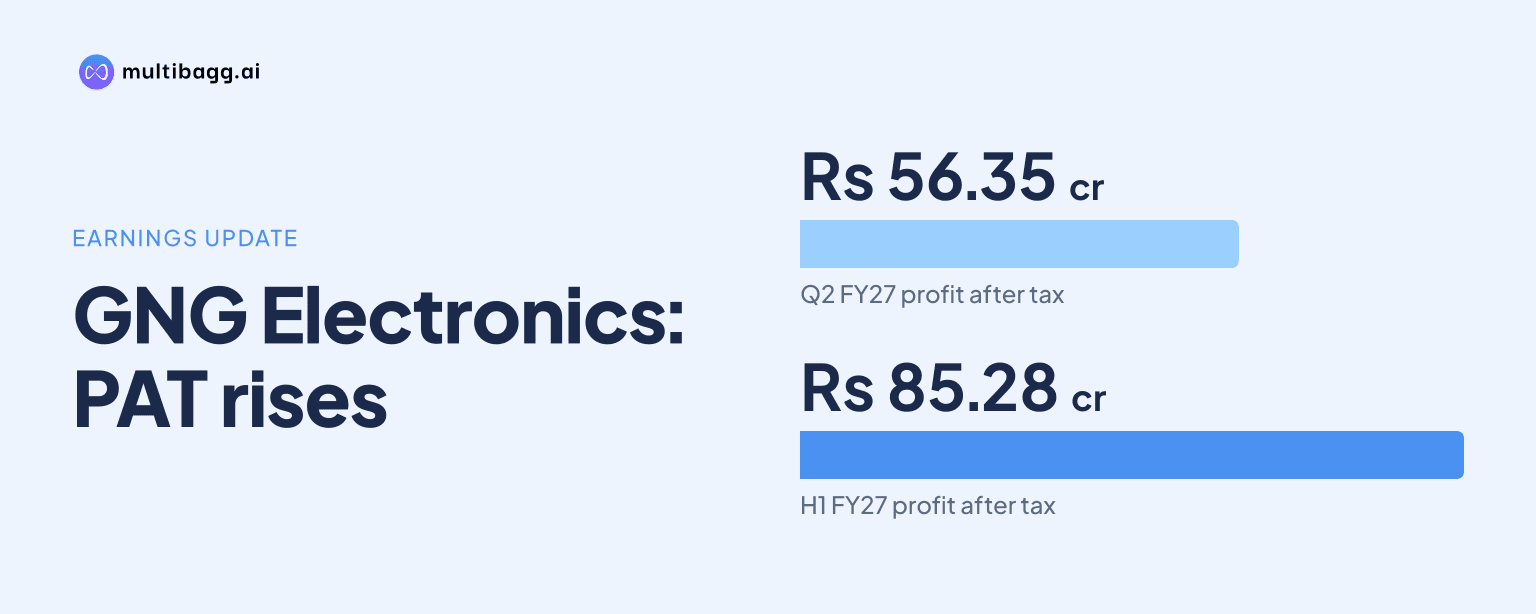
GNG Electronics Limited reported Q2 FY27 profit after tax of ₹56.35 crore on consolidated revenue of ₹624.81 crore, while operating cash flow for the first half remained negative because working capital absorbed cash. The results matter because profit growth and cash conversion moved in different directions during the period.
Know GNG Electronics inside out
Results, valuation, peers and who's buying, in one view.
What did GNG Electronics report for Q2 FY27?
GNG Electronics Limited reported consolidated revenue of ₹624.81 crore and profit after tax of ₹56.35 crore for the quarter ended September 30, 2026. For the first half of FY27, the company reported profit after tax of ₹85.28 crore. The company, referred to as GNG Electronics after its first mention, operates in the refurbished information and communication technology device segment.
The Q2 outcome followed a strong first quarter. GNG Electronics had reported Q1 FY27 revenue of ₹412.50 crore, up 32.1% year on year, while PAT rose 56.2% to ₹28.90 crore. Q1 EBITDA was ₹52.90 crore, and its EBITDA margin was 12.8%.
The Q2 revenue figure is higher than the Q1 revenue reported by the company. However, the supplied financial information does not provide a year-on-year comparison for Q2 revenue or PAT, nor does it disclose Q2 EBITDA or margin figures. The reported H1 PAT indicates that the second quarter accounted for the larger part of the first-half profit.
Why was operating cash flow negative despite higher earnings?
Operating cash flow was negative in H1 FY27 because of working-capital absorption, despite the reported profit. This means cash was tied up in operating items rather than being converted into cash generated from day-to-day business operations during the six-month period.
The available information does not specify the absolute operating cash-flow outflow or provide a detailed split between inventory, receivables, payables, and other working-capital items. It therefore cannot establish which specific balance-sheet component was the largest source of the outflow.
The distinction is important for investors assessing a business that is scaling its operations. Profit after tax records accounting earnings for a period, while operating cash flow tracks cash generated or used by core operations. A business can report higher profit while facing temporary or sustained cash requirements linked to higher sales volumes, procurement, inventory holding, or customer credit.
How is GNG Electronics funding its working-capital needs?
GNG Electronics has expanded its banking facilities to support working-capital requirements and has also approved new loans and expanded subsidiary guarantees. The approvals indicate that funding capacity is being strengthened alongside the reported expansion in business activity.
In March 2026, the company increased its ICICI Bank credit facility to ₹72 crore from ₹40 crore. The facility was designated for working-capital needs, and the disclosed outstanding amount was ₹38 crore. The enhanced limit was secured by a pari passu charge on current assets and receivables.
Separately, GNG Electronics increased its Axis Bank working-capital facility to ₹65 crore from ₹44 crore through an addendum dated February 23, 2026. The company disclosed an outstanding amount of ₹36.66 crore under that facility at the time. These arrangements preceded the FY27 first-half cash-flow update but provide context for the company’s financing approach.
Got a follow-up? Ask IRIS
What is driving the company’s operating expansion?
GNG Electronics has attributed its recent growth to demand for refurbished technology devices and a wider international and customer reach. During its Q1 FY27 update, it said its presence had expanded to 49 countries and its customer touchpoints had risen above 5,100.
The company also highlighted a strategic partnership with Redington Limited in relation to organised technology distribution in India. Its Q1 gross margin was reported at 24.65%, up 329 basis points year on year, with the company linking demand for refurbished alternatives to higher prices for new personal computers caused by rising component costs.
These developments provide context for the higher reported revenue base, but they do not by themselves determine cash generation. Growth in distribution and refurbishment activity can require additional investment in inventories and receivables, which are central components of working capital. The disclosed negative H1 operating cash flow makes balance-sheet execution relevant alongside earnings growth.
What does the result mean for investors and operations?
The result presents a mixed financial picture: GNG Electronics reported Q2 revenue of ₹624.81 crore and PAT of ₹56.35 crore, while first-half operating cash flow remained negative. For shareholders, the key issue is the relationship between rising accounting profit, cash tied up in working capital, and the use of bank facilities or other approved funding.
For lenders, suppliers and operating partners, the expansion of credit limits and subsidiary guarantees shows that working-capital funding remains an active part of the company’s operating model. The available disclosures do not state whether the additional facilities were fully drawn after the approvals, nor do they provide an updated debt balance for Q2 FY27.
The quarter also shows why revenue and profit figures should be assessed alongside cash-flow data. Revenue measures sales recognised during the period, and PAT captures profitability after expenses and taxes. Operating cash flow indicates whether those earnings are translating into cash after changes in the working-capital cycle.
Conclusion
GNG Electronics delivered Q2 FY27 consolidated revenue of ₹624.81 crore and PAT of ₹56.35 crore, lifting H1 PAT to ₹85.28 crore. But the negative H1 operating cash flow shows that working-capital needs absorbed cash even as reported earnings increased, making liquidity and cash conversion central parts of the financial assessment.
Investors will next watch for disclosures on the scale and composition of working-capital outflows, the utilisation of enhanced bank facilities, and subsequent quarterly cash-flow performance. The company’s funding actions, including new loans and expanded subsidiary guarantees, remain relevant to how its operating expansion is financed.