










Great Eastern Shipping Adds 82,000 cbm Jag Vikrant Carrier
Key highlights
- GE Shipping took delivery of the 2015-built Jag Vikrant on November 6, 2026.
- Jag Vikrant is a Very Large Gas Carrier with approximately 82,000 cbm capacity.
- The delivery increased GE Shipping’s owned fleet to 42 vessels.
- GE Shipping funded the Jag Vikrant purchase entirely through internal accruals.
powered by IRIS
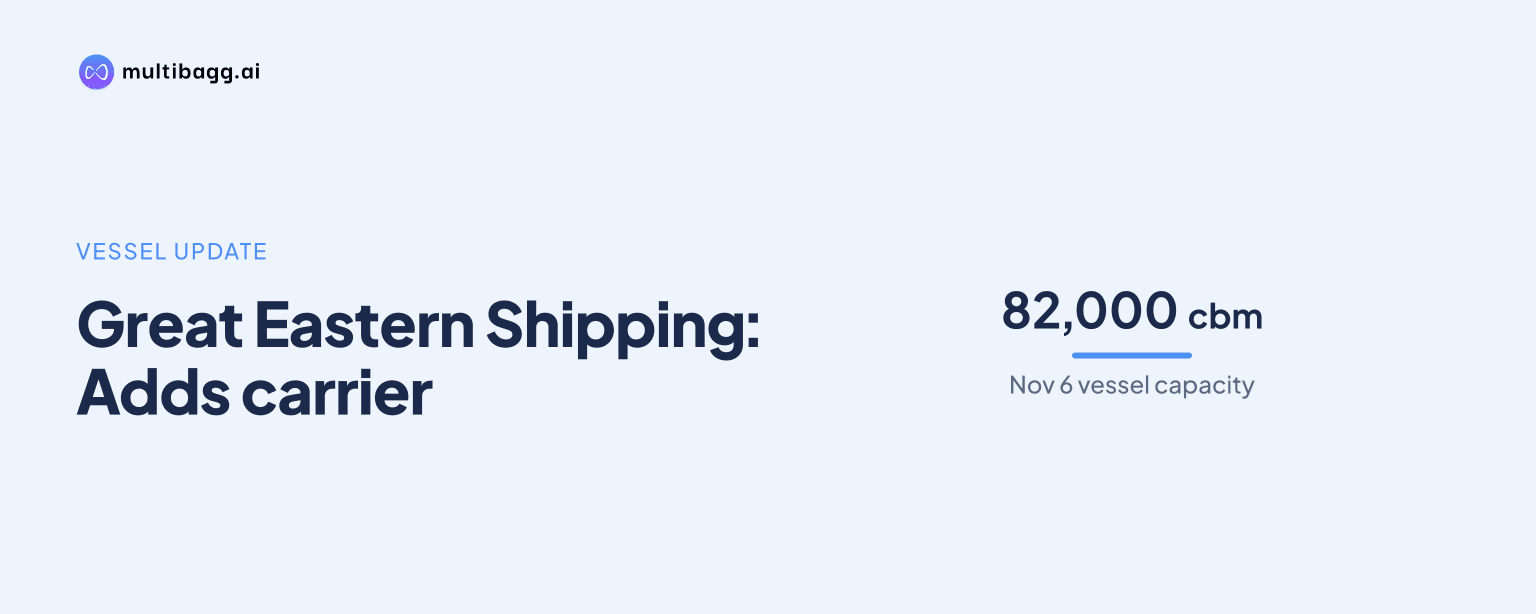
The Great Eastern Shipping Company Limited has taken delivery of the 2015-built Jag Vikrant, an 82,000 cbm Very Large Gas Carrier, increasing its owned fleet to 42 vessels. The acquisition, contracted in the third quarter of FY27 and funded entirely through internal accruals, adds gas-carrying capacity to the company’s fleet expansion programme.
Know Great Eastern Shipping Company inside out
Results, valuation, peers and who's buying, in one view.
What has Great Eastern Shipping acquired?
The Great Eastern Shipping Company Limited, referred to as GE Shipping, announced on November 6, 2026, that it had taken delivery of Jag Vikrant. The vessel is a secondhand Very Large Gas Carrier, or VLGC, built in 2015 and capable of carrying approximately 82,000 cubic metres of gas.
The delivery follows GE Shipping’s earlier contract to buy the vessel during the third quarter of FY27. The company did not disclose the purchase price, seller, deployment route, charter arrangement or expected operating contribution in the information provided.
A VLGC is a specialist vessel category used to transport large gas cargoes. Jag Vikrant’s 82,000 cbm capacity is the principal operating detail disclosed by GE Shipping and indicates the scale of the vessel being added to its gas carrier operations.
How was the Jag Vikrant purchase financed?
GE Shipping said the acquisition of Jag Vikrant was financed entirely through internal accruals. This means the company used internally generated funds for the vessel purchase rather than disclosing external debt financing for this transaction.
The funding approach is significant because vessel acquisitions can require substantial capital commitments, while the company has stated that it is continuing to consider fleet growth through both secondhand purchases and newbuilding vessels. No financial outlay, debt impact or timeline for these additional purchases was disclosed.
The company has used internal accruals for recent fleet additions as well. In January 2026, it took delivery of Jag Vijay, another 2015-built Very Large Gas Carrier with capacity of 84,048 cbm, and said that acquisition was also financed through internal accruals.
How does Jag Vikrant change GE Shipping’s fleet?
Jag Vikrant takes GE Shipping’s owned fleet to 42 vessels, according to the November 6 announcement. The addition is part of a series of vessel deliveries and purchases reported by the company across its shipping operations.
The fleet count had stood at 40 vessels when GE Shipping took delivery of Jag Vijay in January 2026. That earlier disclosure also reported an owned fleet capacity of 3.22 million deadweight tonnes, or dwt. The current Jag Vikrant announcement confirms the fleet count of 42 but does not provide an updated aggregate dwt figure.
The company’s recent acquisitions include gas carriers of varying capacities. GE Shipping had earlier taken delivery of Jag Vikram, a secondhand midsize gas carrier with capacity of about 35,188 cbm, after contracting for it in the fourth quarter of FY21. The current acquisition is materially larger in volumetric capacity than that midsize vessel.
Got a follow-up? Ask IRIS
Why does the acquisition matter for investors and operations?
The delivery matters because it increases GE Shipping’s asset base and gas-carrying fleet capacity while lifting the number of owned vessels to 42. For investors, the disclosed facts point to continued capital allocation toward fleet expansion, with the latest purchase completed without separately disclosed borrowing.
The addition also follows other reported fleet transactions. GE Shipping has disclosed deliveries of vessels including Jag Vijay and, in other company updates, gas carriers such as Jag Vasant. These transactions show that the company has continued to add shipping assets rather than limiting its fleet activity to existing vessels.
Operationally, Jag Vikrant provides GE Shipping with another VLGC in its fleet. However, the company has not disclosed where the ship will operate, whether it has been placed on a charter, the expected utilisation level or the revenue contribution expected from the vessel. Those factors will determine how the asset is integrated into operations.
GE Shipping had said in connection with Jag Vijay that its tanker and dry bulk carrier segments were operating at nearly 100% utilisation. No utilisation figure for Jag Vikrant or an updated fleet-wide utilisation level was included in the November 6 release.
What does GE Shipping’s fleet expansion plan show?
GE Shipping has stated that it plans to pursue further fleet expansion through both secondhand vessels and newbuildings. Jag Vikrant represents the secondhand acquisition route, with the vessel delivered after being contracted in Q3 FY27.
Secondhand purchases can allow shipping companies to add operating vessels without waiting for a newbuilding construction cycle. In this case, the disclosed information establishes that Jag Vikrant was built in 2015 and has now joined GE Shipping’s owned fleet. It does not disclose the commercial terms or the company’s criteria for selecting this vessel.
The company’s record also shows earlier additions across different vessel types, including the midsize gas carrier Jag Vikram and a Supramax bulk carrier in FY22. The current VLGC delivery continues that pattern of fleet management across shipping segments, although GE Shipping has not provided a complete list of planned purchases or newbuilding orders.
Conclusion
GE Shipping’s delivery of Jag Vikrant adds an approximately 82,000 cbm, 2015-built VLGC to its fleet and increases the owned vessel count to 42. The purchase was contracted in Q3 FY27 and financed through internal accruals, underlining the company’s stated use of internal funds for this fleet addition.
The next point to watch is GE Shipping’s stated plan for additional secondhand and newbuilding vessel acquisitions. Investors will also look for company disclosures on the deployment, utilisation and commercial contribution of Jag Vikrant, as none of these details were included in the delivery announcement.