










Highness says Rabale hosts India’s first TFT-LCD re-sizing line
Key highlights
- Highness says its Rabale line re-sizes TFT-LCD display cells with ±0.1 mm cutting accuracy.
- The Rabale process has 7 stages, ending with 100% inspection of dimensions, performance and reliability.
- Highness says custom-size displays can be supplied in weeks rather than months, without new LCD panel tooling.
- Highness has an allotment offer for 5,000 square metres in Goa for a planned facility targeting up to 8,000 displays daily.
powered by IRIS
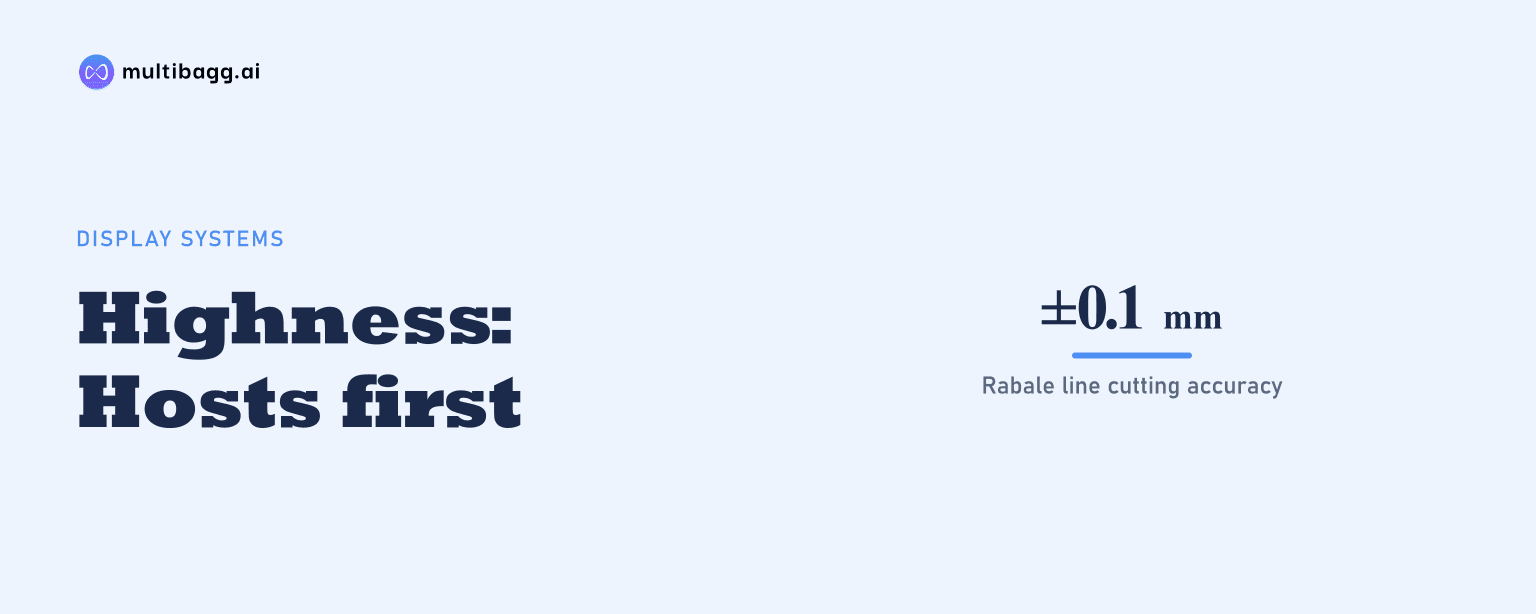
Highness Microelectronics Ltd says its operational Rabale, Mumbai, line is India’s first commercial thin-film-transistor liquid-crystal display (TFT-LCD) re-sizing facility, cutting existing display cells to custom dimensions at ±0.1 mm accuracy without new LCD panel tooling and using 100% inspection at the quality-testing stage.
Know Highness Microelectronics inside out
Results, valuation, peers and who's buying, in one view.
What is Highness’s Rabale display re-sizing facility?
Highness says the Rabale facility is a commercial line that re-sizes existing display cells rather than making a new LCD panel from scratch. The line is operational in Rabale, Mumbai, and is presented as India’s first commercial TFT-LCD display re-sizing facility. Its stated purpose is to produce custom display dimensions without requiring new panel tooling, which Highness identifies as a route to lower tooling and development costs.
The operation sits alongside Highness’s existing in-house assembly and design capabilities at its Mumbai facility. Highness says that site handles printed circuit board, backlight, touch-panel and mechanical-housing assembly, while its internal design team creates two-dimensional and three-dimensional mechanical enclosure designs. The new line adds glass re-sizing to that manufacturing chain, with the resulting display intended for transportation, defence, medical and industrial applications.
How does Highness re-size an existing display cell?
Highness says the process uses seven steps to alter display glass while retaining the stated display characteristics. It begins with removal of the polarizer layer, followed by precision cutting of the glass to the required size at ±0.1 mm accuracy. Highness says the edge is then cleaned and inspected before the layers are reassembled, bonded and sealed.
Highness says the cut edge is sealed immediately and ultraviolet-cured before a new backlight is attached. According to the presentation, the contrast, viewing angle and interface remain intact and the liquid crystal is not harmed. The equipment list includes a polarizer-removal machine, a computer numerical control glass cutter, cleaning station, curing and sealing machine, ultraviolet curing chamber and optical inspection system.
What does the Rabale line change for display customers?
Highness says the Rabale line can supply custom-size displays in weeks rather than months, supported by on-site engineers and testing of every sheet. This is a stated operating proposition rather than a disclosed delivery-time metric, because the presentation does not provide a baseline lead time, production volume or customer order history. Highness nonetheless frames the process as quicker from prototype through production than developing a purpose-built panel.
The key comparison is between re-sizing an existing panel and commissioning new LCD panel tooling. Under the first approach, Highness cuts glass to a required dimension, seals it, attaches a backlight and completes 100% quality testing. Under the second approach, which the presentation seeks to avoid, a customer would need a new panel-development route. Highness says using existing panels can reduce tooling needs and development cost, although it gives no rupee estimate of those savings.
The claimed import-substitution effect also depends on the facility’s ability to serve requirements that otherwise call for imported custom displays. Highness identifies reduced dependence on imported custom displays as a reason the facility matters, but does not disclose the company’s current import purchases, the proportion of components sourced overseas, or the addressable volume for the Rabale line. The disclosed capability is specifically display-cell re-sizing, not full panel fabrication.
Got a follow-up? Ask IRIS
Which sectors can use Highness’s custom-sized displays?
Highness identifies transportation, defence, medical and industrial applications as potential users of the re-sized displays. Its railway segment supplies indigenized display solutions for rail and metro networks. Highness also says it designs stretched, bar-type and sunlight-readable high-brightness displays for locomotives, metro trains, passenger coaches, stations and ticketing kiosks.
For defence and aerospace, Highness says it designs rugged displays and tablets for military, naval and airborne applications. The cited product features include high brightness, wide-temperature operation, night-vision compatibility, optical bonding, electromagnetic interference and electromagnetic compatibility shielding, and ingress protection. The Rabale line’s custom-dimension proposition could be relevant to such applications, but the presentation does not identify a specific defence, rail, medical or industrial contract tied to the facility.
Highness emphasizes that the Rabale process preserves contrast, viewing angle and interface after re-sizing. That claimed preservation is relevant to its stated display products, including high-brightness railway units and rugged defence systems, where the final product must work in outdoor or mission-critical environments. However, Highness provides no product-by-product qualification data, reliability duration or certification results for re-sized panels in those end markets.
How does Rabale fit Highness’s wider manufacturing plan?
Highness’s operational Rabale line is distinct from its planned new TFT-LCD module manufacturing facility in Goa. Highness says it has received an allotment offer for 5,000 square metres at the Electronic Manufacturing Cluster in Tuem, Goa. The proposed site would include module-production lines, a glass cutting and re-sizing line, an in-house research and development centre, and an endurance and environmental testing laboratory.
The comparison is therefore between an operating Rabale re-sizing line and a planned Goa expansion with broader module-manufacturing capacity. Highness says the Goa module-production lines are intended to produce up to 8,000 small and medium-sized displays a day for industrial automation, white goods, automobiles and select medical devices. Rabale’s disclosed focus is custom glass cutting, sealing, curing and inspection, while the Goa project is intended to add module production and testing infrastructure.
Highness also says the Goa facility is planned to include an in-house metal shop, allowing enclosure fabrication to move from outsourcing to internal production. Management presents the 5,000-square-metre plot and new machinery as part of a strategy of portfolio expansion and backward integration. The presentation does not state the Goa facility’s commissioning date, investment amount, funding source or the timing for reaching the stated daily capacity.
Conclusion
Highness says its Rabale operation adds a domestic route for converting existing TFT-LCD cells into custom-size displays, with ±0.1 mm cutting accuracy and 100% inspection in a seven-step process. The company’s central claim is that this can avoid new panel tooling while supporting its display offerings across rail, defence, medical and industrial applications.
The next disclosed development to watch is the planned Goa facility, for which Highness has an allotment offer for 5,000 square metres and targets production of up to 8,000 small and medium-sized displays daily through planned module-production lines. The presentation leaves the project’s commissioning schedule, capital commitment and production ramp unresolved.