










ITC Limited Q2 FY27 Profit Falls 20% to Rs 4,137 Crore YoY
Key highlights
- ITC Limited's Q2 FY27 standalone profit after tax fell 20.1% year-on-year to Rs 4,137.12 crore.
- Reported standalone revenue from operations rose 43.9% to Rs 30,578.40 crore, while revenue after excise duty increased about 3.9% to Rs 20,268.63 crore.
- ITC's cigarette segment profit declined 26% to Rs 4,044.49 crore in Q2 FY27.
- Other FMCG segment profit rose 31.4% to Rs 576.69 crore, while paperboards segment profit increased 50.7% to Rs 273.32 crore.
powered by IRIS
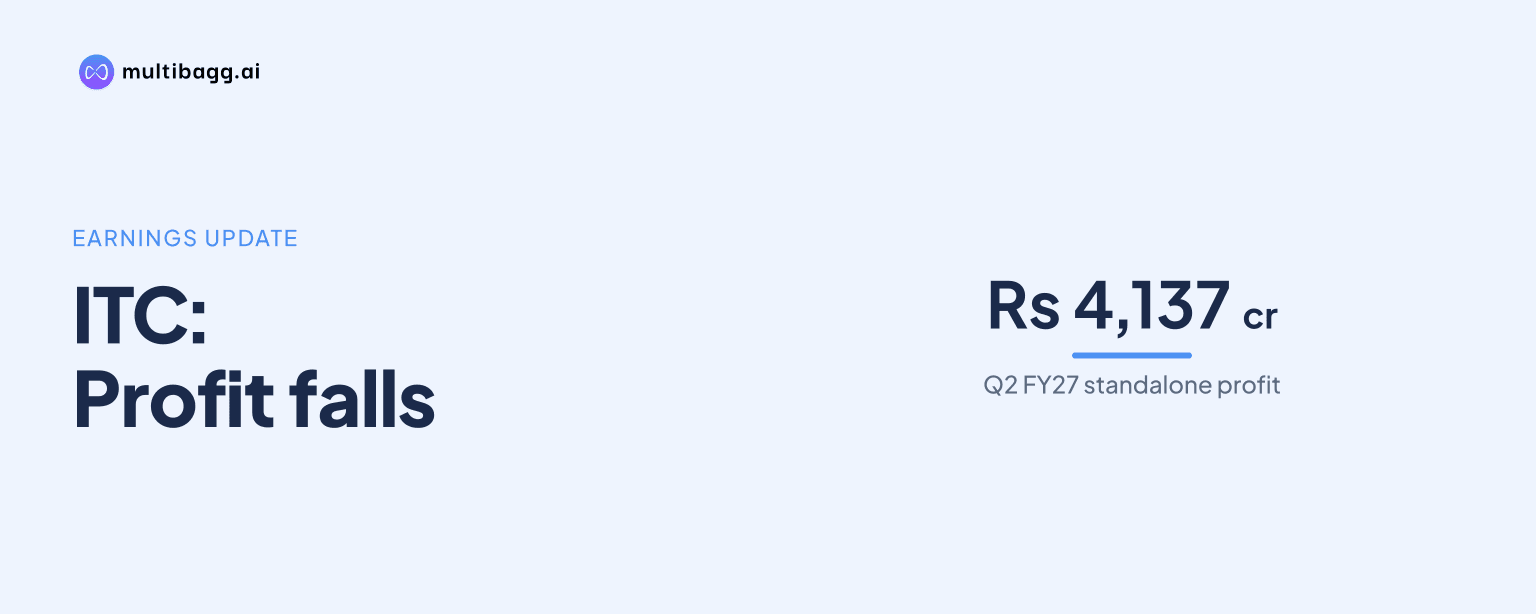
ITC Limited reported standalone profit after tax of Rs 4,137.12 crore for the quarter ended September 30, 2026, a 20.1% year-on-year decline, as cigarette earnings fell despite growth in FMCG, agriculture, and paperboards. Reported standalone revenue from operations rose 43.9% to Rs 30,578.40 crore, largely reflecting higher excise duty included under accounting rules.
Know ITC inside out
Results, valuation, peers and who's buying, in one view.
Why did ITC Limited's Q2 FY27 profit decline?
ITC Limited's standalone profit after tax fell from Rs 5,175.70 crore in Q2 FY26 to Rs 4,137.12 crore in Q2 FY27. Profit before exceptional items and tax declined to Rs 5,720.28 crore from Rs 6,890.60 crore. Other income also fell to Rs 507.36 crore from Rs 584.40 crore in the year-earlier quarter.
The result was affected by weaker cigarette profitability, higher expenses, and an adverse comparison with the previous year. ITC recorded an exceptional acquisition-related expense of Rs 25.66 crore in the quarter, whereas the corresponding prior-year quarter included an exceptional insurance settlement gain of Rs 88.08 crore. On a consolidated basis, profit after tax was Rs 4,229.33 crore, compared with Rs 5,187 crore a year earlier, a decline of about 18.5%.
Total standalone expenses increased to Rs 25,462.44 crore from Rs 15,016.02 crore. Employee benefit expenses rose to Rs 1,886.52 crore from Rs 1,654.49 crore. The company reported standalone profit before tax of Rs 5,481.75 crore and tax expense of Rs 1,344.63 crore for the September quarter.
Why did reported revenue rise sharply in the September quarter?
Reported standalone revenue from operations increased to Rs 30,578.40 crore from Rs 21,255.86 crore, but the increase was substantially influenced by the higher excise duty on cigarettes that is included in revenue under accounting rules. This treatment raised both reported revenue and expenses and makes the headline growth rate less representative of underlying business expansion.
After deducting excise duty, revenue from operations rose about 3.9% to Rs 20,268.63 crore from Rs 19,501.63 crore, based on calculations from the filing. Separately, ITC reported standalone total income from operations of Rs 29,125.19 crore for the quarter. The differing figures reflect the financial-statement measures cited in the reported results.
The company reported consolidated total income from operations of Rs 30,431.01 crore for Q2 FY27, against Rs 21,047.45 crore in the corresponding quarter of the prior year. Consolidated profit before tax was Rs 5,694.62 crore, while consolidated tax expense was Rs 1,465.29 crore. Consolidated total comprehensive income stood at Rs 4,096.24 crore.
Got a follow-up? Ask IRIS
How did ITC's business segments perform in Q2 FY27?
ITC's cigarette segment remained the largest contributor to earnings, but its consolidated segment profit fell 26% to Rs 4,044.49 crore from Rs 5,462.10 crore. Reported segment revenue rose to Rs 16,237.11 crore from Rs 9,414.34 crore, a figure also affected by the excise-duty change.
The other FMCG business delivered stronger growth. Segment revenue rose 19.1% to Rs 7,218.36 crore, while segment profit increased 31.4% to Rs 576.69 crore. ITC said its digital-first and organic portfolio continued to grow strongly, with revenue rising more than 70% year-on-year and annual recurring revenue exceeding Rs 1,800 crore.
The agriculture business reported revenue growth of 12.7% to Rs 4,550.60 crore, with segment profit rising 14.3% to Rs 518.41 crore. In paperboards, paper and packaging, revenue increased 35.9% to Rs 3,017.45 crore and segment profit rose 50.7% to Rs 273.32 crore. These businesses partly offset the pressure from cigarettes but were not sufficient to prevent the decline in overall profit.
What do ITC Limited's Q2 FY27 results mean for investors?
The quarterly numbers show that ITC's reported revenue growth needs to be assessed alongside the excise-duty effect. Revenue excluding excise duty rose about 3.9%, much lower than the 43.9% increase in reported standalone revenue. For investors, the movement in cigarette profitability is especially relevant because the segment remains ITC's largest earnings contributor.
The 26% fall in cigarette segment profit was the central reason for the decline in group profitability. At the same time, the higher revenue and profit in the other FMCG, agriculture, and paperboards businesses indicate that ITC's diversified operating portfolio continued to expand during the quarter. The company did not provide a share-price movement or market reaction in the supplied information.
ITC's Q2 EBITDA was reported at Rs 5,160 crore, down 17% from Rs 6,251 crore a year earlier. EBITDA margin contracted to 18.22% from 31.15%. The reported information also noted that the other FMCG segment's EBITDA margin expanded by more than 50 basis points year-on-year and sequentially, supported by portfolio mix, cost management initiatives, and calibrated pricing actions.
Conclusion
ITC Limited's Q2 FY27 performance was defined by lower profit in its largest earnings segment and the accounting impact of higher cigarette excise duty. Standalone profit after tax declined 20.1% to Rs 4,137.12 crore, while revenue after excise duty increased about 3.9%. Growth in other FMCG, agriculture, and paperboards provided support but did not fully offset the pressure on cigarette earnings.
Investors will watch the next quarterly disclosure for the progression of cigarette profitability, expense trends, and growth in the non-cigarette businesses. The reported digital-first and organic portfolio, with annual recurring revenue above Rs 1,800 crore, and the company's stated cost and pricing measures in FMCG will also remain relevant indicators of operating performance.