










ITC Limited Q2 profit falls 20% as revenue rises 44%
Key highlights
- ITC Limited reported Q2 net profit of ₹4,137 crore, down 20%.
- ITC Limited's Q2 revenue increased 44%, although the absolute revenue figure was not disclosed in the source.
- ITC acquired the remaining 52.5% of Sproutlife Foods for about ₹645 crore on September 28, 2026.
- ITC's board approved Sproutlife's proposed amalgamation on November 2, 2026, subject to approvals.
powered by IRIS
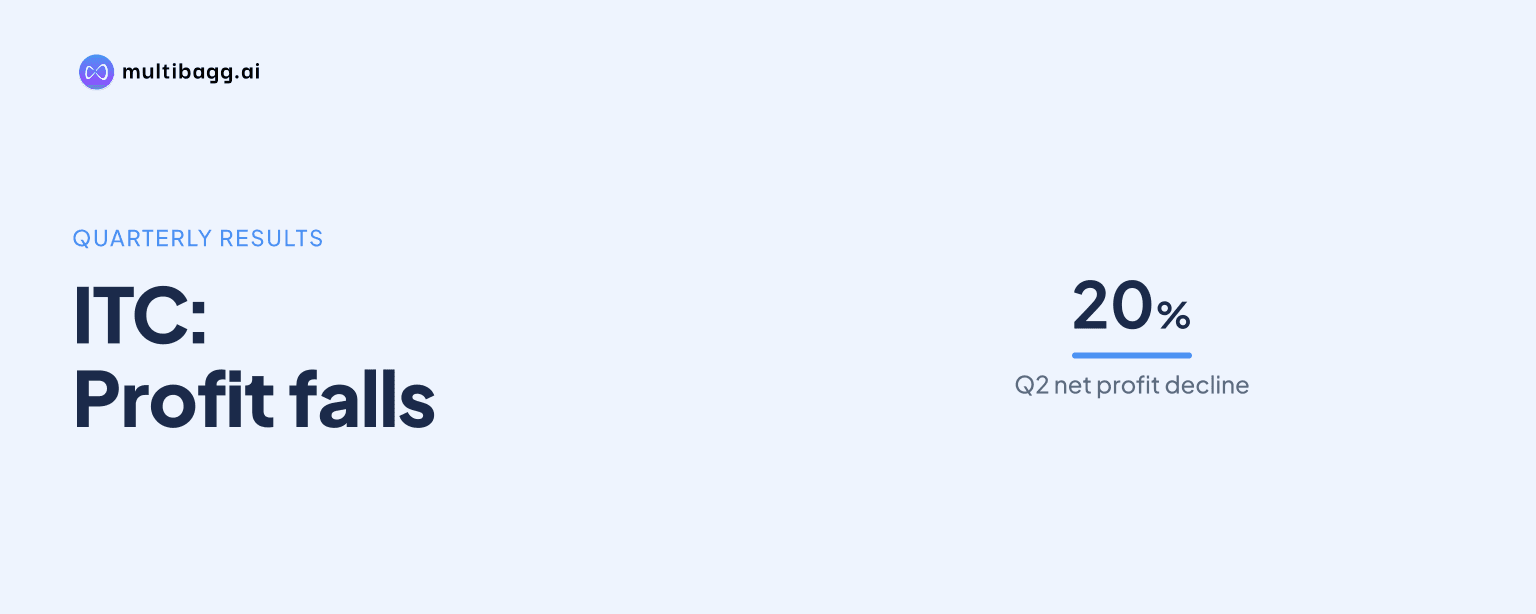
ITC Limited reported Q2 net profit of ₹4,137 crore, down 20%, while revenue increased 44% and the company moved to amalgamate its wholly owned Yoga Bar parent Sproutlife Foods Private Limited. The results matter because cigarette earnings declined even as other FMCG operations grew and the company simplified its health-food business structure.
Know ITC inside out
Results, valuation, peers and who's buying, in one view.
What did ITC report in its Q2 results?
ITC reported net profit of ₹4,137 crore for the quarter, representing a 20% year-on-year decline. Revenue, however, rose 44%, showing a sharp increase in the company’s top line during the period.
The company said cigarette earnings fell, while its other FMCG business grew. The reported performance therefore reflected differing trends across ITC’s businesses, with growth in non-cigarette consumer categories occurring alongside a decline in cigarette segment earnings.
ITC also stated that its other FMCG segment included Sproutlife Foods from April 1, 2026. As a result, the company said the segment’s figures are not comparable with earlier periods. This disclosure is important when assessing growth in the FMCG business because the consolidation changes the reporting base.
The available information does not provide a quarterly revenue amount, cigarette earnings amount, or separate other FMCG segment profit. The disclosed figures establish the direction of performance: revenue growth was positive, while reported profit and cigarette earnings declined.
Why are ITC's FMCG figures not directly comparable?
ITC’s other FMCG figures are not directly comparable because Sproutlife was included in the segment from April 1, 2026. Sproutlife owns and operates the digital-first health-food brand Yoga Bar and sells products including bars, muesli, oats, protein-rich foods and peanut butter.
The company acquired the right to nominate a majority of Sproutlife’s board directors from April 1, 2026. ITC said this made Sproutlife its subsidiary under the Companies Act, even though its holding then stood at 47.5% on a fully diluted basis.
Sproutlife’s inclusion adds a business that was not part of the earlier comparative period. Investors reviewing ITC’s FMCG growth will therefore need to distinguish between underlying performance in existing operations and growth resulting from consolidation of the acquired company.
The acquisition was part of ITC’s stated strategy to build a future-ready foods portfolio. Yoga Bar gives ITC an established presence in health-oriented snacking and protein-rich food categories, which sit within its broader packaged-food operations.
What has ITC approved for Sproutlife Foods?
ITC’s board approved the proposed amalgamation of wholly owned subsidiary Sproutlife with ITC on November 2, 2026. The scheme is proposed to take effect from April 1, 2026, subject to the required regulatory and other approvals.
ITC said the merger is intended to unlock synergies and simplify the corporate structure by reducing the number of operating entities. Once effective, Sproutlife’s operations would be integrated into ITC rather than being run through a separate wholly owned subsidiary.
No new ITC shares will be issued under the scheme because Sproutlife is already wholly owned. All Sproutlife equity shares held by ITC and its nominees will be cancelled and extinguished when the amalgamation becomes effective.
ITC also said there would be no change in its shareholding pattern. The transaction is a related-party transaction, but the company stated it would be conducted at arm’s length.
Got a follow-up? Ask IRIS
How did ITC gain full ownership of Sproutlife?
ITC completed the acquisition of Sproutlife on September 28, 2026, after a multi-year process that began with a binding term sheet signed in January 2023. The original plan envisaged ITC acquiring 100% of the company over three to four years.
In May 2023, ITC acquired 39.42% of Sproutlife on a fully diluted basis for ₹175 crore through primary subscription and secondary purchases. The original arrangement also provided for a further infusion of up to ₹80 crore through primary subscription in one or more tranches by March 2025, subject to agreed terms.
As of March 31, 2026, ITC held 47.5% of Sproutlife on a fully diluted basis, with cumulative investment of ₹255 crore. Sproutlife reported revenue of ₹68 crore for the financial year ended March 31, 2022.
On September 28, ITC bought the remaining 52.5% stake, or 13,445 equity shares of ₹10 each, through a secondary cash purchase for about ₹645 crore. This took ITC’s holding to 100%, and Sproutlife became a wholly owned subsidiary with effect from that date.
What do the results and merger mean for investors?
The Q2 update presents two separate considerations for investors: a 20% decline in reported net profit to ₹4,137 crore and a 44% increase in revenue. The fall in cigarette earnings is relevant because the segment remains an important contributor to ITC’s financial performance, while the article does not provide the segment’s quarterly profit or revenue figures.
The other FMCG business recorded growth, but the addition of Sproutlife from April 1 means the reported segment data cannot be read as a like-for-like comparison with earlier periods. ITC has explicitly flagged this limitation, which is relevant for assessing the pace of organic growth in its consumer-products portfolio.
The full acquisition and proposed merger bring Yoga Bar directly into ITC’s operating structure. This can simplify legal entities and internal management, while preserving ITC’s existing shareholding structure because no shares are being issued for the amalgamation.
For the wider FMCG sector, the transaction reflects continued interest in food categories such as nutrition-oriented snacks, oats, muesli and protein-rich products. The disclosed facts do not establish the financial impact of the merger on future earnings, but they confirm ITC’s ownership and integration of the business.
Conclusion
ITC’s Q2 results showed a mixed operating picture, with revenue up 44% but net profit down 20% to ₹4,137 crore amid lower cigarette earnings. At the same time, the company has completed ownership of Sproutlife and approved its proposed absorption into ITC, strengthening the place of Yoga Bar within its foods portfolio.
The next development to watch is completion of the amalgamation, which remains subject to necessary approvals despite its proposed April 1, 2026 effective date. Investors will also watch future disclosures for comparable FMCG performance after the inclusion of Sproutlife and for any further detail on cigarette earnings and segment profitability.