










LGT plans 51% partnership for leisure travel platform
Key highlights
- LGT plans to invest for a 51% stake in a collaboration-based online travel platform structure.
- Management said holidays will be the planned platform’s major strength, alongside airlines, hotels and holiday packages.
- LGT had more than Rs 50 crore of confirmed bookings in November, with five months remaining in the financial year.
- LGT expanded its office network from 9 to 14 locations and plans further offices, including Lucknow.
powered by IRIS
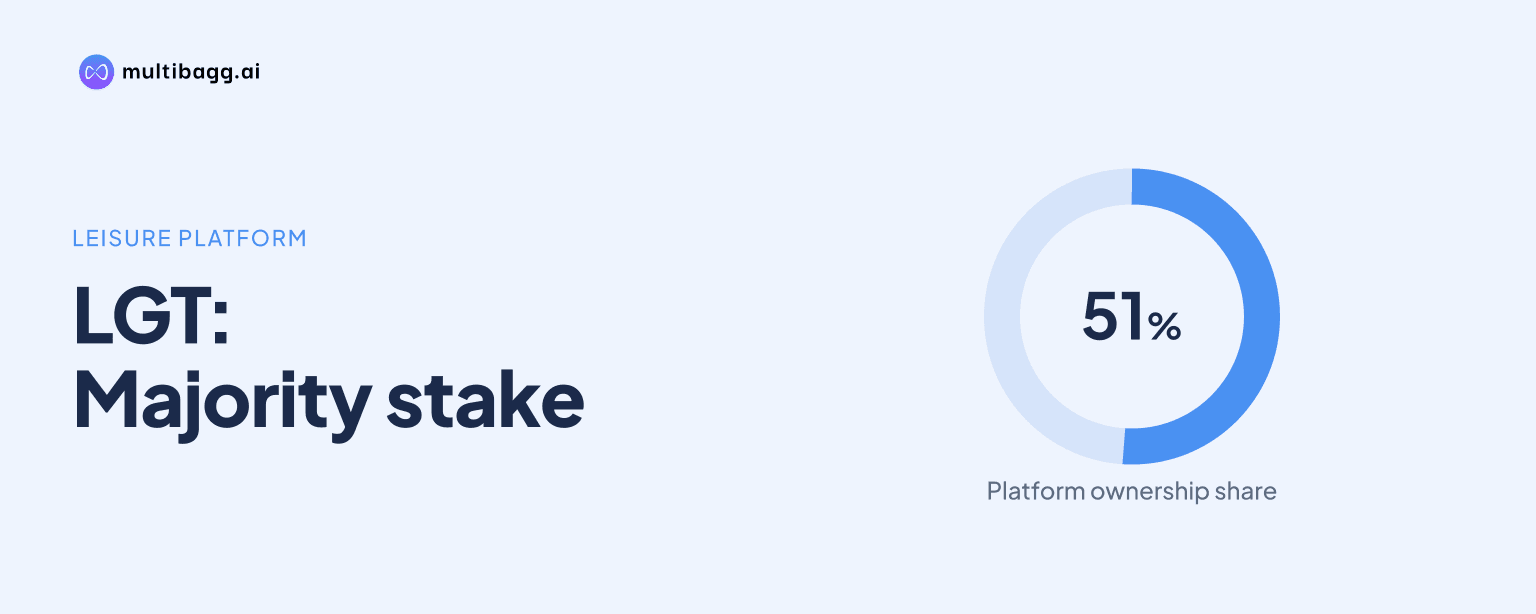
LGT Global Hospitality Ltd (LGT) plans a leisure-led online travel platform through an investment for a 51% stake in an existing-partner structure, with management saying the ready product and collaboration model are intended to avoid capital drain beyond capex already allocated from proceeds. The company did not disclose an investment amount or launch date.
Know LGT Global Hospitality inside out
Results, valuation, peers and who's buying, in one view.
What is LGT's online travel platform plan?
LGT’s plan is to create a leisure-focused online travel platform rather than simply automate its existing corporate travel operations. Management said the company had changed its corporate name to LGT Global Hospitality Ltd to reflect an ambition to expand into global markets, which it said could not be achieved through its current offline model alone.
The proposed platform would make holidays its principal offering, alongside holiday packages, airlines, hotels and other travel services. Management said the intended differentiators are quick responses and accountability for users, citing the difficulty customers can face in contacting some online travel providers. These are product objectives stated by management, not operating metrics from a launched platform.
LGT described the proposed offering as leisure-driven rather than centred on individual ticketing or hotel transactions. Management said there were few niche players in this segment and identified holidays as a major strength. However, it provided no launch timing, booking target, revenue forecast, customer-acquisition budget or platform-level profitability guidance.
How will LGT's 51% partnership use capital?
LGT said the platform would operate on a light working-capital model through collaboration with an existing player. Management said the product was ready and described the transaction as a re-merger of an unnamed X company with an unnamed Y entity, with LGT investing for a 51% stake. The transcript does not identify either party or state the value of the proposed investment.
Management said the collaboration is designed to reduce the time and expenditure of constructing a platform from scratch. It described the existing player as a backup arrangement under the LGT brand, intended to unify the offering while avoiding a separate spend on building and framing the digital product. Management did not quantify potential working-capital savings or capital-expenditure reductions.
LGT said it was applying the investment approach used for Traflix and Holiday One to the proposed expansion. Management said capital allocation already made for capital expenditure, or capex, from proceeds had been retained and was not being exceeded “as of today.” It also said the funding position could change as the business expands, leaving the eventual capital requirement unresolved.
Got a follow-up? Ask IRIS
Which markets and customers will LGT target?
LGT said the product would be available internationally in the US, Dubai, the Middle East, Australia, New Zealand and other markets, serving as an outbound travel offering. Management positioned this geographic ambition as part of the move from an offline corporate travel base to a globally available leisure product, but gave no rollout sequence by country or expected booking volumes.
The target customer proposition differs from LGT’s current corporate-led activity. During discussion of 35% half-on-half revenue growth, management identified corporate accommodation software, meetings, incentives, conferences and exhibitions, or MICE, and leisure as growth areas. It also said infrastructure, pharmaceutical and information-technology customers had balanced growth in the latest half-yearly results, while the digital product is intended to centre on leisure packages.
LGT’s physical expansion from 9 to 14 offices is a separate route to customer acquisition. Management said tier-2 locations are intended to reach niche travellers and free independent traveller, or FIT, business, naming Pune, Coimbatore and Nagercoil. It said the Nagercoil office covers Trivandrum through Madurai and that offices in Lucknow and other locations are planned.
How does LGT's platform fit its existing businesses?
LGT presented the platform as an additional route to global leisure customers, not as a disclosed replacement for corporate, MICE or accommodation operations. Management said pharmaceutical and cement companies were performing well and had produced new clients, while infrastructure, pharmaceutical and information-technology segments supported the latest half-yearly growth. The platform therefore represents a proposed shift in customer proposition and distribution, rather than a reported change in segment revenue.
LGT’s newer travel investments remain at an early stage. Management said the revenue contribution and profitability of Traflix Stores, Holiday One and Yatra Travel Solutions were minimal because the acquisitions were in their first year of operation. It identified Traflix as the largest of the three and said it was on track to reach break-even and become profitable during the year, without providing revenue or profit figures.
LGT also cited more than Rs 50 crore of confirmed bookings in November, with five months remaining in the financial year, but declined to give FY25 revenue or profitability guidance. Management said it expected geopolitical conditions to stabilise, oil prices and operating costs to decline, and pent-up corporate demand to emerge. It expected second-half volume, revenue and operating margin to be better than the first half, but those comments did not establish financial guidance for the planned platform.
Conclusion
LGT’s proposed platform would extend its offering from an offline corporate base toward globally distributed leisure packages, airlines and hotels. Its central financial mechanism is the intended 51% stake in a collaboration-based structure that management says can limit platform-building costs and working-capital use. The company has disclosed the model and prospective markets, but not the counterparties, investment value, launch date, booking outlook or expected profitability.
The next disclosures to watch are LGT’s formal platform announcement, the identity and terms of the re-merger counterparties, and whether spending remains within capex proceeds already allocated. Management also plans more offices, including in Lucknow, and expects Traflix to reach break-even during its first year of operation.