










NPST LOI targets 300 banks, revenue within nine months
Key highlights
- NPST said its bank-in-a-box LOI covers more than 300 banks and has a five-year direct-business term.
- Management expects direct revenue contribution from the LOI to begin within nine months.
- NPST described the immediate opportunity as a 10-digit amount but did not disclose its value or currency.
- Management expects the channel's additional opportunity to develop over 18 to 24 months.
powered by IRIS
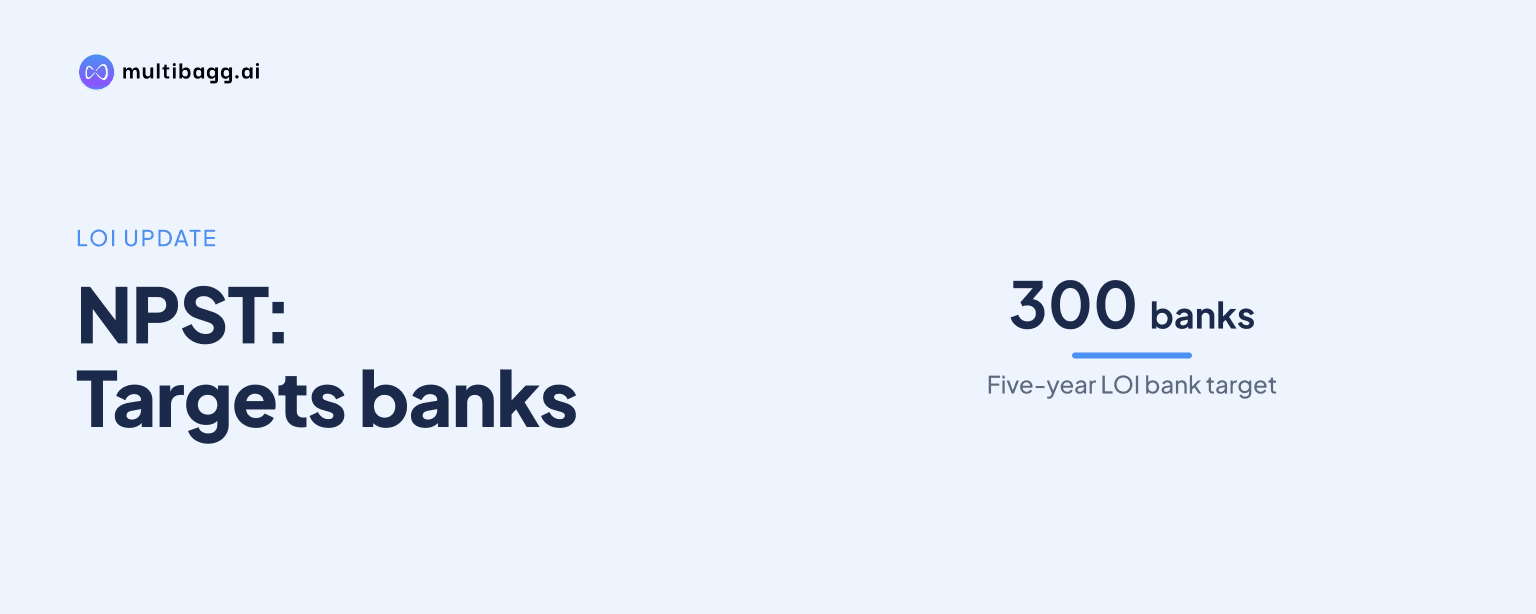
Network People Services Technologies Limited said its five-year bank-in-a-box letter of intent, or LOI, covering more than 300 banks should start direct revenue contribution within nine months. NPST described the immediate opportunity as a 10-digit amount, without disclosing its value, currency, counterparty, annual revenue or implementation schedule.
Know Network People Services Technologies inside out
Results, valuation, peers and who's buying, in one view.
What does NPST's bank-in-a-box LOI cover?
NPST said the LOI covers a five-year direct bank-in-a-box business opportunity spanning more than 300 banks. Management called the direct opportunity a 10-digit amount but did not disclose the contract value or say how much revenue will be recognised in any year of the five-year term.
The product has been developed for about one and a half years, management said. NPST launched bank-in-a-box around February of the prior year with payment products, added digital banking later, and is now incorporating compliance products, expanding the offering beyond a standalone payments solution.
NPST also said HSM orders support the package. Management described HSM as a core part of its Unified Payments Interface, or UPI, solution and said it is required for UPI licences as well as bank-in-a-box deployments, allowing NPST to include more of the project requirement in its offerings.
When will NPST receive revenue from the LOI?
NPST expects direct revenue contribution from the five-year LOI to begin within nine months. Management made this distinction after an investor asked whether revenue would only emerge after the 18-to-24-month period needed to establish presence across the more than 300-bank segment.
The 18-to-24-month timeline instead concerns the additional sales opportunity that management expects to develop after implementation. NPST said visibility in the banking market could give its future products more immediate access to customers, but this is management's projection rather than a disclosed commitment by banks to purchase further products.
NPST said the direct business amount is capped and will be disclosed at the appropriate time. The 10-digit description therefore does not establish annual revenue, revenue per bank, the number of installations, or the proportion of the more than 300 banks expected to be operational by the ninth month.
How could the LOI widen NPST's distribution?
NPST said a presence across more than 300 banks could reduce the need to market separately to each institution. Management estimated the cooperative-bank universe at around 1,200-plus banks in one calculation, while also referring to an overall universe of about 1,800 banks.
The LOI does not cover the entire 1,200-plus or 1,800-bank universe discussed by management. Rather, NPST's plan is to use the initial five-year deployment to introduce future products, with the eventual outcome depending on product launches, bank adoption and the number of institutions reached.
Management illustrated the mechanism with a hypothetical example of selling one product to 500 banks, or even 100 banks, for a monthly ticket size over several years. It did not give a ticket size, adoption rate or pricing for that example, so it should not be read as revenue guidance.
NPST contrasted this domestic distribution opportunity with international work, where management said three or four contracts can matter because ticket sizes are larger than in domestic deals. It said it had five to 15 international opportunities across discussions, proposals and requests for proposal, or RFPs, with some outcomes expected in the third and fourth quarters and larger results in financial year 2028.
Got a follow-up? Ask IRIS
Which products can NPST add to bank-in-a-box?
NPST said bank-in-a-box started with payment products, then added digital banking, and is now being extended with compliance solutions. Management termed the added layer compliance-in-a-box and said products not previously hosted on its data centre or available through subscriptions will be incorporated into the existing framework.
Management said this compliance focus responds to DPDP requirements, fraud concerns and money-mule issues. NPST expects bank-in-a-box and the compliance offering to start producing results in the next one year, although it also said further research, development and product investment are needed to address banks' requirements.
UPI-related products remain part of NPST's broader banking offering. The company said it is live with a credit-on-UPI solution for participants eligible under the applicable credit-line policy, but adoption has not yet created the revenue model management expected when it began projections in the previous year.
This creates a contrast between two offerings. NPST said credit on UPI is technically ready but awaits bank adoption, while bank-in-a-box has a five-year term and a stated revenue start within nine months, giving the latter clearer disclosed commercial timing.
What remains uncertain about NPST's financial gain?
NPST has not disclosed the five-year deal value, revenue-recognition pattern, scope per bank or expected annual contribution. Without those details, the 10-digit description cannot be converted into revenue per bank, annual sales, or a share of NPST's total revenue.
Follow-on sales after the 18-to-24-month presence-building period are also uncertain. Management described 18 months as a conservative estimate for additional opportunity, but gave no target for product conversion, number of subscribing banks or recurring revenue beyond the initial five-year direct business.
Execution will occur alongside investment in customers across multiple geographies. Management said earnings before interest, tax, depreciation and amortisation, or EBITDA, margin was around 24% currently, with a target of around 25% for the year and a possible 27% to 28% target in the following year.
NPST also targeted about 40% productivity improvement in deliveries by March through artificial-intelligence work. Management said the aim is productivity rather than operating-cost reduction, because faster development may also reduce what clients are willing to pay for delivery work.
Conclusion
The five-year LOI gives NPST a defined route to direct revenue within nine months and a potential presence across more than 300 banks. Its larger significance depends on whether the initial bank-in-a-box deployment creates a distribution channel for payment, digital-banking, security and compliance products.
Investors should watch for NPST's eventual disclosure of the capped direct-business value, evidence of revenue beginning within nine months, and progress towards the 18-to-24-month market-presence objective. Management also plans to add compliance products and targets about 40% delivery-productivity improvement by March, both of which could affect the products offered through this channel.