










National Stock Exchange of India Q2 PAT rises 23% to ₹2,578 crore
Key highlights
- National Stock Exchange of India reported Q2 FY27 consolidated PAT of ₹2,578 crore.
- National Stock Exchange of India's Q2 FY27 PAT rose 23% from ₹2,098 crore in Q2 FY26.
- National Stock Exchange of India's quarterly PAT increased by ₹480 crore year-on-year.
- The Q2 FY27 result was reported on November 3, 2026.
powered by IRIS
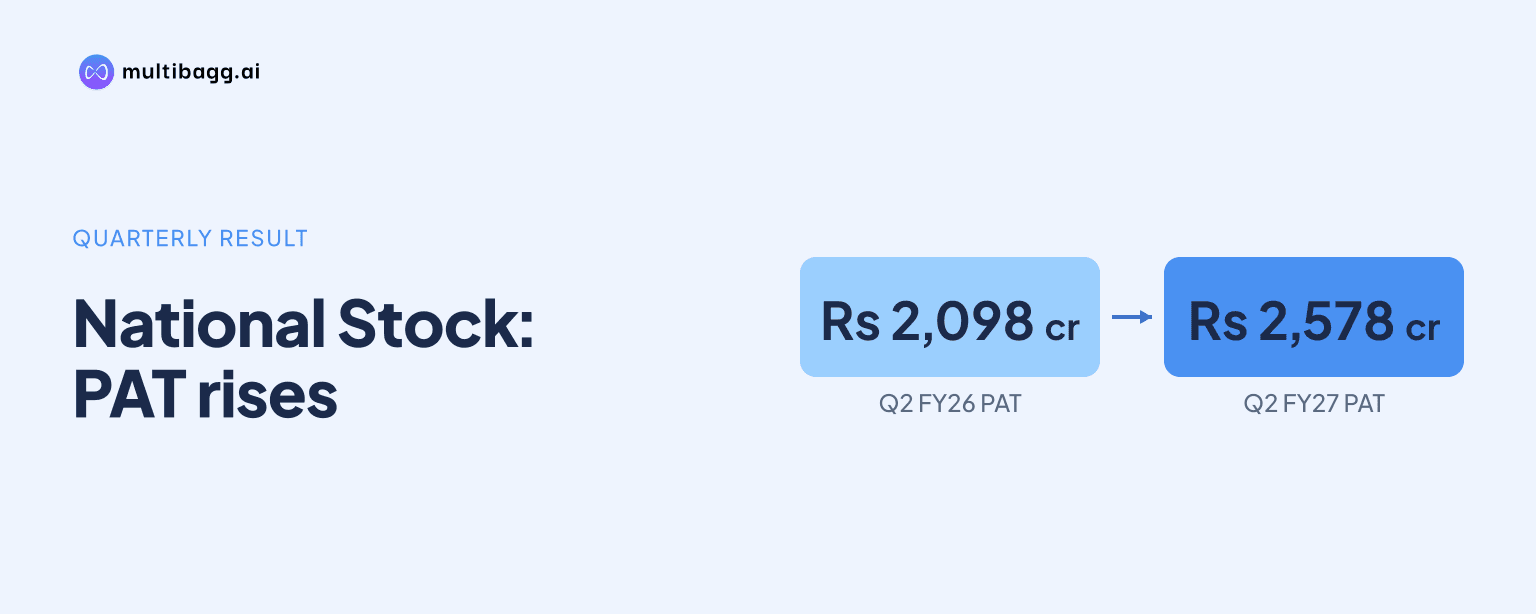
National Stock Exchange of India reported consolidated profit after tax of ₹2,578 crore for Q2 FY27, a 23% year-on-year increase from ₹2,098 crore in Q2 FY26. The result puts the exchange's quarterly earnings growth in focus as cash-market activity, revenue and co-location capacity featured in the reported update.
Know S & T Corporation inside out
Results, valuation, peers and who's buying, in one view.
What did National Stock Exchange of India report for Q2 FY27?
National Stock Exchange of India reported consolidated profit after tax, or PAT, of ₹2,578 crore for the July-September quarter of FY27. This was ₹480 crore higher than the ₹2,098 crore reported in the corresponding quarter of FY26, translating into year-on-year growth of 23%.
The disclosure places National Stock Exchange of India among the notable Q2 FY27 corporate results announced in early November 2026. The reported profit figure is consolidated, meaning it reflects the results of the exchange and its consolidated entities rather than a standalone quarterly number.
The comparison is specifically between Q2 FY27 and Q2 FY26. It should therefore be read as an annual comparison for the same quarter, rather than as a comparison with the immediately preceding quarter.
What supported National Stock Exchange of India's quarterly profit growth?
The reported update linked National Stock Exchange of India's profit growth to cash-market growth, higher revenue and expanding co-location capacity. These were the operating factors identified alongside the 23% increase in consolidated PAT.
Cash-market activity is relevant to an exchange because it is part of its core trading ecosystem. The update did not provide separate cash-market volumes, segment revenue, expense figures or margin details. As a result, the available information supports the reported drivers but does not allow a quantified assessment of each driver's contribution to profit.
Co-location capacity was also cited as an element of the quarterly performance. Co-location services allow eligible market participants to place trading infrastructure close to exchange systems. National Stock Exchange of India did not disclose a capacity figure, utilisation level or related revenue in the material provided.
How does the Q2 FY27 result compare with the previous year?
National Stock Exchange of India's Q2 FY27 consolidated PAT was 23% above the year-earlier level, rising to ₹2,578 crore from ₹2,098 crore. The increase of ₹480 crore is the key reported change in the quarterly comparison.
The result was reported on November 3, 2026, during the broader Q2 FY27 earnings season. Several other large Indian companies were also releasing July-September financial results around this period, making quarterly earnings a central focus for market participants.
No share-price movement, valuation data, dividend decision, revenue amount or operating-expense number for National Stock Exchange of India was included in the supplied information. Those items cannot be inferred from the PAT comparison alone.
Got a follow-up? Ask IRIS
Why do cash-market growth and co-location capacity matter for National Stock Exchange of India?
Cash-market growth and co-location capacity matter because they relate to the exchange's trading and market-infrastructure operations. The Q2 update identified both alongside higher revenue, connecting them to the period in which consolidated PAT rose 23%.
An exchange's financial performance can be influenced by market participation and the range of services used by trading members and other participants. In this case, the source specifically identifies cash-market growth, revenue and co-location expansion, while providing no detailed breakdown of how these factors affected individual business lines.
For investors and market participants, the result offers a confirmed measure of quarterly profitability rather than a complete operating scorecard. The ₹2,578 crore PAT provides the strongest disclosed indicator, while the lack of segment-level figures limits further conclusions about the pace of growth in individual services.
What is the market relevance of the Q2 FY27 earnings update?
The Q2 FY27 earnings update is relevant because National Stock Exchange of India is a key part of India's market infrastructure and reported a material increase in consolidated quarterly profit. A 23% year-on-year increase in PAT indicates that the exchange generated higher earnings than it did in the same period last year.
The result also adds to the broader earnings-season picture for Indian markets. However, the supplied update does not disclose trading volumes, market-share data, transaction-fee trends, capital expenditure, regulatory developments or management guidance. Those details would be required to assess changes beyond the reported profit and the stated operating drivers.
The disclosed information does not establish how the result affected investors, customers or trading members after the announcement. It does confirm that the exchange cited operating growth in the cash market, higher revenue and co-location expansion during the quarter.
Conclusion
National Stock Exchange of India delivered a Q2 FY27 consolidated PAT of ₹2,578 crore, up 23% from ₹2,098 crore a year earlier. The reported performance was associated with cash-market growth, higher revenue and expanding co-location capacity, although the available disclosure does not quantify the contribution from each factor.
The next points to watch are any subsequent disclosures on cash-market activity, revenue composition and co-location capacity. Investors will also need future financial updates for comparable profit trends, as no guidance, segment figures or specific operating targets were included in the supplied material.