










Patanjali Foods Limited Q2 FY27 Results Due After Q1 Growth
Key highlights
- Patanjali Foods will approve Q2 FY27 results on 14 November 2026.
- Q1 FY27 revenue from operations rose 27.4% year-on-year to ₹11,337.45 crore.
- Q1 FY27 consolidated net profit increased 86.2% year-on-year to ₹335.73 crore.
- Patanjali Foods closed at ₹421, with market capitalisation of ₹45,809.37 crore.
powered by IRIS
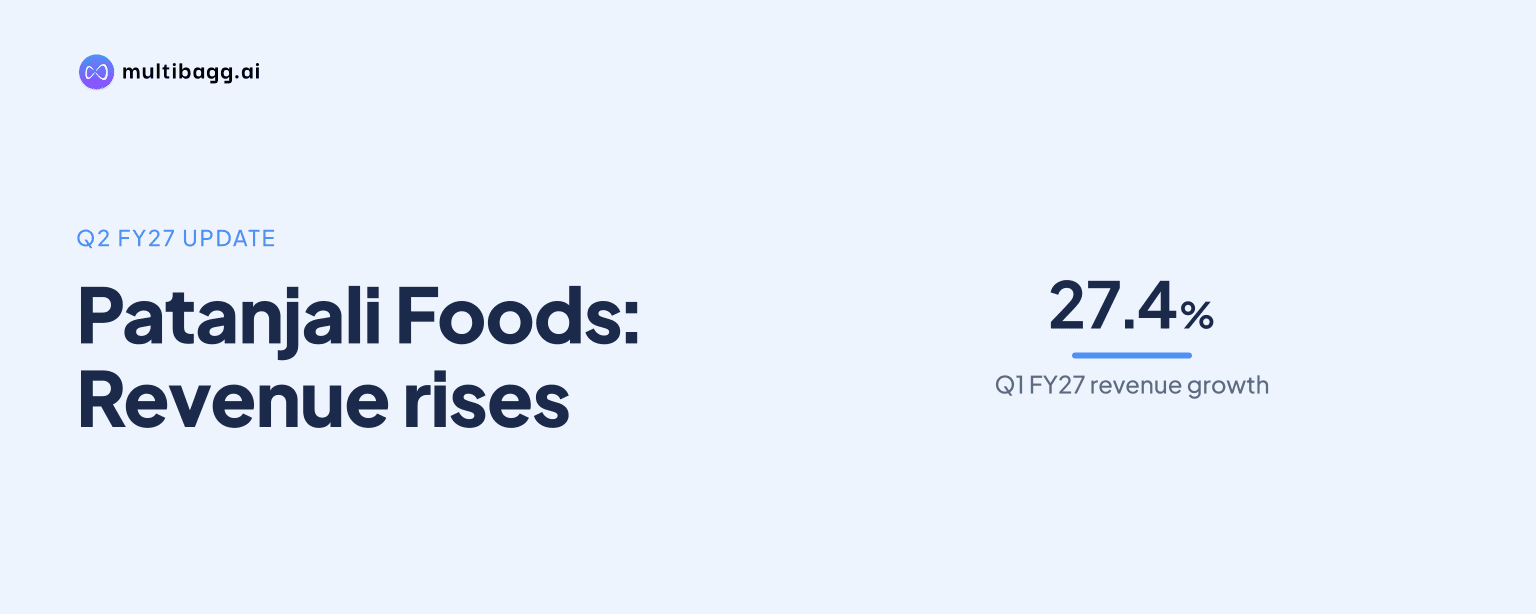
Patanjali Foods Limited is scheduled to approve its Q2 FY27 results on 14 November 2026 after reporting 27.4% year-on-year revenue growth and 86.2% net profit growth in Q1 FY27. The board will consider unaudited standalone and consolidated financial results for the quarter and half year ended 30 September 2026.
Know Patanjali Foods inside out
Results, valuation, peers and who's buying, in one view.
When will Patanjali Foods announce Q2 FY27 results?
Patanjali Foods will consider and approve its Q2 FY27 financial results at its board meeting on Saturday, 14 November 2026. The company informed the National Stock Exchange on 11 November that the meeting would cover unaudited standalone and consolidated results for the July-September quarter and the first half of FY27.
The board is also expected to take on record the limited review report from the statutory auditors. The results had not been filed at the time of the announcement, so the reported numbers for the September quarter, including revenue, operating profitability and net profit, were not yet available.
Patanjali Foods has scheduled an earnings call at 3:00 PM IST on 14 November to discuss its Q2 and H1 FY27 operational and financial performance. The company has stated that the call will not include price-sensitive or forward-looking statements.
What did Patanjali Foods report in Q1 FY27?
Patanjali Foods reported consolidated revenue from operations of ₹11,337.45 crore in Q1 FY27, compared with ₹8,899.71 crore in Q1 FY26. Total income was ₹11,341.89 crore, while net profit was ₹335.73 crore for the quarter ended June 2026.
The company’s Q1 net profit rose from ₹180.36 crore in the corresponding quarter of the previous financial year. However, profit was lower than the ₹523.98 crore reported in Q4 FY26, reflecting a sequential decline from the March 2026 quarter. The reported earnings per share for Q1 FY27 was ₹3.09, compared with ₹4.82 in Q4 FY26 and ₹4.98 in Q1 FY26.
The available comparative data shows steady revenue expansion over recent quarters. Revenue from operations rose from ₹9,798.84 crore in Q2 FY26 to ₹10,483.71 crore in Q3 FY26, ₹11,155.60 crore in Q4 FY26 and ₹11,337.45 crore in Q1 FY27.
What will investors compare in the September quarter?
Investors will compare the Q2 FY27 numbers with Q2 FY26, when Patanjali Foods reported consolidated total income of ₹9,850.07 crore and net profit of ₹516.70 crore. They will also assess the quarter-on-quarter movement from Q1 FY27, which recorded total income of ₹11,341.89 crore and net profit of ₹335.73 crore.
The Q2 release will provide the first reported financial update for the company after the June quarter. Key items to monitor include revenue from operations, operating profit, margins and net profit, along with the auditor’s limited review report that accompanies the unaudited results.
The corporate actions listing notes that Patanjali Foods had a ₹1.75 interim dividend associated with results in the previous year. No dividend proposal for Q2 FY27 was stated in the board-meeting announcement provided, and any such decision would require a formal company disclosure.
Got a follow-up? Ask IRIS
How has the Patanjali Foods share performed before results?
Patanjali Foods shares closed at ₹421 per equity share on Friday, ahead of the scheduled board meeting. The company’s market capitalisation was ₹45,809.37 crore, placing the result announcement among the notable updates expected from companies reporting September-quarter earnings on 14 November.
The immediate market focus will be on actual financial figures released after the board meeting rather than on estimates, since the company had not filed Q2 FY27 results at the time of the notice. The trading window will remain closed until 48 hours after the results declaration, in line with applicable Securities and Exchange Board of India regulations.
For shareholders, the distinction between annual growth and sequential performance remains relevant. Q1 FY27 showed strong year-on-year gains in revenue and profit, but net profit was below the March-quarter level. The September-quarter filing will provide the next official basis for assessing those trends.
Why do the Q2 FY27 results matter for Patanjali Foods?
The Q2 FY27 release matters because it will show whether the company’s revenue growth continued after Q1 FY27. In the June quarter, revenue from operations was 27.4% higher year-on-year, while net profit increased 86.2% from the low base of Q1 FY26.
The results will also cover the six months ended 30 September 2026, allowing investors to review first-half performance alongside the individual September-quarter numbers. Since the company has announced both standalone and consolidated results, market participants will be able to compare the two reported sets of financial statements once they are published.
Patanjali Foods is one of more than 500 companies scheduled to declare earnings for the quarter ended September 2026 on 14 November. Other companies on the list include Ashok Leyland, PTC Industries, Kaynes Technology, Sammaan Capital, Shreeji Shipping Global and Genus Power Infrastructures.
Conclusion
Patanjali Foods enters its Q2 FY27 result date after a June quarter in which revenue from operations reached ₹11,337.45 crore and net profit was ₹335.73 crore. The September-quarter announcement will establish how the company performed against Q2 FY26, when total income was ₹9,850.07 crore and net profit was ₹516.70 crore.
Investors should watch for the board-approved unaudited standalone and consolidated results, the statutory auditors’ limited review report and management commentary during the 3:00 PM IST earnings call on 14 November 2026. Any dividend-related decision, if made, would need to be disclosed separately by the company.