










Rasi Electrodes Q1 FY27 Profit Rises 6% Despite Revenue Decline
Key highlights
- Rasi Electrodes reported Q1 FY27 profit after tax of ₹1.33 crore, up 6% year-on-year.
- Revenue from operations fell 9% year-on-year to ₹17.64 crore in Q1 FY27.
- Q1 FY27 EBIT margin rose to 9.55% from 5.95% in Q4 FY26.
- FY26 revenue from operations declined 11.6% to ₹72.02 crore, while net profit rose 28.4% to ₹3.52 crore.
powered by IRIS
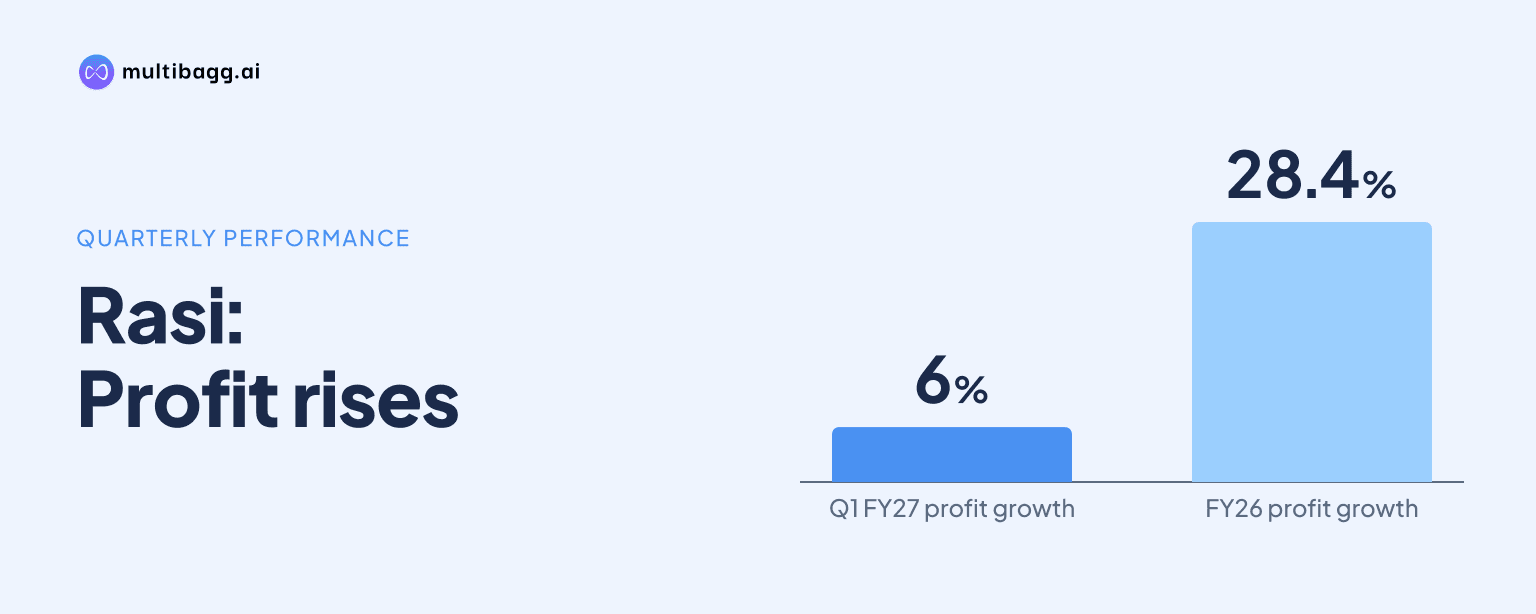
Rasi Electrodes Limited reported a 6% year-on-year increase in net profit to ₹1.33 crore in Q1 FY27, even as revenue from operations fell 9% to ₹17.64 crore for the quarter ended June 30, 2026. The result highlights improved profitability despite lower sales in the welding consumables business.
Know Rasi Electrodes inside out
Results, valuation, peers and who's buying, in one view.
What did Rasi Electrodes report for Q1 FY27?
Rasi Electrodes reported profit after tax of ₹1.33 crore for Q1 FY27, compared with ₹1.26 crore in the corresponding quarter of the previous financial year. Revenue from operations declined to ₹17.64 crore from ₹19.42 crore a year earlier, according to the reported quarterly result.
The company's total income was ₹17.94 crore in the June 2026 quarter, compared with ₹19.34 crore in the March 2026 quarter and ₹19.80 crore in the June 2025 quarter. On a sequential basis, total income declined 5.01% from the March quarter. The quarterly revenue trend indicates that sales growth remains under pressure.
However, operating performance improved from the immediately preceding quarter. EBIT rose to ₹1.71 crore in June 2026 from ₹1.15 crore in March 2026. EBIT margin increased to 9.55% from 5.95% over the same period, while net profit margin improved to 7.44% from 3.91%.
The company reported basic earnings per share of ₹0.43 for the June quarter, compared with ₹0.40 in the June 2025 quarter. The disclosed results attributed the improvement in profit margin to lower expenses, although the available information does not provide a detailed cost break-up.
How did Rasi Electrodes improve profit despite lower revenue?
Rasi Electrodes improved quarterly profit because its margins expanded even as revenue declined. EBIT grew 48.70% sequentially to ₹1.71 crore, and profit after tax rose 76.59% from ₹0.76 crore in the March 2026 quarter to ₹1.33 crore in June 2026.
The movement in margins is notable because the company faced lower turnover. EBIT margin rose by 360 basis points quarter-on-quarter to 9.55%, while net profit margin increased by 353 basis points to 7.44%. These changes explain why profit rose despite lower revenue from operations on a year-on-year basis.
Rasi Electrodes manufactures and markets welding electrodes and consumables under the RASI brand in India. For a manufacturer of industrial consumables, revenue is influenced by demand from fabrication, construction, engineering and related industrial activity. The quarterly data provided does not identify the volume, pricing or customer-level reasons for the sales decline.
The June quarter result therefore presents two separate trends. Sales remained below the previous year's level, but expense control and stronger margins supported earnings. Whether the margin improvement can be sustained cannot be determined from the reported numbers alone.
Got a follow-up? Ask IRIS
What does the recent financial trend show?
Rasi Electrodes' recent financial trend shows a decline in revenue alongside uneven operating margins. Revenue reported in the quarterly results was ₹22 crore in September 2023 and ₹18 crore in June 2026, with several intervening quarters below ₹20 crore.
Year-on-year revenue growth has remained negative in recent quarters. The reported growth rate was negative 8.6% in June 2025, negative 18.7% in September 2025, negative 10.8% in December 2025, negative 8.3% in March 2026 and negative 9.2% in June 2026. This establishes that the latest quarterly decline follows a broader period of lower sales rather than a single-quarter reversal.
For FY26, Rasi Electrodes reported revenue from operations of ₹72.02 crore, down 11.6% from ₹81.44 crore in FY25. Yet annual net profit increased 28.4% to ₹3.52 crore. The company also declared a final dividend of ₹0.20 per share for FY26.
What are the implications for investors and operations?
Rasi Electrodes' Q1 FY27 numbers show that improved margins partly offset the effect of weaker revenue. For investors, the central operating issue remains the continued decline in sales, because revenue from operations was lower both year-on-year and sequentially based on the available quarterly information.
The higher EBIT and net profit margins provide evidence of better profitability in the June quarter. But the result does not establish whether the improvement came from recurring operational efficiencies, temporary cost movements or changes in the sales mix. The company has not provided such a detailed explanation in the supplied material.
The board had earlier scheduled a meeting on May 29, 2026 to consider the FY26 audited financial statements and related reports. Separately, it had considered seeking in-principle approval for the sale of landed property and a postal ballot process. The supplied information does not state whether the land-sale proposal was completed or quantify any financial effect from it.
For customers and industry participants, the reported numbers confirm that Rasi Electrodes continues to operate its welding electrode and consumables business under the RASI brand. The reported revenue decline indicates lower business activity in value terms, while the stronger margins indicate that the company generated more profit from each rupee of total income during the June quarter.
Conclusion
Rasi Electrodes delivered a higher Q1 FY27 profit of ₹1.33 crore despite a 9% decline in revenue from operations to ₹17.64 crore. The main support came from a substantial sequential recovery in EBIT and net profit margins, while the wider quarterly and annual data show that revenue has remained under pressure.
The next disclosed event to watch is Rasi Electrodes' Q2 FY27 results, which were scheduled for November 14, 2026. Investors will look for evidence on whether revenue from operations stabilises, whether the June-quarter margin gains continue, and whether the company provides an update on measures to address the sales decline.