










Rathi Steel & Power Ltd Q2 Profit Rises 56.2% to ₹2.5 Crore
Key highlights
- Rathi Steel reported Q2 FY27 revenue of ₹204.3 crore, up 30.7% year on year.
- Q2 FY27 net profit rose 56.2% year on year to ₹2.5 crore.
- H1 FY27 revenue reached ₹397.7 crore, up 27.6% from ₹311.6 crore.
- Q2 FY27 sales volume increased 28.86% to 32,028 metric tonnes.
powered by IRIS
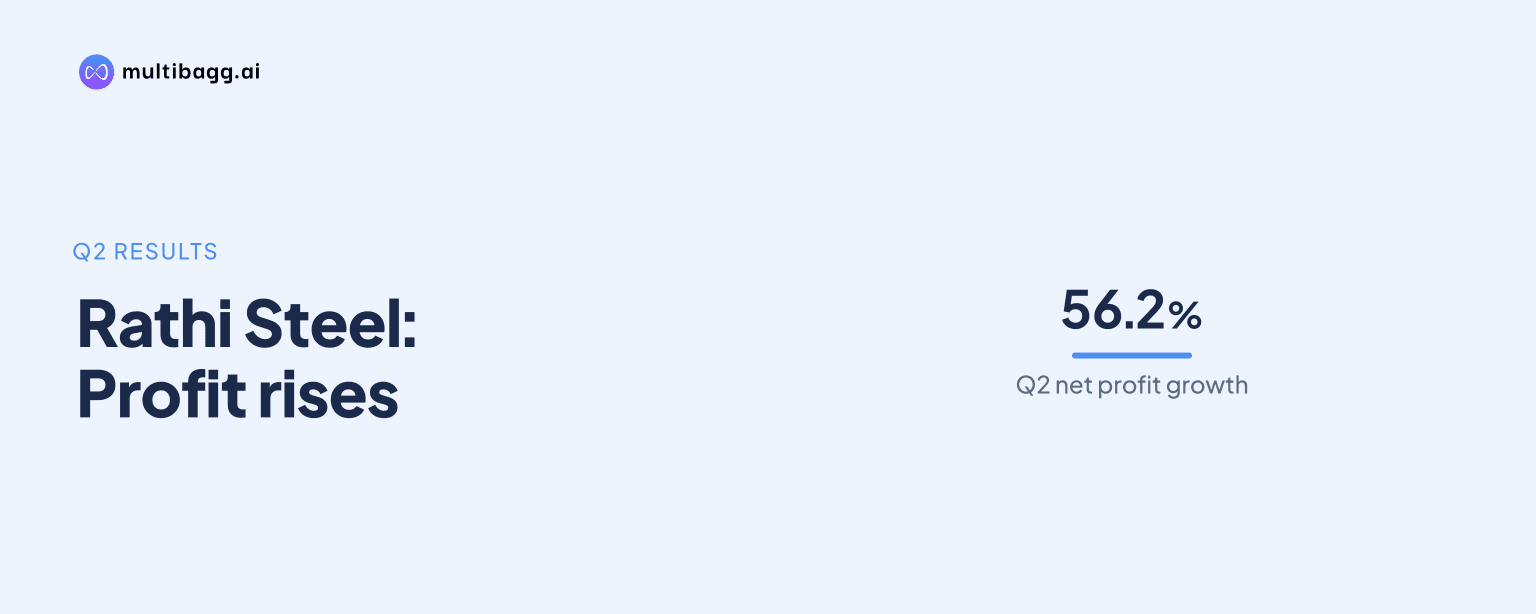
Rathi Steel & Power Ltd reported Q2 FY27 net profit of ₹2.5 crore, up 56.2% year on year from ₹1.6 crore, while revenue from operations increased 30.7% to ₹204.3 crore. The result shows stronger sales volumes and improved profit compared with the corresponding quarter, although profit was lower than the preceding quarter.
Know Rathi Steel & Power inside out
Results, valuation, peers and who's buying, in one view.
What did Rathi Steel report for Q2 FY27?
Rathi Steel reported revenue from operations of ₹204.3 crore for the quarter ended September 30, 2026, compared with ₹156.3 crore in Q2 FY26. Total income stood at ₹204.4 crore, including ₹0.1 crore of other income. Profit before tax and net profit were both ₹2.5 crore, against ₹1.6 crore a year earlier.
The board approved the unaudited standalone financial results for the quarter and half-year ended September 30, 2026, at its meeting on November 14, 2026. The statutory auditors issued an unmodified limited review report, indicating no modification to their conclusion on the interim financial statements.
How did sales volume support quarterly revenue growth?
Rathi Steel recorded sales volume of 32,028 metric tonnes in Q2 FY27, compared with 24,855 metric tonnes in Q2 FY26. This represented a 28.86% increase in volume and was broadly aligned with the 30.7% rise in revenue from operations during the period.
The volume increase was the main disclosed driver of the higher quarterly sales base. Revenue crossed ₹200 crore for the quarter, compared with about ₹156 crore in the year-earlier period. The result indicates that the company sold more steel products during the quarter, while the reported operating margin remained near the level seen a year earlier.
Rathi Steel has stated a target of 55% to 60% rolling mill utilisation in FY27, compared with approximately 51% to 52% in FY26. The target provides context for the higher reported volume, although the company has not disclosed an updated utilisation figure alongside the September-quarter financial results.
Why was profit lower than in the previous quarter?
Rathi Steel's Q2 FY27 net profit of ₹2.5 crore was 28.6% lower than the ₹3.5 crore reported in Q1 FY27, despite revenue rising from ₹193.4 crore in the June quarter to ₹204.3 crore in the September quarter. The profit margin declined to 1.2% from 1.8% in Q1 FY27.
On a year-on-year basis, however, the comparison was favourable. Net profit rose from ₹1.6 crore in Q2 FY26 to ₹2.5 crore in Q2 FY27, while the margin improved from 1.0% to 1.2%. Profit before exceptional items and tax also increased by 60% year on year, from ₹1.6 crore to ₹2.5 crore.
The available results do not provide a detailed explanation for the sequential margin movement. The reported figures show that quarterly sales grew, but profit did not rise at the same pace as revenue compared with Q1 FY27. For investors, this makes the margin trend as important as the sales growth trend in assessing the second-half performance.
Got a follow-up? Ask IRIS
What does the first-half performance show?
Rathi Steel reported H1 FY27 revenue of ₹397.7 crore, up from ₹311.6 crore in H1 FY26, representing growth of 27.6%. H1 net profit increased to ₹6.02 crore from ₹3.51 crore in the corresponding six months of the previous financial year, a rise of about 71%.
The first-half revenue is more than half of the ₹716 crore revenue reported for the year ended March 2026. The company reported profit of ₹13 crore for FY26. The stronger first-half comparison reflects the impact of higher sales and the improvement in profit over the same period last year.
The company has also expanded capital work in progress. CWIP rose to ₹15.18 crore in September 2026 from ₹4.93 crore at March 2026, an increase of ₹10.25 crore in six months. Reported borrowings were approximately ₹61.5 crore at September 2026, comprising ₹27.78 crore of long-term borrowings and ₹33.74 crore of short-term borrowings, compared with ₹45 crore at March 2026.
How do working capital and borrowings affect investors?
Higher borrowings and working-capital requirements are relevant because the company is funding a larger operating base as well as expansion-related work. Trade receivables were ₹63.61 crore and inventories were ₹78.02 crore at September 2026, while trade payables stood at ₹96 crore.
The increase in debt from the March 2026 level coincided with the increase in CWIP and the larger sales base. This does not by itself establish the precise use of every borrowing, but the reported balance-sheet movement shows that growth in operations and capital work required additional funding during the first half.
For shareholders, the key positive is the combination of 27.6% H1 revenue growth and 71% growth in H1 net profit. The key financial items to monitor are whether margins remain stable, whether receivables and inventory are controlled as sales rise, and how borrowing levels move alongside CWIP and operating cash requirements.
Conclusion
Rathi Steel's Q2 FY27 results showed a clear year-on-year improvement, with revenue rising to ₹204.3 crore and net profit increasing to ₹2.5 crore. H1 revenue reached ₹397.7 crore and H1 net profit was ₹6.02 crore, supported by a substantial increase in quarterly sales volume. However, the sequential decline in Q2 profit margin shows that revenue growth has not fully translated into quarter-on-quarter earnings growth.
The next results will show whether the company can sustain higher sales volumes and progress towards its stated FY27 rolling mill utilisation target of 55% to 60%. Investors will also track changes in CWIP, borrowings, receivables, inventories and profit margins as the company funds its expanded operations.