










Rishabh Instruments Q2 FY27 Results Due as EEI Faces Margin Test
Key highlights
- Rishabh Instruments will consider Q2 FY27 results on November 13, 2026.
- The EEI segment delivered 34% year-on-year revenue growth in Q1 FY27.
- Consolidated Q1 FY27 sales were ₹198 crore, up 4% year on year.
- Q1 FY27 EBITDA was ₹33 crore and consolidated EBITDA margin was 16.8%.
powered by IRIS
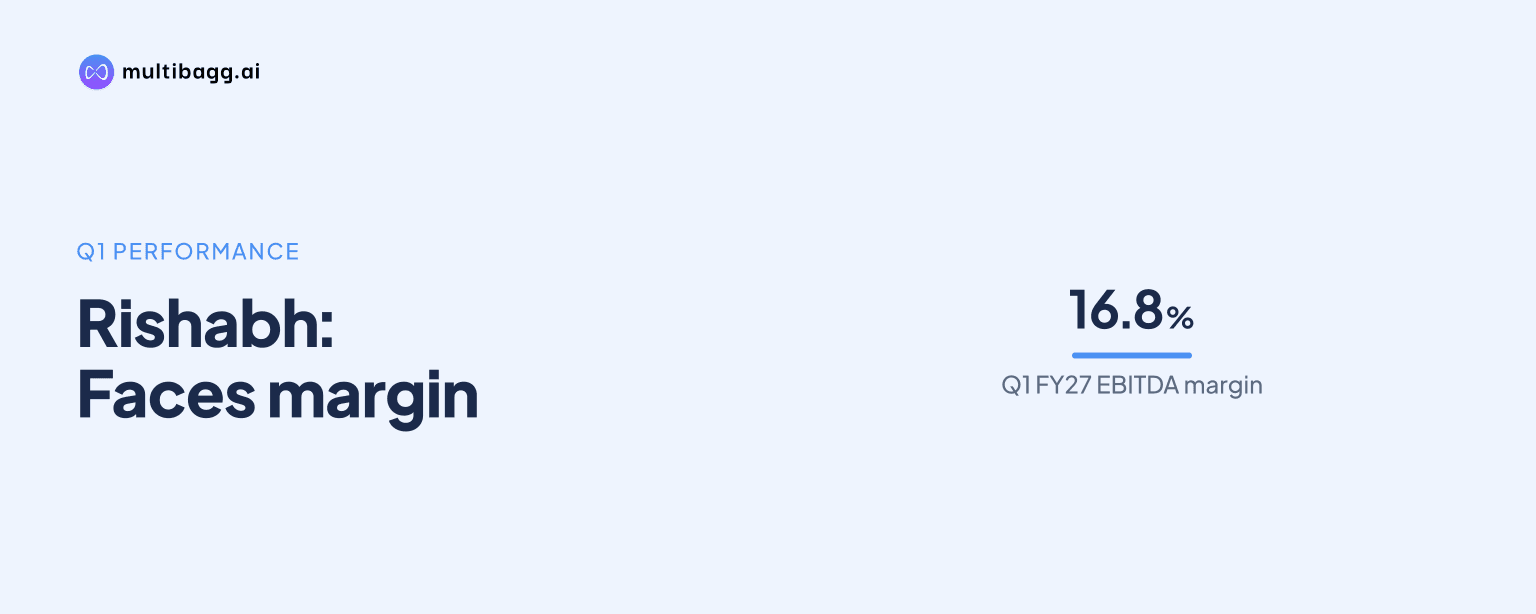
Rishabh Instruments Limited is scheduled to consider Q2 FY27 results on November 13, 2026, after its Electrical and Electronic Instruments segment recorded 34% year-on-year revenue growth in Q1 FY27. The release will show whether segment momentum can support consolidated margins, which were 16.8% in the preceding quarter.
Know Rishabh Instruments inside out
Results, valuation, peers and who's buying, in one view.
When will Rishabh Instruments report Q2 FY27 results?
Rishabh Instruments will hold a board meeting on Friday, November 13, 2026, to consider and approve unaudited standalone and consolidated financial results for the quarter and half year ended September 30, 2026. The company disclosed the meeting in an NSE filing dated November 5, with no delay to the reporting schedule indicated in the available information.
The results are expected during late morning or early afternoon Indian Standard Time, according to the preview material. Rishabh Instruments has also scheduled an earnings conference call for November 16, 2026, at 4:00 PM IST to discuss Q2 FY27 and H1 FY27 financial and operational performance. Shareholders and other investors were invited to register in advance for the call.
The company also stated that its trading window would remain closed from October 1 until 48 hours after the financial results are released. That restriction is part of the announced result-related corporate process and does not provide an indication of the financial outcome.
What did Rishabh Instruments report in Q1 FY27?
Rishabh Instruments reported consolidated sales of ₹198 crore in Q1 FY27, up 4% year on year, while EBITDA rose 17% to ₹33 crore. Consolidated net profit was ₹19 crore, down 1% from ₹20 crore a year earlier, and earnings per share were ₹4.93 compared with ₹5.13 in Q1 FY26.
The company’s Q1 revenue was also reported at ₹198.28 crore, representing a 3.21% sequential decline from ₹204.86 crore in the March 2026 quarter. The difference between revenue growth and profit movement reflected a quarter in which EBITDA expanded while reported net profit and EPS were lower year on year.
The Electrical and Electronic Instruments, or EEI, segment was the principal growth area in the Q1 commentary. EEI revenue grew 34% year on year, ahead of the initial full-year expectation cited in the preview. Standalone India operations reported 25.6% revenue growth and an EBITDA margin of 22.9%, while consolidated EBITDA margin held at 16.8%.
Got a follow-up? Ask IRIS
Which Q2 FY27 metrics are under investor scrutiny?
Investors will focus on EEI growth, consolidated revenue, EBITDA margin and profit after tax when Rishabh Instruments releases Q2 FY27 numbers. The preview identifies EEI as the company’s growth engine after its 34% expansion in Q1, making the segment’s pace a key measure of whether the earlier performance continued through the September quarter.
The preview’s parameters for a stronger outcome include year-on-year revenue growth of 3% to 5%, EBITDA margin of 16.5% to 17.2%, EEI growth above 20%, and profit after tax of ₹21 crore to ₹23 crore. These are expectations set out in the preview, not company guidance or reported results.
Its weaker-outcome parameters include flat or contracting revenue, EBITDA margin below 16%, single-digit EEI growth and profit after tax below ₹19 crore. The material also identifies possible references to macroeconomic or currency headwinds as factors that could accompany a reduction or withdrawal of full-year guidance. Rishabh Instruments has not yet reported its Q2 numbers or confirmed any such change.
How could the Q2 release affect Rishabh Instruments investors?
The Q2 release will provide a fresh measure of whether Rishabh Instruments can convert EEI-led growth into stable consolidated profitability. Q1 showed that EBITDA increased to ₹33 crore and margin was maintained at 16.8%, but net profit was ₹19 crore and EPS declined 4% year on year. The relationship between these measures will remain relevant in the September-quarter update.
The company’s shares closed at ₹623.50 on the BSE on October 30, 2026, down ₹31.95 or 4.87% for that session. The supplied information does not attribute that movement to a specific event. The scheduled result release and the November 16 conference call are the next disclosed occasions for management to provide updated financial details and operating commentary.
The broader context includes a forecast in the supplied material for Rishabh Instruments’ revenue to grow at an average annual rate of 16% over the next two years, compared with a 20% forecast for India’s electronic industry. That comparison underscores why investors may assess both the company’s execution and its growth relative to sector expectations, while recognising that forecasts are not reported performance.
Conclusion
Rishabh Instruments enters Q2 FY27 reporting after a mixed Q1 financial outcome: consolidated sales grew 4% to ₹198 crore and EBITDA rose 17% to ₹33 crore, while net profit edged down to ₹19 crore. EEI’s 34% revenue growth and the 16.8% consolidated EBITDA margin are the central reference points for assessing the upcoming release.
Investors will next watch the November 13 board-approved results for revenue, EEI growth, margin and profit trends, followed by management’s November 16 earnings call. Any update on full-year EBITDA growth expectations, previously framed in the preview at 12% to 15%, will be relevant if disclosed by the company.