










Roto Pumps Limited Q1 Profit Rises 46.8% to ₹9.25 Crore
Key highlights
- Roto Pumps reported Q1 FY27 consolidated net profit of ₹9.25 crore, up 46.8% year on year.
- Q1 FY27 EPS was ₹0.49, compared with ₹0.33 in Q1 FY26.
- The latest-quarter revenue snapshot cited ₹75.60 crore, down 7.02% sequentially.
- Promoter shareholding remained stable at 66.8% in the Q2 FY27 summary.
powered by IRIS
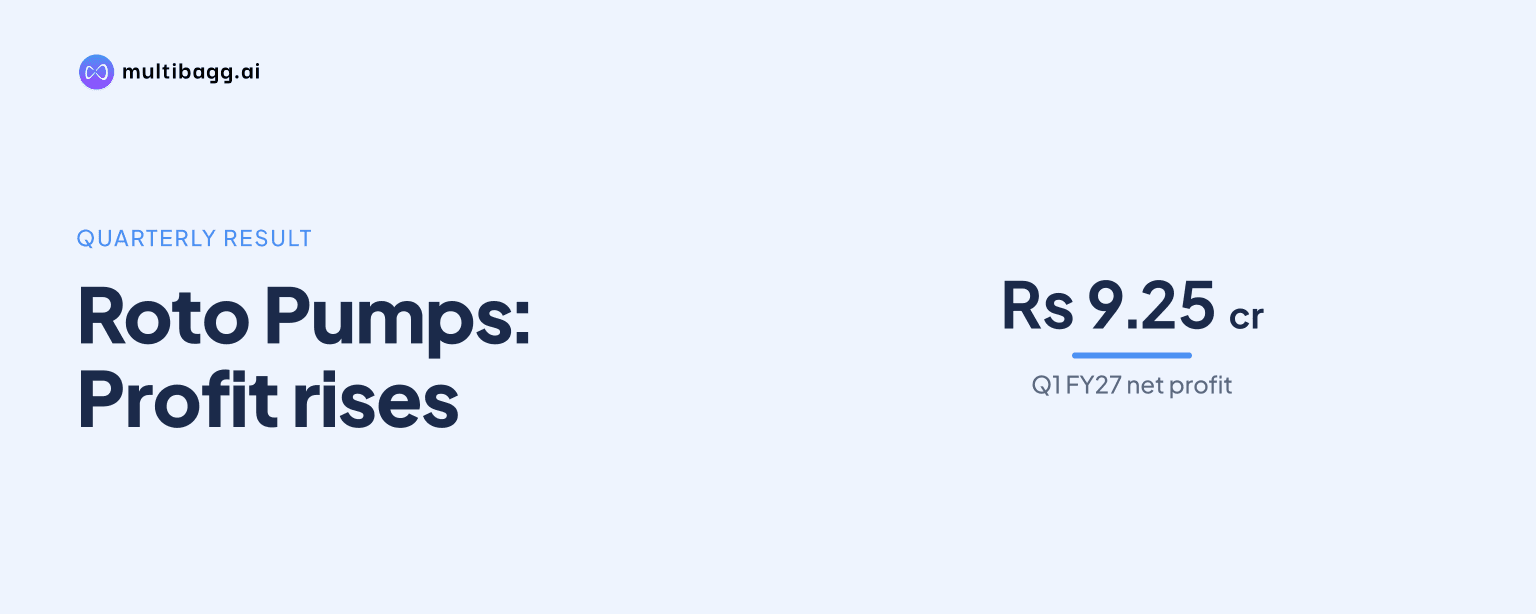
Roto Pumps Limited reported consolidated net profit of ₹9.25 crore in Q1 FY27, a 46.8% year-on-year increase from ₹6.30 crore, while the board was scheduled to consider Q2 FY27 results on November 11, 2026. The profit increase is significant because revenue indicators in the available disclosures show mixed sequential and annual comparisons.
Know Roto Pumps inside out
Results, valuation, peers and who's buying, in one view.
What did Roto Pumps report in Q1 FY27?
Roto Pumps reported consolidated net profit of ₹9.25 crore for Q1 FY27, compared with ₹6.30 crore in Q1 FY26, according to the reported quarterly summary. Earnings per share were stated at ₹0.49, compared with ₹0.33 in the corresponding quarter of the previous year. The reported profit margin was 12%, versus 9.6% a year earlier.
Revenue for the latest reported quarter was cited as ₹75.60 crore in the supplied financial snapshot, down 7.02% from the preceding quarter. Another reported quarterly release put revenue at ₹77.44 crore and described an 18% year-on-year increase. These figures appear to reflect different reporting presentations or bases, and investors should rely on the company’s filed standalone and consolidated statements for a like-for-like comparison.
The Q1 FY27 results were filed on August 8, 2026. Roto Pumps operates through a unified Pumps & Spares business segment, with manufacturing operations in India and international distribution and operating hubs.
Why are the revenue figures important for investors?
Revenue trends are important because they indicate whether profit growth is being supported by broader sales expansion or by better operating efficiency. The latest-quarter snapshot cited operating revenue of ₹75.60 crore, down 9.0% year on year and 7.0% sequentially, while net profit was ₹9.2 crore and operating margin was 20.1%.
The supplied material also described a sequential revenue decline as consistent with seasonal patterns, while noting improvement in profitability and margins. That interpretation is based on the reported figures, but the available data contains differing quarter labels and revenue values. For this reason, the key factual takeaway is that the company reported higher Q1 consolidated profit despite mixed revenue references across the supplied summaries.
For the financial year ended March 31, 2026, Roto Pumps’ standalone revenue declined 7.3% year on year to ₹222.88 crore. Standalone annual net profit fell 30.7% to ₹21.33 crore from ₹30.79 crore in the previous fiscal year. The Q1 FY27 profit increase therefore follows a year in which the company’s standalone annual performance had weakened.
Got a follow-up? Ask IRIS
When will Roto Pumps consider its Q2 FY27 results?
Roto Pumps’ board was scheduled to meet on November 11, 2026, to consider and approve unaudited standalone and consolidated financial results for Q2 FY27 and the half-year ended September 2026. The meeting was announced by the company in a filing dated November 2, 2026.
The upcoming result is relevant because it should provide an updated view of demand, revenue progression and margins following the Q1 FY27 numbers. It will also allow investors to compare the standalone and consolidated financial statements on the same reporting basis, which is particularly relevant given the different revenue figures appearing in third-party summaries.
The source material also states that the annual general meeting ratified the FY26 audited financial statements and a final dividend of ₹0.19 per share. Auditor reports for FY26 were stated to have contained no qualifications, adverse comments or matters of emphasis.
How has Roto Pumps’ shareholder base changed?
Roto Pumps’ promoter holding remained unchanged at 66.8% from Q1 to Q2 FY27, according to the supplied shareholding summary. Stable promoter ownership can be relevant for investors tracking changes in control or insider participation, although it does not by itself indicate future financial performance.
Public shareholding increased to 26.38% in Q2 FY27 from 26.04% in Q1 FY27. The number of shareholders rose to 65,177. The summary also stated that foreign institutional investor and domestic institutional investor stakes declined slightly, without providing the exact percentages.
The shareholder data should be read alongside the company’s reported financial performance. A stable promoter stake, a larger public shareholder count and changes in institutional ownership are ownership indicators, while the scheduled Q2 disclosure will provide the more current operating and financial data.
What risks should Roto Pumps investors monitor?
The primary disclosed risk is potential margin pressure if expansion investments grow faster than revenue. This is relevant because the reported profit improvement has occurred alongside mixed revenue indicators, making the sustainability of margins an important item to track in subsequent filings.
Demand conditions in export markets are another stated area for monitoring. Roto Pumps has manufacturing in India as well as international distribution and operating hubs, so changes in overseas demand can affect the Pumps & Spares segment. The company’s Q2 FY27 filing is expected to provide the next formal update on business conditions for the July-September 2026 period.
Conclusion
Roto Pumps Limited’s reported Q1 FY27 consolidated net profit of ₹9.25 crore, up 46.8% year on year, marks an improvement from the prior-year quarter. However, the supplied data shows mixed revenue comparisons and differing reporting presentations, so profit growth should be assessed against the company’s filed standalone and consolidated statements.
Investors should watch the November 11, 2026 board consideration of Q2 FY27 results, including revenue movement, operating margins, export-market demand and any comments on expansion spending. The next disclosure will also provide a clearer basis for comparing quarterly performance across reporting periods.