










Royal India Corporation Reports ₹2.23 Crore Q2 FY27 Profit
Key highlights
- Royal India Corporation reported standalone Q2 FY27 profit of ₹2.2314 crore for the quarter ended September 30, 2026.
- Standalone revenue from operations was stated at ₹4.2891 crore in Q2 FY27.
- Standalone profit for the first half of FY27 was reported at ₹2.1780 crore.
- Standalone operating cash flow was negative ₹8.2073 crore in H1 FY27, while financing cash flow was ₹10.4548 crore.
powered by IRIS
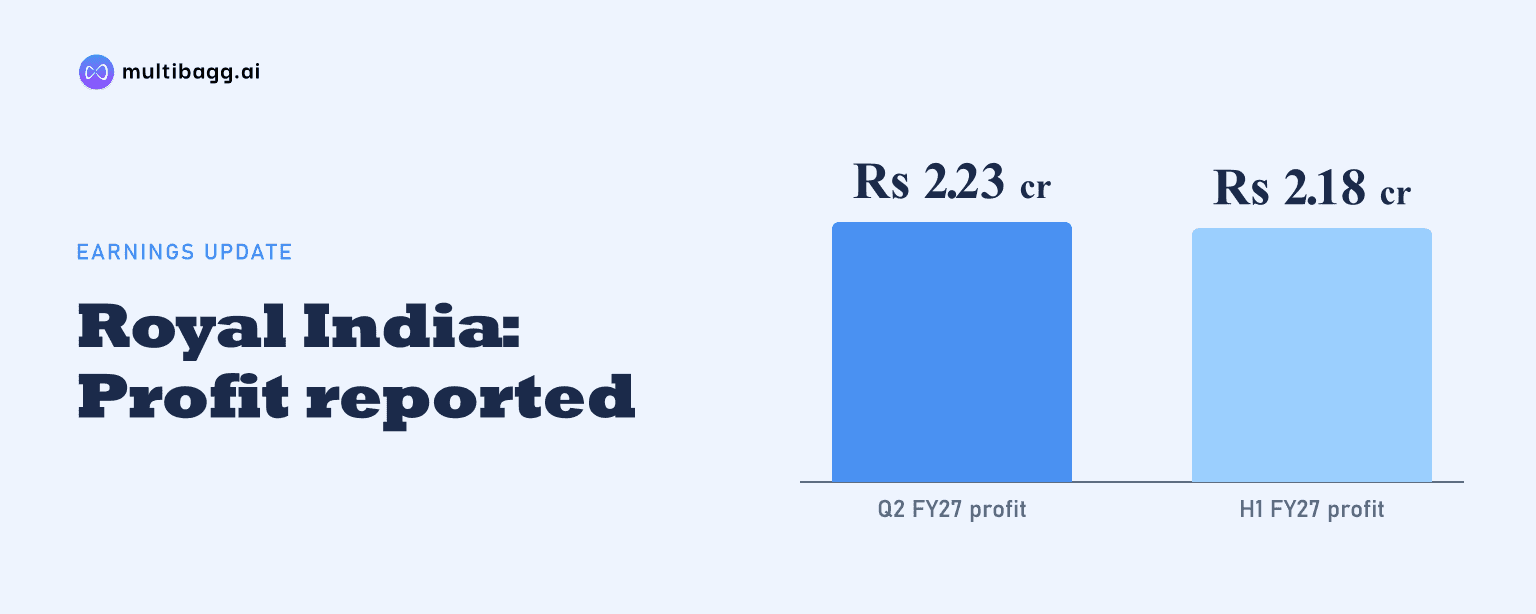
Royal India Corporation Limited reported a standalone profit of ₹2.23 crore for the quarter ended September 30, 2026, on revenue from operations of ₹4.29 crore, while profit for the first half of FY27 was ₹2.18 crore. The Board approved the unaudited results on November 5, 2026.
Know Royal India Corporation inside out
Results, valuation, peers and who's buying, in one view.
What did Royal India Corporation's board approve for Q2 FY27?
Royal India Corporation's Board approved unaudited standalone and consolidated financial results for the quarter and half-year ended September 30, 2026. The decision was taken at a Board meeting held on November 5, 2026, according to the company update.
The company said the results were accompanied by a Limited Review Report from its statutory auditor, M/s Rakchamps & Co. LLP. The Board also approved shifting the company's bookkeeping address to its registered office. Royal India Corporation said the results and review reports were available on its website, ricl.in.
How did Royal India Corporation perform in Q2 FY27?
Royal India Corporation reported standalone revenue from operations of ₹4.29 crore and profit of ₹2.23 crore for the September 2026 quarter. For the six months ended September 30, 2026, the company reported standalone profit of ₹2.18 crore.
The supplied financial table contains some column-label and line-item inconsistencies relative to the accompanying summary. The figures below therefore use the results summary for the headline standalone quarterly and half-year profit figures, while retaining other metrics as stated in the source. All amounts have been converted from lakh to crore for consistency.
The company update also listed standalone profit before tax of ₹2.2314 crore for the quarter and ₹2.9303 crore for the half-year in its financial table. It listed total comprehensive income of ₹2.2314 crore for the quarter and ₹2.1780 crore for the half-year. Investors should rely on the company’s complete filing and accompanying notes for the final presentation of individual line items.
What did the limited review report say?
Rakchamps & Co. LLP said that nothing came to its attention during the limited review that indicated a material misstatement or a failure to comply with applicable disclosure requirements. The review was stated to have been conducted in accordance with the relevant Standards on Review Engagements.
A limited review is distinct from a full audit of annual financial statements. In this case, the company described the September-quarter standalone and consolidated results as unaudited, with the statutory auditor providing its review report alongside the results. This is the normal format for interim results disclosed by listed companies.
Got a follow-up? Ask IRIS
What do the cash flow and earlier results show?
Royal India Corporation reported a net decrease of ₹0.0032 crore in cash and cash equivalents during the first half of FY27. The standalone cash flow statement showed negative operating cash flow of ₹8.2073 crore, partly offset by financing cash flow of ₹10.4548 crore.
The company’s FY26 figures provide context for the recent interim results. The supplied material said Royal India Corporation reported FY26 revenue of ₹121.63 crore and net profit of about ₹53.00 crore. It attributed the annual profit increase to a ₹71.99 crore reversal of notional interest expenses, while stating that revenue fell 45% during that year.
The same source includes separate references to June 2026 results that are not fully consistent with each other. One reference cited Q1 FY27 revenue of ₹3.63 crore and net profit of ₹1.93 crore, while the September-results table presents different interim line items. Such differences make the original exchange filing, financial statements and notes especially important for comparing quarterly trends.
How could the results matter to investors and operations?
For investors, the September update provides the company’s latest Board-approved financial disclosure and confirms that the statutory auditor has completed a limited review. The standalone profit of ₹2.23 crore and reported revenue from operations of ₹4.29 crore are the key quarterly figures stated in the company summary.
The cash flow numbers are also relevant because they show that first-half operating activities used cash, while financing activities provided cash. The approved bookkeeping-address change is an administrative decision and the update did not state any change to the company’s registered office, business operations, customers or operating locations.
The consolidated figures differ from the standalone figures, including reported negative revenue from operations of ₹0.55 crore for the September quarter alongside consolidated profit after tax of ₹1.21 crore. The supplied material does not provide sufficient detail to explain this relationship, so conclusions about the performance of subsidiaries or consolidation adjustments cannot be drawn from the update alone.
Conclusion
Royal India Corporation’s September 2026 update records a standalone quarterly profit of ₹2.23 crore, standalone revenue from operations of ₹4.29 crore and a first-half profit of ₹2.18 crore. The Board’s approval, backed by a limited review report, completes the company’s announced interim-results process for Q2 FY27.
The next point for investors to watch is the company’s complete financial filing and subsequent quarterly disclosure, particularly for clarity on the differences between standalone and consolidated figures, the stated cash flow movements and the notes supporting the reported results. The company has said the results and review reports can be accessed through its website.