










Sahaj Digital Schedules Q2 Results Board Meeting for Nov 13
Key highlights
- Sahaj Digital’s board will consider September-quarter unaudited results on November 13, 2026.
- Sahaj Digital reported total income of ₹0.11 crore in the June 2026 quarter.
- June 2026 PAT was a loss of ₹0.14 crore, compared with a ₹0.27 crore loss in March 2026.
- June-quarter expenses were ₹0.25 crore and net profit margin was -119.61%.
powered by IRIS
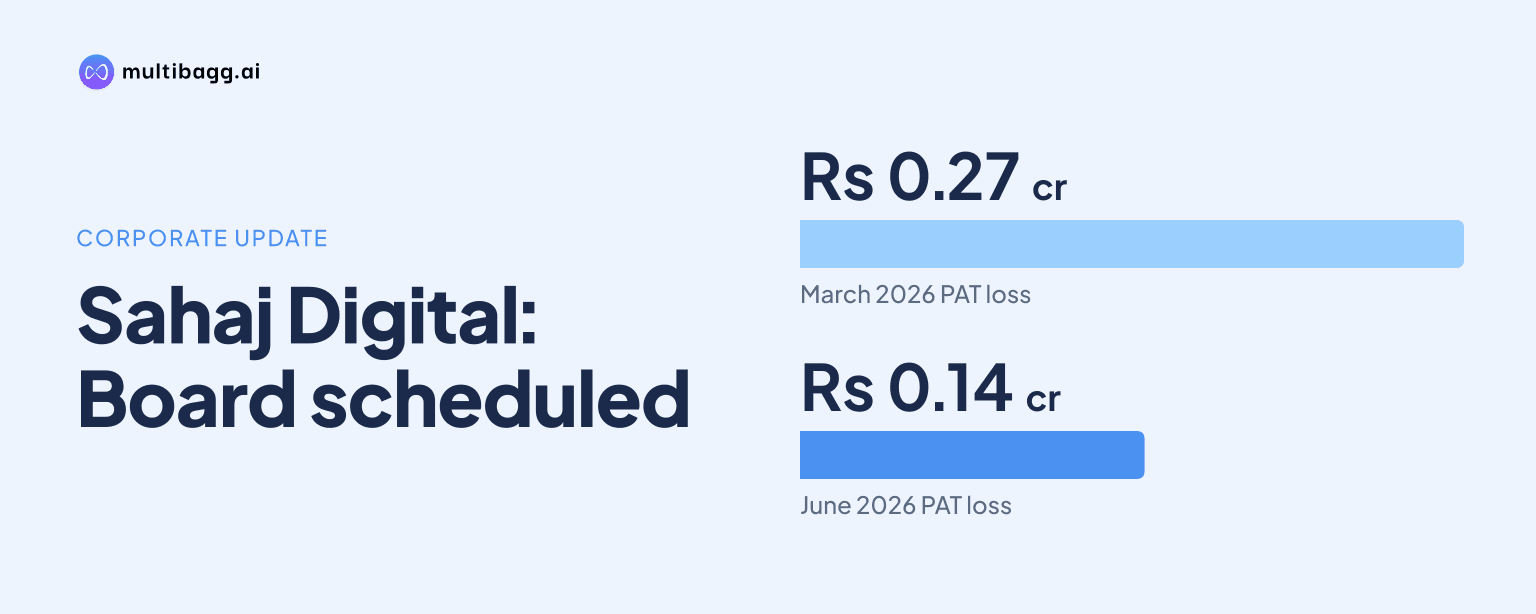
Sahaj Digital Ltd will consider unaudited standalone and consolidated results for the quarter ended September 30, 2026, at a board meeting on November 13, 2026, following a June-quarter total income of ₹0.11 crore and a ₹0.14 crore net loss.
Know Sahaj Digital inside out
Results, valuation, peers and who's buying, in one view.
When will Sahaj Digital announce its Q2 FY 2026-27 results?
Sahaj Digital has scheduled its board meeting for Friday, November 13, 2026, to consider and approve unaudited standalone and consolidated financial results for the quarter ended September 30, 2026. The company informed BSE of the meeting, which is also identified as the expected date for its Q2 FY 2026-27 earnings release.
The disclosure says the board may also consider any other matter. The company’s corporate-actions calendar similarly marks November 13 as the date for Q2 FY 2026-27 results. This makes the board outcome the key official update due from Sahaj Digital on the stated date.
A board-meeting table in the supplied information lists a November 12 meeting for quarterly results and says it was announced on November 2. However, the BSE notice and the corporate-actions calendar specify November 13 for the consideration of the September-quarter results. The exchange disclosure provides the more detailed description of the agenda.
The previous listed results event was Q1 FY 2026-27 on August 13, 2026. Sahaj Digital’s latest available quarterly financial table covers the quarter ended June 2026, providing the immediate financial reference point before the September-quarter outcome.
What did Sahaj Digital report in the June 2026 quarter?
Sahaj Digital reported total income of ₹0.11 crore in the June 2026 quarter, compared with ₹0.07 crore in the March 2026 quarter and ₹0.04 crore in the June 2025 quarter. The supplied quarterly table shows total-income growth of 67.69% quarter-on-quarter and 33.33% year-on-year for June 2026.
Expenses were ₹0.25 crore during the quarter, exceeding total income. As a result, EBIT was a loss of ₹0.14 crore and profit after tax was also a loss of ₹0.14 crore. The company reported a basic loss per share of ₹0.06 for the June quarter.
The June-quarter loss followed a ₹0.27 crore PAT loss in March 2026. In the December 2025 quarter, Sahaj Digital had reported break-even PAT, while the September 2025 quarter showed PAT of ₹0.03 crore. These small absolute figures make period-to-period growth rates volatile.
Got a follow-up? Ask IRIS
Why are Sahaj Digital’s margins negative despite higher income?
Sahaj Digital’s June-quarter expenses of ₹0.25 crore were more than double its total income of ₹0.11 crore, resulting in an EBIT margin of -119.61% and a net profit margin of -119.61%. The negative margins reflect the difference between the company’s limited revenue base and its reported expenses for the quarter.
Although income rose from ₹0.07 crore in March, it remained below expenses. Expenses fell 24.93% sequentially from ₹0.33 crore, but the reduction was not sufficient to return the company to profitability. The ₹0.14 crore loss was smaller than the preceding quarter’s ₹0.27 crore loss.
Half-yearly figures for the period ended March 2026 show total income of ₹0.16 crore, EBIT of -₹0.26 crore and reported PAT of -₹0.27 crore. The same half-yearly data shows net sales turnover of ₹0.14 crore and other income of ₹0.02 crore, underscoring the modest scale of reported operations.
The supplied data also refers to an annual net profit of ₹0.01 crore and an annual report for FY 2025-26. Separately, it notes a revised outcome of audited financial results for the quarter and year ended March 31, 2026. Investors should rely on the company’s filed results and accompanying notes for the final reported classifications and comparisons.
What should investors assess in the September-quarter results?
Investors should assess whether Sahaj Digital’s September-quarter income has increased enough to cover operating expenses, and whether the June-quarter loss narrows or widens. The September results will be the first formal financial update after the ₹0.14 crore June-quarter PAT loss shown in the supplied quarterly data.
The most relevant reported measures will include total income, expenses, EBIT, PAT, profit margin and EPS. Since the company’s quarterly financial values are small, even modest changes in income or costs can create large percentage movements. Comparing absolute rupee figures alongside growth percentages is therefore important.
The board is expected to consider both standalone and consolidated unaudited results. The data provided does not give separate September-quarter estimates, management guidance, analyst forecasts or a share-price reaction. The board’s approved filing will establish the reported financial position for the quarter.
For market participants, the November 13 disclosure is a scheduled corporate event rather than a confirmed statement about profitability or future performance. Any assessment of operating momentum will depend on the figures and disclosures released after the board’s consideration.
Conclusion
Sahaj Digital’s scheduled November 13 board meeting will address unaudited results for the quarter ended September 30, 2026. The event follows a June quarter in which total income rose to ₹0.11 crore, while expenses of ₹0.25 crore resulted in a ₹0.14 crore PAT loss and negative margins.
The next item to watch is the company’s BSE filing after the meeting, particularly its standalone and consolidated income, expense and profit figures for the September quarter. Investors can compare those disclosures with the June-quarter loss and the FY 2025-26 annual-report information already referenced in the supplied data.