










Seemax Resources Limited Sets Results Review for November 14
Key highlights
- Seemax Resources will review unaudited results for the six months ended 30 September 2026 on 14 November 2026.
- FY2026 net profit was about ₹1.75 crore, down from about ₹2.24 crore on the annual earnings summary.
- FY2026 basic EPS fell to ₹5.83 from ₹7.46 in FY2025.
- The FY2026 annual report information stated that no dividend was recommended.
powered by IRIS
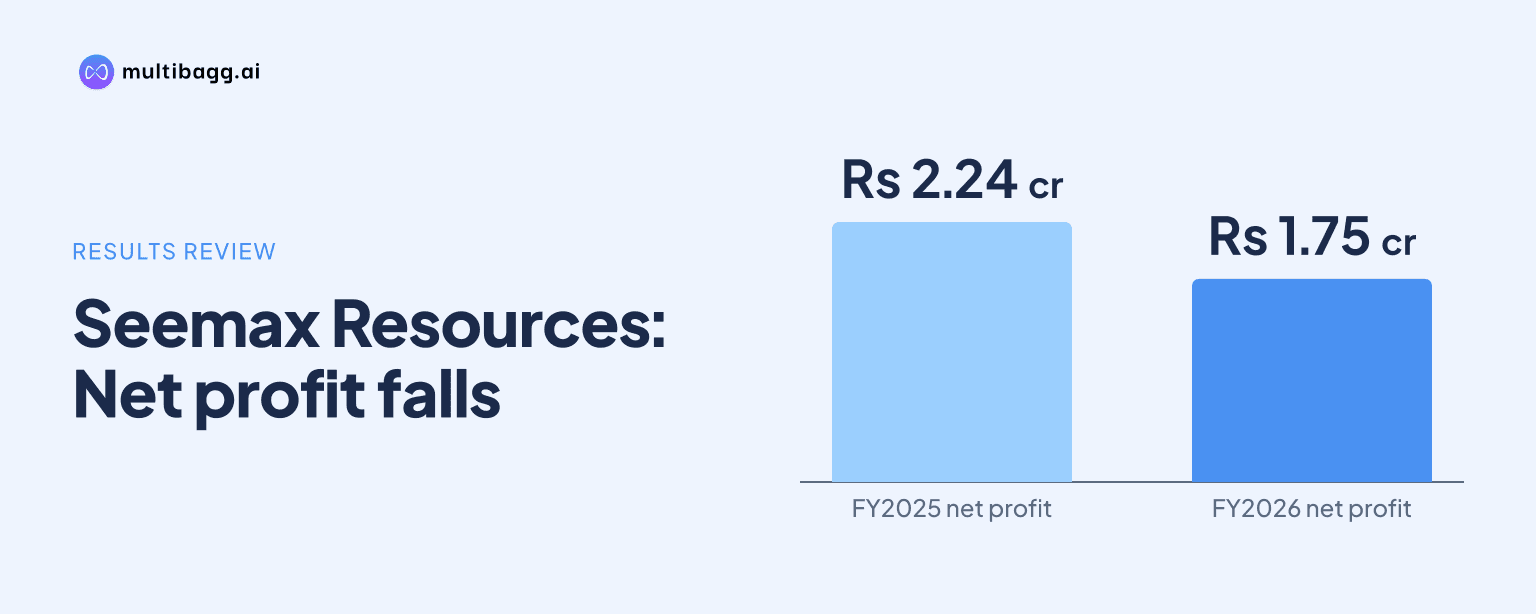
Seemax Resources Limited is scheduled to review unaudited financial results for the quarter and half-year ended 30 September 2026 on 14 November 2026. The meeting follows FY2026 profit after tax of ₹1.75 crore, down 22% from ₹2.24 crore in FY2025 on one reported annual earnings basis.
Know Seemax Resources inside out
Results, valuation, peers and who's buying, in one view.
What will Seemax Resources review on 14 November?
Seemax Resources will consider and approve unaudited financial results for the six months ended 30 September 2026, along with the limited review report. The company’s board-meeting intimation was dated 6 November 2026 and specified Saturday, 14 November, as the date for considering the quarterly and half-year financial statements.
The scheduled disclosure is important because it will provide the first reported view of the company’s performance for the first half of FY2027. The supplied information identifies the event as an earnings-results announcement and also describes it as a board meeting to review results for both the quarter and the half-year. No September-period financial figures were included in the source material.
The company had previously submitted its financial results for the half-year and year ended 31 March 2026, along with its audit report, on 27 July 2026. Its annual general meeting was held or scheduled for 22 September 2026, according to the corporate-event details provided.
How did Seemax Resources perform in FY2026?
Seemax Resources reported lower profitability in FY2026 despite a modest increase in total revenue in one annual earnings summary. That summary put FY2026 revenue at ₹15.00 crore, up 4.0% year-on-year, while net income declined to ₹1.75 crore from ₹2.24 crore and EPS fell to ₹5.83 from ₹7.46.
The same summary attributed the reduction in profit margin to higher expenses. Net profit margin was stated at 12%, compared with 16% in FY2025. Separately, the company’s annual report information recorded FY2026 net profit of ₹1.7488 crore, down from ₹2.3556 crore in FY2025, with no dividend recommended.
The table uses the profit-and-loss series supplied in ₹ crore. It shows that annual net profit increased from ₹0.79 crore in FY2023 to ₹2.36 crore in FY2025 before declining to ₹1.75 crore in FY2026. Sales in that series also fell from ₹14.42 crore to ₹13.74 crore in the latest financial year.
Why do reported revenue figures differ across disclosures?
The supplied disclosures use different labels and values for FY2026 revenue, so investors should compare the underlying financial statements rather than treat every figure as identical. The profit-and-loss table reports sales of ₹13.74 crore, while an annual earnings summary reports total revenue of ₹15.00 crore and the annual-report summary cites revenue of ₹14.9958 crore.
These figures may represent differently labelled financial-statement lines or reporting summaries, but the provided material does not explain the reconciliation. The 14 November filing will be most useful when read alongside the company’s published financial statements and notes, which can clarify the comparable revenue measure used for the September half-year.
The profitability figures are more consistent after rounding. The annual report’s ₹1.7488 crore profit corresponds closely with the ₹1.75 crore figure in the annual earnings summary and profit-and-loss table. This indicates that the reported fall in FY2026 profit is supported across the supplied annual data, even where revenue labels vary.
Got a follow-up? Ask IRIS
What should investors assess in the September results?
Investors can assess whether revenue, expenses and margins in the six months to September show any change from the weaker FY2026 profitability trend. The company’s FY2026 operating profit margin was reported at 29.79%, slightly below 30.16% in FY2025, while net profit margin decreased to 12.72% from 15.51% in the same data set.
A separate quarterly entry for the quarter ended March 2026 listed sales of ₹8.29 crore and net profit of ₹1.88 crore, compared with net profit of ₹2.13 crore for March 2025. Since this is a separately supplied quarterly data point, investors should use the upcoming company filing to identify the reported period, accounting basis and comparability of quarterly figures.
The new results will also matter for shareholders because promoter holding was stated at 50% in the annual-report information, and no FY2026 dividend was recommended. The filing is expected to provide updated financial performance but the supplied announcement does not disclose any dividend proposal, outlook, capital-raising plan or other board agenda.
How does the results date affect market tracking?
The 14 November date gives market participants a defined corporate-event point for tracking Seemax Resources. The half-year disclosure will place the company’s FY2027 first-half numbers against a FY2026 base marked by a 22% decline in annual net income on the stated earnings summary and a decline in margins linked to higher expenses.
For the broader small-cap market, the filing is a routine compliance event rather than evidence of a confirmed business change before the results are released. The announcement itself provides no guidance on future sales, costs or earnings. Any assessment of operational recovery or further pressure must therefore wait for the figures and limited review report.
Conclusion
Seemax Resources is due to place its September 2026 quarter and half-year financial statements before the board on 14 November. The event follows FY2026 results in which reported net profit fell to about ₹1.75 crore, while the available summaries show differing revenue labels and values that require careful comparison with the formal accounts.
The next point to watch is the company’s unaudited results and limited review report for the six months ended 30 September 2026. Investors can then examine reported sales, expenses, operating margin, net profit and the accounting disclosures needed to compare the new period with FY2026.