










Shanti Overseas (India) posts ₹3.52 crore profit, revenue up 54%
Key highlights
- Shanti Overseas reported consolidated Q2 FY27 net profit of ₹3.52 crore versus a ₹0.12 crore loss in Q2 FY26.
- Revenue from operations increased 54% year-on-year to ₹4.07 crore in Q2 FY27.
- EBITDA turned positive at ₹2.74 crore, with margin improving to 67.3% from negative 82.7%.
- Total expenses declined 70.1% year-on-year to ₹1.46 crore in Q2 FY27.
powered by IRIS
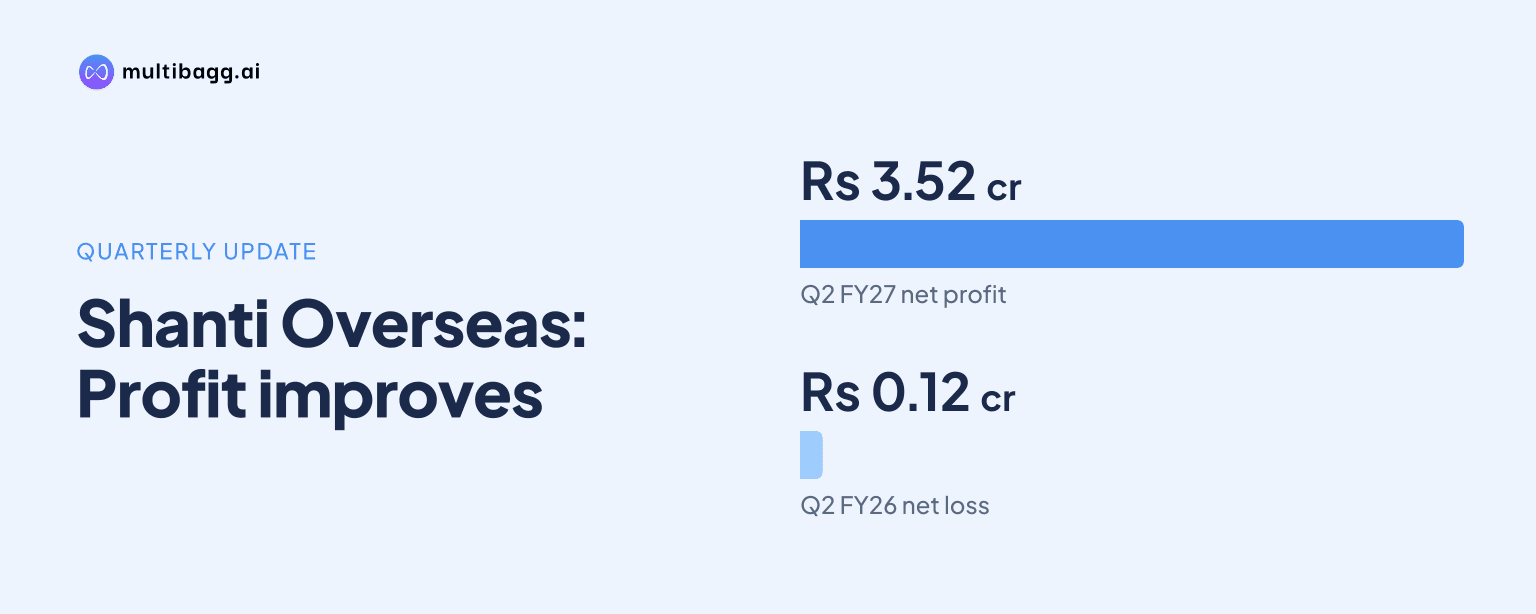
Shanti Overseas (India) Limited reported a consolidated net profit of ₹3.52 crore in Q2 FY27, reversing a ₹0.12 crore loss a year earlier, while revenue from operations increased 54% to ₹4.07 crore for the quarter ended 30 September 2026. The result marks a sharp quarterly turnaround after a period of uneven profitability and operating losses.
Know Shanti Overseas (India) inside out
Results, valuation, peers and who's buying, in one view.
How did Shanti Overseas perform in Q2 FY27?
Shanti Overseas reported revenue from operations of ₹4.07 crore for the July-September 2026 quarter, compared with ₹2.64 crore in Q2 FY26. Total expenses declined 70.1% year-on-year to ₹1.46 crore from ₹4.88 crore, supporting the move into operating profitability.
The company reported EBITDA of ₹2.74 crore, against an EBITDA loss of ₹2.18 crore in the corresponding quarter of the previous year. Its EBITDA margin improved to 67.3% from negative 82.7%. Profit before tax was ₹3.52 crore, compared with a loss of ₹0.02 crore a year earlier, while the tax expense was nil.
Net profit stood at ₹3.52 crore, compared with a net loss of ₹0.12 crore in Q2 FY26. Basic earnings per share rose to ₹3.17 from a loss per share of ₹0.22. The reported net margin was 86.5%, compared with negative 4.6% a year earlier.
What drove the quarterly profit turnaround?
The turnaround was driven by higher revenue and a substantial reduction in expense lines compared with Q2 FY26. Materials and purchases were reported at about ₹1.3 crore, down from about ₹2.6 crore a year earlier, while other expenses fell sharply from the previous year's level.
Materials cost represented 31% of revenue in Q2 FY27, compared with 99.8% in Q2 FY26. Other expenses were 0.7% of revenue, compared with 82.3% a year earlier. These movements contributed to the improvement in operating margin.
The quarterly profit also included items outside operating earnings. Other income was ₹0.16 crore, down 92.8% from ₹2.22 crore in Q2 FY26, while the results table showed exceptional items of ₹0.80 crore. Investors assessing the quarter therefore need to distinguish between the ₹2.74 crore reported EBITDA and the higher ₹3.52 crore reported profit after tax.
When were the Q2 FY27 results approved and filed?
Shanti Overseas' board approved the unaudited standalone and consolidated financial results for the quarter and half year ended 30 September 2026 on 14 November 2026. The company filed the results with the National Stock Exchange on the same date at 7:25 pm IST.
The filing covered both standalone and consolidated numbers. On a standalone basis, Shanti Overseas reported revenue of ₹2.80 crore and a loss after tax of ₹1.82 crore for Q2 FY27. The difference between standalone and consolidated performance is relevant because the headline profit figure is based on the consolidated accounts.
The disclosed information also noted that one subsidiary recorded latest-quarter revenue of ₹1.27 crore and profit after tax of ₹0.03 crore. The board's approval means the quarterly figures are the company's reported financial position for the period, subject to the normal framework applicable to unaudited results.
Got a follow-up? Ask IRIS
How does the quarter compare with Shanti Overseas' recent record?
The latest quarter contrasts with a volatile financial record for Shanti Overseas. Its quarterly operating profit was negative in several reported periods between June 2023 and June 2026, including operating losses of ₹2.19 crore in September 2025 and ₹3.13 crore in March 2026.
Profitability has also varied materially across quarters. The company reported a net loss of ₹9.26 crore in March 2026, followed by a small profit of ₹0.03 crore in June 2026. Q2 FY27 therefore represents a marked sequential improvement from Q1 FY27, when revenue from operations was reported as nil and net profit was ₹0.03 crore.
For the first half of FY27, the reported consolidated revenue was ₹4.07 crore and net profit was ₹3.55 crore. In H1 FY26, revenue was ₹6.15 crore and net profit was ₹0.05 crore. The half-year comparison shows that the improved profit came despite lower reported revenue than the prior-year half.
What does the result mean for investors and operations?
For investors, the key reported change is that Shanti Overseas moved from operating and net losses to positive EBITDA and profit in the September quarter. Revenue growth was accompanied by lower expenses, producing a 67.3% EBITDA margin and positive earnings per share of ₹3.17.
However, the company's recent financial history indicates that quarterly results have been irregular. The consolidated profit figure was also above EBITDA, with other income and exceptional items reported during the quarter. This makes the composition of future earnings, expense levels and the relationship between standalone and consolidated results important areas for monitoring.
Shanti Overseas operates in the Other Agricultural Products sector and is described as a micro-cap company. For a business of this size, changes in quarterly revenue, purchase costs and other expenses can have a significant effect on reported margins and profits. The filing does not provide a forward earnings target or guidance.
Conclusion
Shanti Overseas delivered a strong consolidated Q2 FY27 turnaround, reporting ₹4.07 crore in revenue, ₹2.74 crore in EBITDA and ₹3.52 crore in net profit. The result reversed losses reported in the year-ago quarter and reflected both 54% revenue growth and a steep reduction in total expenses.
The next point to watch is whether the company can sustain revenue generation and positive operating margins after a period of volatile quarterly performance. Investors can also track subsequent NSE or BSE filings for the contribution of standalone operations, subsidiaries, other income and exceptional items to consolidated profitability.