










Shoora Designs Limited Posts H1 Profit of ₹23.93 Lakh
Key highlights
- Shoora Designs reported H1FY27 revenue from operations of ₹952.03 lakh, up from ₹189.74 lakh in H1FY26.
- Shoora Designs' H1FY27 profit after tax rose to ₹23.93 lakh from ₹2.03 lakh a year earlier.
- Trade receivables increased to ₹213.42 lakh from ₹77.35 lakh at March 31, 2026.
- Cash flow from operations was ₹0.72 lakh despite profit before tax of ₹31.96 lakh.
powered by IRIS
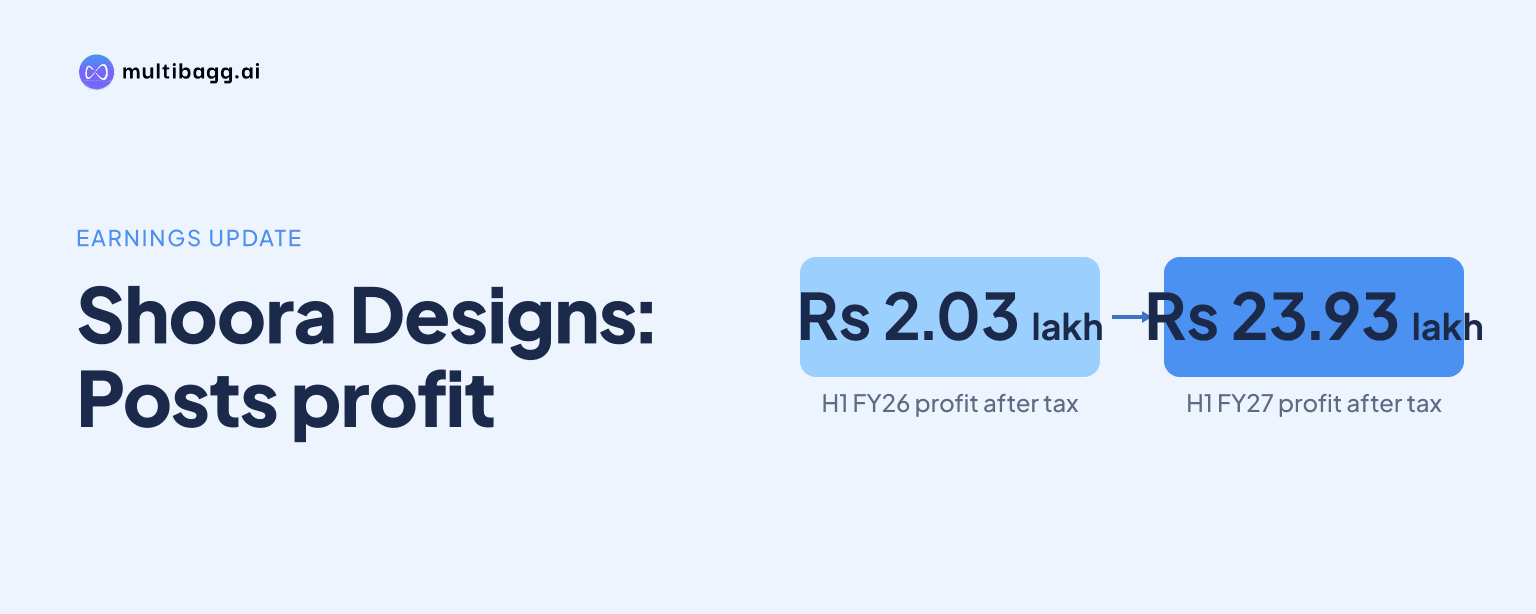
Shoora Designs Limited reported standalone profit after tax of ₹23.93 lakh for the half year ended September 30, 2026, compared with ₹2.03 lakh a year earlier, as revenue from operations increased to ₹952.03 lakh from ₹189.74 lakh. The result marks a material improvement in reported earnings, although receivables and operating cash generation remain key balance-sheet considerations.
Know Shoora Designs inside out
Results, valuation, peers and who's buying, in one view.
How did Shoora Designs perform in H1FY27?
Shoora Designs, a Surat-based manufacturer and trader of diamonds, recorded a sharp rise in revenue and profitability during H1FY27. Revenue from operations reached ₹952.03 lakh, against ₹189.74 lakh in the corresponding half-year of the previous financial year. This represents an increase of ₹762.29 lakh over the year-ago period.
Profit before tax rose to ₹31.96 lakh from ₹2.72 lakh in H1FY26. After tax, the company reported a profit of ₹23.93 lakh, compared with ₹2.03 lakh a year earlier. The results reflect a turnaround in the reported half-year earnings relative to the same period last year.
The company operates as a single segment entity engaged in manufacturing and trading diamonds. As a result, the disclosed financial performance is not split across separate business divisions. The figures are standalone and unaudited for the six months ended September 30, 2026.
What did the board approve on November 4, 2026?
Shoora Designs' Board of Directors approved the standalone unaudited financial results for H1FY27 at its meeting on November 4, 2026. The meeting had been scheduled to consider and approve the results along with the limited review report.
The company had closed its insider trading window from October 1, 2026 until 48 hours after the declaration of the half-year results. The board meeting was held at the company's registered office in Surat. The disclosed agenda also allowed for other business with the permission of the chair.
TGB & Associates, Chartered Accountants, reviewed the financial statements under Regulation 33 of the SEBI Listing Obligations and Disclosure Requirements Regulations, 2015. The limited review report stated that the auditors had not identified material misstatements in the accompanying statement of unaudited financial results.
Why did receivables and cash flow remain important in the results?
The rise in reported sales was accompanied by a substantial increase in trade receivables. Receivables stood at ₹213.42 lakh at September 30, 2026, compared with ₹77.35 lakh at March 31, 2026. This indicates that a larger portion of sales remained outstanding for collection at the end of the reporting period.
Inventory, meanwhile, declined to ₹1,801.28 lakh from ₹1,899.09 lakh at the end of FY26. The simultaneous fall in inventory and increase in receivables is consistent with stock being converted into sales, while collections had not kept pace with the reported revenue increase.
Cash flow from operations was ₹0.72 lakh despite profit before tax of ₹31.96 lakh. The gap between operating profit and operating cash flow was attributable to working-capital changes absorbing most of the operating profit. For investors, this makes collection trends and the movement in working capital relevant alongside the improvement in profit after tax.
Got a follow-up? Ask IRIS
How did Shoora Designs' balance sheet change after H1FY27?
Shoora Designs reported marginal growth in total equity, which rose to ₹2,028.01 lakh at September 30, 2026 from ₹2,004.10 lakh at March 31, 2026. The increase broadly corresponds with the profit reported for the half-year, subject to other movements within equity.
Current liabilities increased to ₹143.39 lakh from ₹104.25 lakh over the same period. Trade payables rose to ₹60.06 lakh, contributing to the higher current-liability position. These changes show that the company had larger operating balances on both the customer and supplier sides at the reporting date.
Cash and cash equivalents remained largely unchanged at ₹60.41 lakh, compared with ₹60.28 lakh at the end of FY26. The limited movement in cash is consistent with the reported low operating cash inflow despite higher revenue and profit.
What does the H1FY27 result mean for investors?
The H1FY27 result establishes that Shoora Designs delivered significantly higher revenue, profit before tax and profit after tax than in H1FY26. Revenue from operations was more than five times the previous year's comparable figure, while profit after tax increased by ₹21.90 lakh.
However, the financial statements also show that earnings conversion into cash was limited during the period. Trade receivables increased by ₹136.07 lakh and operating cash flow was only ₹0.72 lakh. The disclosed figures therefore place equal importance on future collections, inventory movement and cash generation, alongside reported sales growth.
The auditor's limited review did not identify material misstatements in the unaudited results. That review provides the regulatory assurance applicable to the half-year filing, while the company's single-segment structure keeps the reported operating disclosure focused on its diamond manufacturing and trading business.
Conclusion
Shoora Designs reported a marked H1FY27 improvement, with revenue from operations rising to ₹952.03 lakh and profit after tax reaching ₹23.93 lakh. The result was supported by higher reported sales and a reduction in inventory, but the increase in trade receivables meant that operating cash flow remained minimal at ₹0.72 lakh.
The next disclosed point for investors is the company's subsequent financial reporting, where receivable collections, cash and cash equivalents, inventory levels and the sustainability of profitability can be assessed against the H1FY27 base. The November 4, 2026 board meeting also formally completed approval of the unaudited half-year results and limited review process.