










SKF India (Industrial) Q2 profit rises 34.5% to ₹103 crore
Key highlights
- SKF India (Industrial) reported Q2 FY27 net profit of ₹1,034.8 million, up 34.5% from ₹769.3 million a year earlier.
- Q2 FY27 profit before tax increased 32.6% year-on-year to ₹1,343.7 million.
- Six-month operating cash flow was ₹431.5 million despite operating profit before working-capital changes of ₹2,202.1 million.
- Cash and cash equivalents fell to ₹3,183.8 million from ₹5,691.7 million after ₹1,483.5 million of dividends and ₹1,620.4 million of capital expenditure.
powered by IRIS
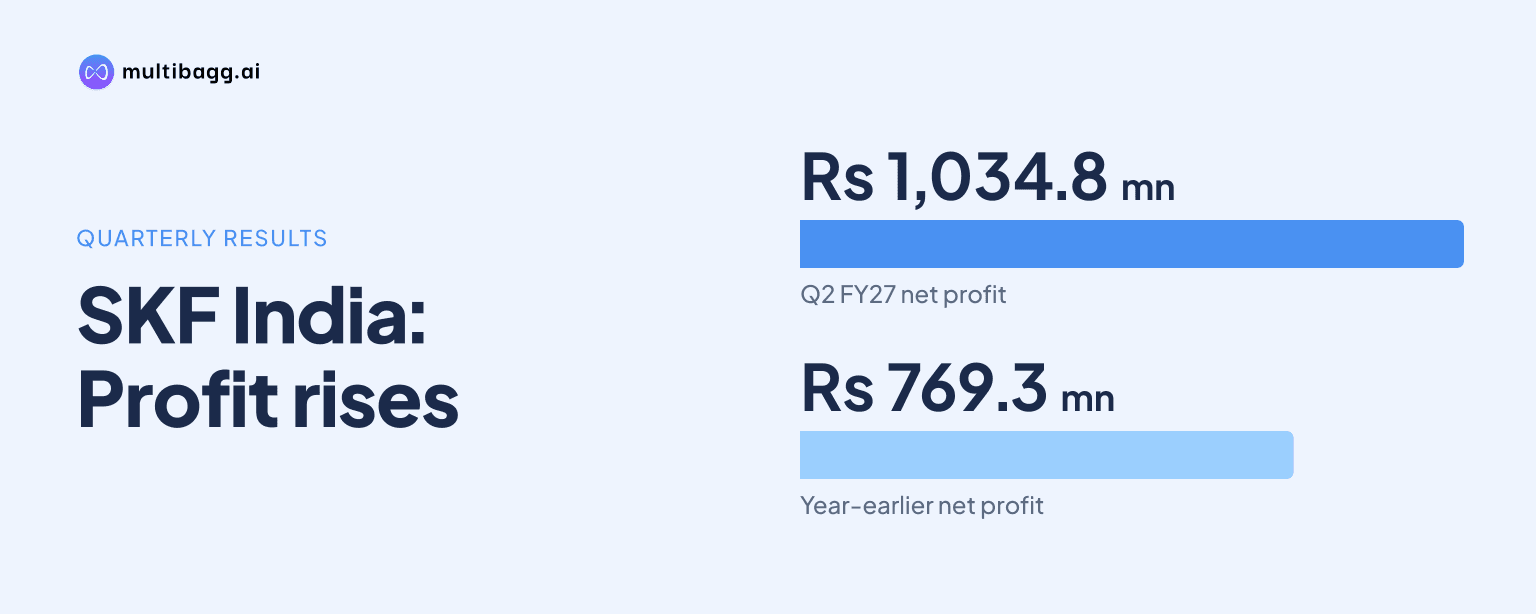
SKF India (Industrial) Limited reported net profit of ₹1,034.8 million for Q2 FY27 ended September 30, 2026, up 34.5% from ₹769.3 million a year earlier, while revenue from operations was ₹10,428.6 million. The result matters because profit growth outpaced the reported quarterly revenue figure, although working-capital movements sharply reduced operating cash generation in the first half.
Know SKF India (Industrial) inside out
Results, valuation, peers and who's buying, in one view.
What did SKF India (Industrial) report for Q2 FY27?
SKF India (Industrial) reported revenue from operations of ₹10,428.6 million for the quarter ended September 30, 2026. Profit before tax was ₹1,343.7 million, compared with ₹1,013.6 million in the corresponding quarter of FY26. Net profit rose to ₹1,034.8 million from ₹769.3 million.
Basic earnings per share for the quarter stood at ₹20.8. The results were approved by the Board of Directors at its meeting on November 4, 2026. They are unaudited interim results prepared under Indian Accounting Standard 34 and in compliance with Regulation 33 of the SEBI Listing Obligations and Disclosure Requirements Regulations, 2015.
The year-on-year rise in profit before tax was about 32.6%, while net profit increased about 34.5%. The higher growth in net profit relative to profit before tax reflects the figures disclosed for the two periods; the company did not provide a further explanation for the movement in the supplied results.
Why did operating cash flow fall despite stable operating profit?
SKF India (Industrial)'s operating profit before working-capital changes was ₹2,202.1 million for the six months ended September 30, 2026, compared with ₹2,237.8 million in the previous-period comparison. Despite this relatively stable operating-profit measure, net cash flow from operating activities fell to ₹431.5 million.
The company attributed the lower cash generation to higher working-capital absorption. Inventories increased by ₹1,368.6 million during the six-month period, while trade payables decreased by ₹621.4 million. An inventory build-up uses cash, and a reduction in trade payables also requires cash outflow as amounts owed to suppliers are settled.
This distinction is important for investors assessing the result. Profit measures are calculated under accounting standards and may include sales and expenses that have not yet converted into cash. The cash-flow statement shows that cash conversion was weaker in the first half even as operating profitability before working-capital changes stayed close to the earlier-period level.
What changed in SKF India (Industrial)'s balance sheet?
SKF India (Industrial)'s total equity and liabilities were ₹25,430.9 million as of September 30, 2026, down from ₹26,745.0 million on March 31, 2026. Cash and cash equivalents declined to ₹3,183.8 million from ₹5,691.7 million over the same period.
The company disclosed dividend payments of ₹1,483.5 million and capital expenditure of ₹1,620.4 million during the six months ended September 30, 2026. These two uses of cash, together with lower cash generated from operations, help explain the reduction in the cash balance.
Capital expenditure can support manufacturing capacity, maintenance, technology, or other operating needs, but the supplied financial information does not specify the projects funded during the period. Similarly, the disclosure identifies the dividend cash outflow without stating a dividend per share in the information provided.
Got a follow-up? Ask IRIS
How does the demerger affect comparison with prior periods?
SKF India (Industrial) stated that the prior-period figures were extracted from the industrial undertaking records of SKF India Limited following a demerger scheme that became effective on October 1, 2025. This provides the basis for comparative figures included in the results.
However, the company also said that these prior-period figures have not been audited or reviewed by its statutory auditors. Investors should therefore distinguish between the current interim financial statements, which were subject to limited review, and comparative numbers drawn from the former industrial undertaking's records.
Demerger-related comparisons can require additional care because historical figures may have been prepared from a business undertaking rather than from a separately reported legal entity for the whole earlier period. The company has disclosed this qualification directly, allowing readers to assess the comparability of the year-on-year data.
What was the auditor's conclusion on the quarterly results?
Deloitte Haskins & Sells LLP issued an unmodified review conclusion on SKF India (Industrial)'s interim financial statements. An unmodified conclusion means the auditors did not identify a matter requiring modification to their conclusion based on their limited review procedures.
The review applies to the unaudited interim financial statements presented for the current reporting period. It does not change the company's separate disclosure that the extracted prior-period figures related to the industrial undertaking have not been audited or reviewed by the statutory auditors.
For market participants, the result combines improved quarterly profit with a clear cash-flow issue to monitor. Inventory growth, lower trade payables, dividend payments and capital expenditure collectively reduced cash available at the end of September, despite operating profit before working-capital changes remaining near the prior-period level.
Conclusion
SKF India (Industrial) delivered a higher Q2 FY27 profit, with net profit rising to ₹1,034.8 million and profit before tax reaching ₹1,343.7 million. But the six-month cash-flow data shows that inventory expansion and lower trade payables absorbed substantial cash, reducing operating cash flow to ₹431.5 million.
Investors will watch future disclosures for changes in inventory, trade payables and operating cash conversion, as well as the effect of ₹1,620.4 million in capital expenditure on operations. Comparability with the prior period also remains an important consideration because the disclosed historical figures were extracted following the October 2025 demerger and were not reviewed by the statutory auditors.