










Gujarat Pipavav Port Q2 Revenue Rises 13.71% to ₹340 Crore
Key highlights
- Gujarat Pipavav Port reported Q2 FY27 revenue of ₹340 crore, up 13.71% from ₹299 crore in Q2 FY26.
- Q2 FY27 container volumes increased to 192,000 TEUs from 164,000 TEUs a year earlier.
- H1 FY27 container volumes reached 360,000 TEUs, compared with 328,000 TEUs in H1 FY26.
- The board approved an interim dividend of ₹3 per share, with 12 November 2026 as the record date.
powered by IRIS
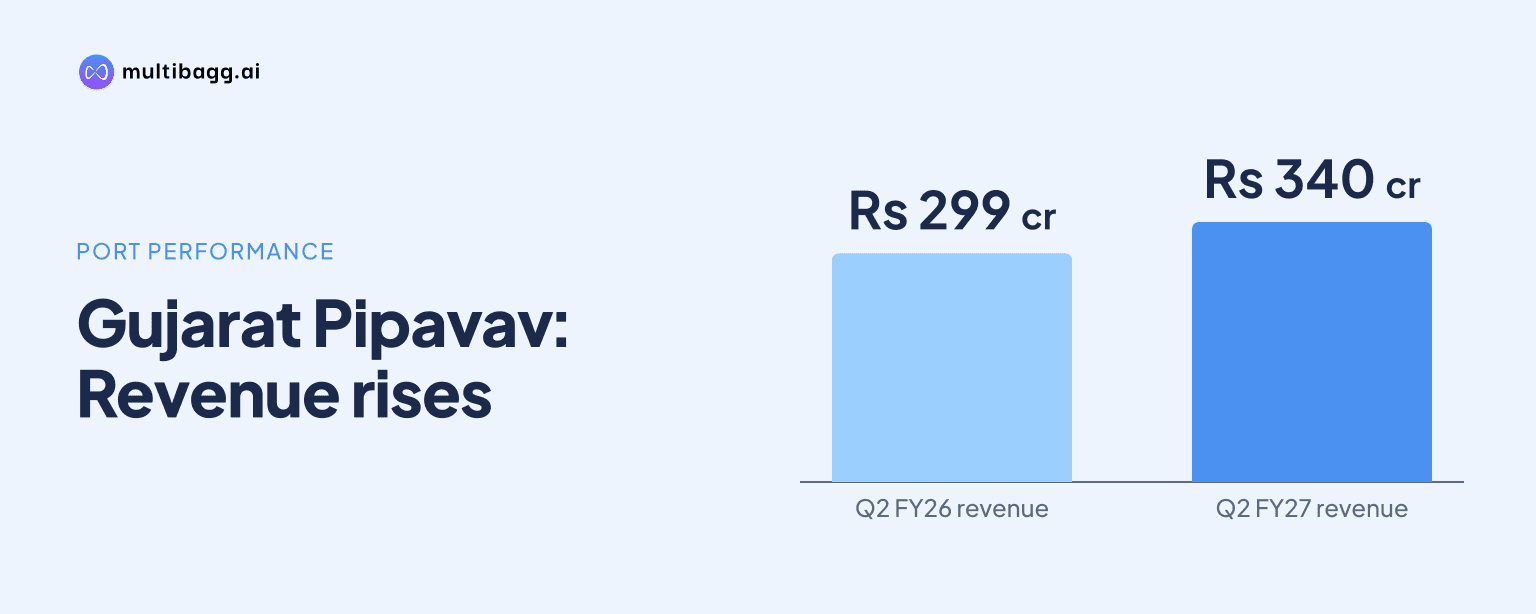
Gujarat Pipavav Port Limited reported Q2 FY27 revenue of ₹340 crore, up 13.71% from ₹299 crore a year earlier, and its board approved an interim dividend of ₹3 per share on 4 November 2026. The result is supported by higher operational activity across container, bulk, liquid and Ro-Ro cargo categories.
Know Gujarat Pipavav Port inside out
Results, valuation, peers and who's buying, in one view.
What did Gujarat Pipavav Port report for Q2 FY27?
Gujarat Pipavav Port reported revenue of ₹340 crore for the quarter ended 30 September 2026, compared with ₹299 crore in the corresponding quarter of the preceding financial year. This represents a year-on-year increase of approximately 13.71%. The board approved the unaudited standalone and consolidated financial results for the quarter and half year, along with the statutory auditors' unmodified limited review report.
The company also approved an interim dividend of ₹3 per share for FY27. The record date for determining eligible shareholders is 12 November 2026. The board had earlier said on 19 October that it would consider the Q2 and half-yearly results, an interim dividend and the associated record date at its 4 November meeting.
The reported revenue figure follows Q1 FY27 net sales turnover of ₹331.77 crore. For that June 2026 quarter, total income was ₹347.22 crore, EBITDA was ₹229.44 crore and reported profit after tax was ₹146.71 crore, according to the quarterly financial data provided. These Q1 figures are separate from the newly reported Q2 revenue number.
How did cargo operations change in the September quarter?
Cargo volumes increased in several segments during Q2 FY27, with containers handled rising to 192,000 TEUs from 164,000 TEUs in Q2 FY26. The September-quarter container volume was also higher than the 168,000 TEUs handled in Q1 FY27. For the first half, container volumes reached 360,000 TEUs, compared with 328,000 TEUs in the year-earlier half.
Rail-linked container activity showed a mixed movement. The port handled 452 container trains in Q2 FY27, below 461 in Q2 FY26, but above 346 in Q1 FY27. Containers handled on trains increased to 116,000 TEUs from 111,000 TEUs a year earlier. Half-year train volumes stood at 204,000 TEUs, compared with 210,000 TEUs in H1 FY26.
The operational filing dated 7 October covered container, bulk, liquid and Ro-Ro cargo for both the quarter and half year ended 30 September 2026. It did not provide all segment-wise tonnage and unit figures in the supplied material. Still, the container data indicates a stronger quarterly throughput level compared with both the prior-year quarter and the immediately preceding quarter.
What are the key reported financial and operating figures?
The key disclosed figures show year-on-year revenue growth in Q2 FY27 alongside improved container throughput. The board's dividend decision adds a shareholder-distribution element to the earnings announcement, while the record date sets the eligibility cutoff for investors.
For context, the company's Q1 FY27 net sales turnover was ₹331.77 crore, up from ₹250.45 crore in Q1 FY26. Q1 reported profit after tax was ₹146.71 crore, against ₹100.13 crore in the corresponding prior-year quarter. Those figures show that the company entered the September quarter after a stronger June-quarter financial performance.
Got a follow-up? Ask IRIS
Why do the Q2 results matter for investors?
The Q2 update matters because it combines higher revenue with evidence of increased container handling. Container throughput is a central operating measure for a port, and the rise to 192,000 TEUs provides operating context for the reported ₹340 crore revenue. The figures also indicate that volume growth continued into the first half, when containers handled reached 360,000 TEUs.
The interim dividend of ₹3 per share is another direct outcome of the board meeting. Investors who hold eligible shares on the announced 12 November record date will be considered for the dividend, subject to the applicable corporate process. The supplied announcement does not specify the dividend payment date.
There is also a relevant comparison with the company's prior Q2 performance. In Q2 FY26, Gujarat Pipavav Port reported revenue from operations of ₹299 crore, while consolidated net profit was ₹161 crore, including a ₹43 crore exceptional item related to a cyclone Tauktae claim. Therefore, comparisons of profit between periods should account for the disclosed exceptional item in the earlier quarter.
How does the result fit Gujarat Pipavav Port's recent operating trend?
Gujarat Pipavav Port's recent disclosures show changes in cargo mix and throughput across quarters. In Q2 FY26, dry bulk cargo rose 128% to 1.05 million tonnes, Ro-Ro units rose 70% to 56,000, and liquid cargo increased 15%, even as container volumes declined 8.4%. The Q2 FY27 operational update shows container volumes moving higher year-on-year.
The annual financial data also show net sales of ₹1,158.4 crore for FY26, compared with ₹987.7 crore in FY25. Forecast figures shown for later years are estimates rather than released company results and should not be treated as reported performance. The current Q2 announcement is based on the board-approved unaudited results and the separately released operational data.
Conclusion
Gujarat Pipavav Port's Q2 FY27 update reported ₹340 crore of revenue, a 13.71% increase over the ₹299 crore reported in the prior-year quarter. Higher container volumes, at 192,000 TEUs, provide an operational indicator alongside the revenue growth, while the board's approval of a ₹3 per-share interim dividend is a defined outcome for eligible shareholders.
The next disclosed event is the investor call scheduled for 5 November 2026. Investors can watch for management's discussion of the detailed Q2 and half-year financial results, cargo trends across business segments, and the dividend timetable following the 12 November 2026 record date.