










Surya Roshni Q2 FY27 revenue rises 33% to ₹2,448 crore
Key highlights
- Surya Roshni reported Q2 FY27 consolidated revenue of ₹2,448.48 crore, up 32.7% year-on-year.
- Q2 FY27 net profit rose 3.4% year-on-year to ₹76.73 crore, with EPS of ₹3.52.
- Steel Pipes & Strips revenue increased 38% to ₹1,941 crore as volume reached 2.67 lakh tonnes.
- Surya Roshni reported a ₹75 crore cash surplus and remained debt-free as of September 30, 2026.
powered by IRIS
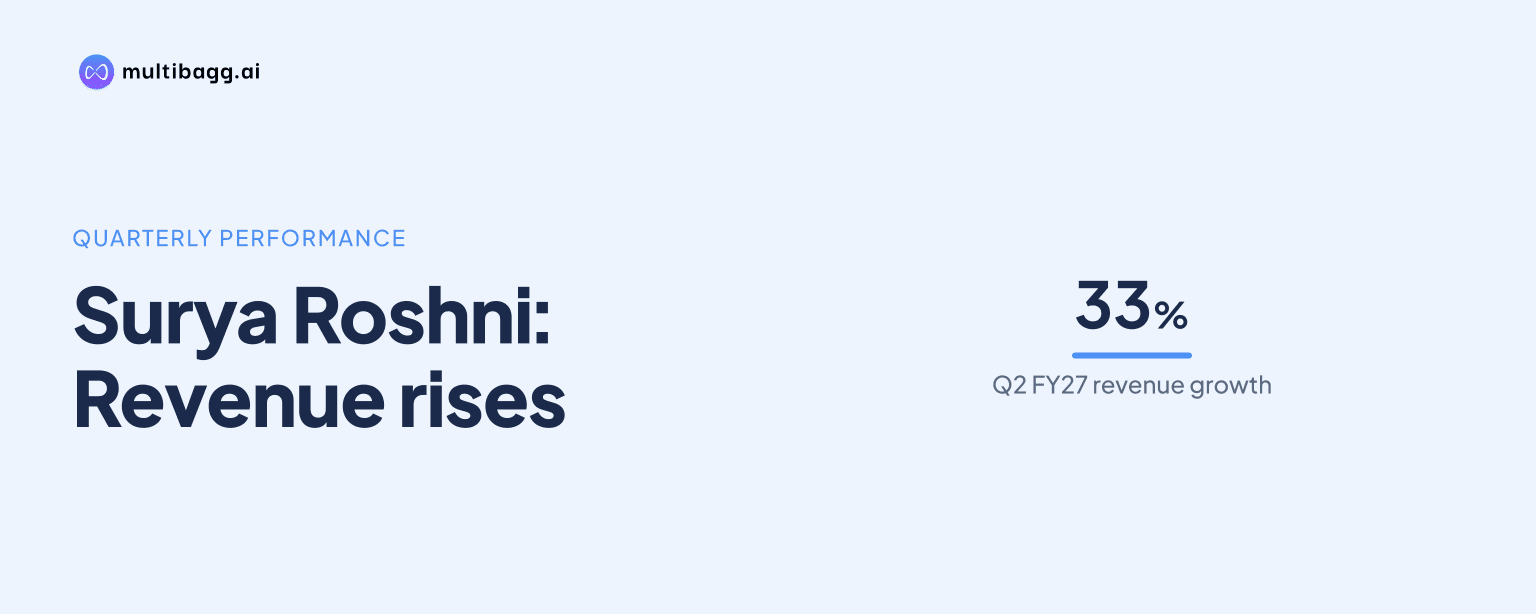
Surya Roshni Limited reported consolidated Q2 FY27 revenue of ₹2,448 crore, up 33% year-on-year, as record steel pipe volumes and higher lighting sales lifted turnover, while net profit rose 3% to ₹77 crore and reported operating margins moderated.
Know Surya India inside out
Results, valuation, peers and who's buying, in one view.
How did Surya Roshni perform in Q2 FY27?
Surya Roshni recorded consolidated revenue of ₹2,448.48 crore in the July-September 2026 quarter, compared with ₹1,845.16 crore in Q2 FY26. The 32.7% year-on-year increase was supported by growth in both its Steel Pipes & Strips and Lighting & Consumer Durables businesses. Revenue also increased 20% sequentially from ₹2,046 crore in Q1 FY27.
Net profit was ₹76.73 crore, compared with ₹74.19 crore in the year-ago quarter, representing a 3.4% increase. Basic earnings per share stood at ₹3.52. Total income was ₹2,454.61 crore, while total expenses were ₹2,351.50 crore. Finance costs declined to ₹5.42 crore from ₹9.10 crore in Q2 FY26.
The company reported operating profit of ₹136.67 crore in its results filing, with an operating margin of 5.6%. Its investor presentation separately reported EBITDA of ₹143 crore, up 1% year-on-year. The presentation described the quarter as a record revenue period, though the increase in profit was materially lower than the rise in revenue.
What drove Surya Roshni's revenue growth?
The Steel Pipes & Strips division was the principal driver of quarterly growth, reporting revenue of ₹1,941 crore, up 38% year-on-year. Sales volume in the segment reached 2.67 lakh tonnes, a record level and 23% above the comparable quarter. The reported performance came alongside a stronger domestic oil and gas tendering environment.
The Lighting & Consumer Durables division reported its highest-ever second-quarter revenue of ₹507 crore, up 17% year-on-year. The segment's reported EBITDA was ₹40 crore, up 1%, and its EBITDA margin was 7.8%, compared with 9.0% a year earlier. The two operating businesses together accounted for the reported consolidated revenue expansion.
For the first half of FY27, consolidated revenue rose 30% year-on-year to ₹4,495 crore. H1 EBITDA was reported at ₹263 crore, up 18%, while profit after tax increased 26% to ₹136 crore. Lighting and consumer durables revenue for the half year was ₹964 crore, up 16% year-on-year.
Why did Surya Roshni's margins moderate?
Surya Roshni's Q2 FY27 operating margin was 5.6%, compared with 6.4% in Q2 FY26, according to the consolidated results filing. The company reported that higher material costs and other expenses accompanied the sharp growth in revenue. Its investor presentation also showed a gross margin of 21.6% for the quarter.
Steel segment EBITDA per tonne was ₹4,105 in Q2 FY27, compared with ₹5,013 in Q2 FY26, although it improved from ₹4,006 in Q1 FY27. Management noted that margins had reduced from an earlier average of about ₹10,000 per tonne to around ₹8,000 per tonne, citing lower coating-material rates and limited API pipe capacity in India.
For H1 FY27, gross profit was ₹964 crore and gross margin was 21.4%, compared with 22.4% in H1 FY26. These figures indicate that higher volumes and revenue supported absolute earnings, while profitability ratios faced pressure during the period.
Got a follow-up? Ask IRIS
What is Surya Roshni's financial position and outlook?
Surya Roshni remained debt-free and reported a cash surplus of ₹75 crore as of September 30, 2026. The company reported first-half capital expenditure of ₹69 crore and a closing capital work-in-progress balance of ₹59 crore. These disclosures provide context for its investment activity without indicating additional funding requirements.
The company reaffirmed its FY27 consolidated revenue growth guidance of 22% to 23%. Its steel order book was reported at about ₹1,200 crore, while another results update placed the order book at about ₹1,400 crore across both businesses. The disclosed figures indicate ongoing order visibility, although the company has not published an earnings-call transcript for the quarter.
For investors, the quarter presents two contrasting factors. Revenue growth was led by record steel volumes and a strong lighting contribution, but profit growth was limited and margins were lower year-on-year. The debt-free balance sheet and cash surplus remain relevant financial indicators alongside the order book and capital expenditure disclosures.
How does the quarter affect Surya Roshni's operating businesses?
The steel business delivered the largest contribution to quarterly growth, with revenue rising faster than sales volume. This reflects the importance of product mix and realisations in addition to shipment volumes for the segment. At the same time, lower EBITDA per tonne and management's comments on coating-material rates show that higher turnover did not translate into proportionate margin expansion.
The lighting and consumer durables business added a record quarterly revenue contribution of ₹507 crore. However, its EBITDA margin declined to 7.8% from 9.0% in the previous year's quarter. The reported results therefore show growth across both businesses, while also highlighting the pressure on consolidated and segment-level margins.
Conclusion
Surya Roshni's Q2 FY27 results showed strong revenue momentum, with consolidated turnover rising 33% to ₹2,448 crore on record steel pipe and strip volumes and higher lighting revenue. Net profit rose 3% to ₹77 crore, while operating margins declined, making cost trends and segment profitability important alongside top-line growth.
Investors will watch whether the company maintains its FY27 revenue growth guidance of 22% to 23%, converts its reported steel order book into revenue, and improves profitability per tonne. Further updates on capital expenditure, cash surplus and the domestic oil and gas tendering environment will also be relevant to its operating outlook.