










TARC Limited Q2 FY27 Revenue Falls 47.8% to ₹128.81 Crore
Key highlights
- TARC reported Q2 FY27 revenue from operations of ₹128.81 crore, down 47.8% year on year.
- Consolidated Q2 FY27 net profit was ₹4.39 crore, down 80.6% quarter on quarter.
- TARC recorded a consolidated loss of ₹15.77 crore for the half-year ended September 30, 2026.
- TARC's debt-equity ratio stood at 1.64 as of September 30, 2026.
powered by IRIS
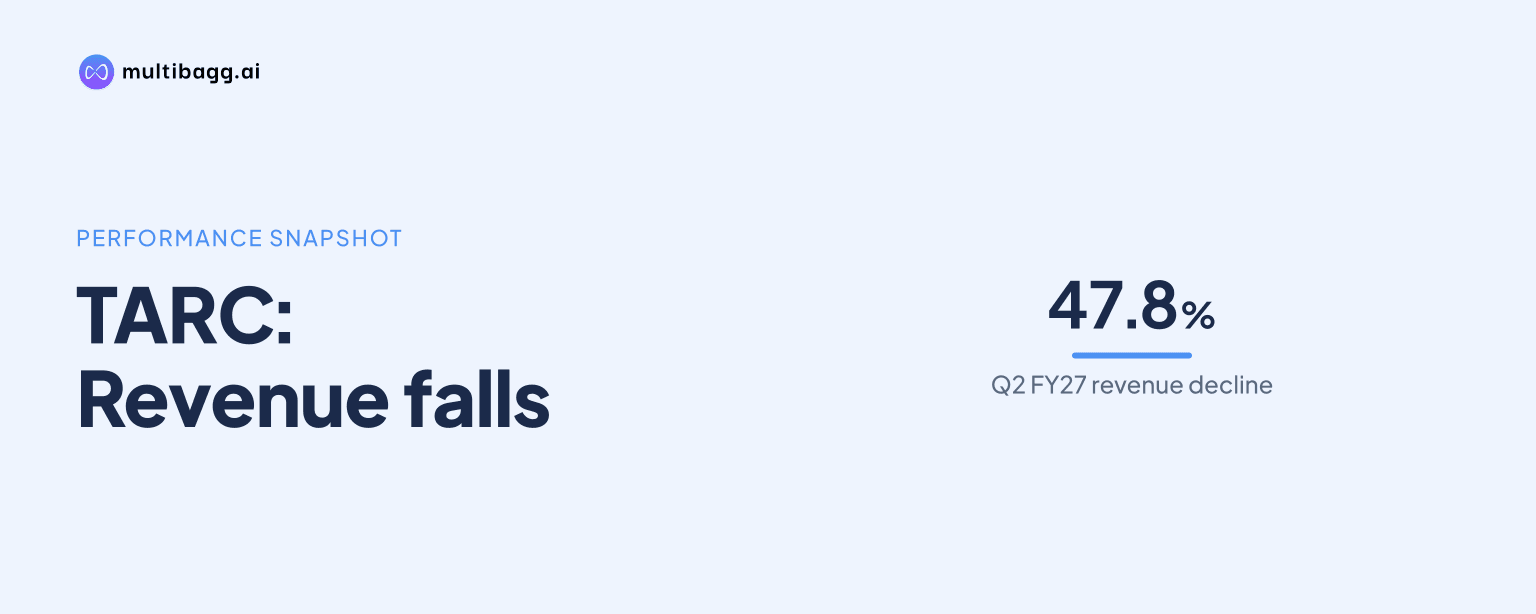
TARC Limited reported consolidated revenue from operations of ₹128.81 crore for the quarter ended September 30, 2026, down 47.8% year on year, while consolidated net profit was ₹4.39 crore. The result marked a sharp sequential decline in revenue and profit, although the company returned to quarterly profitability from a loss reported in Q2 FY26.
Know TARC inside out
Results, valuation, peers and who's buying, in one view.
What did TARC report for Q2 FY27?
TARC reported revenue from operations of ₹128.81 crore and consolidated net profit of ₹4.39 crore for Q2 FY27. The company disclosed the results on November 12, 2026, following a board meeting held to consider the financial statements for the quarter and half-year ended September 30, 2026.
The quarterly revenue figure was lower by 53.5% on a sequential basis and 47.8% from a year earlier, according to the results highlights. Net profit declined 80.6% from the preceding quarter. Despite the sequential fall, the Q2 FY27 profit compares with a consolidated loss reported for Q2 FY26.
Why did quarterly revenue and profit decline?
TARC's reported Q2 FY27 performance reflected lower revenue recognition than the preceding quarter and the corresponding quarter a year earlier. The company did not provide a detailed operational explanation for the revenue decline in the information released with the results highlights.
The scale of the sequential movement is visible against TARC's Q1 FY27 financial data, which showed sales of ₹217.13 crore and net profit of ₹22.65 crore. Q2 FY27 revenue of ₹128.81 crore and profit of ₹4.39 crore were therefore materially below those reported Q1 levels. The results indicate that the company's quarterly financial performance can vary significantly across reporting periods.
Profitability also remained mixed. TARC reported a negative operating margin of 1.91%, indicating that operating performance before other income and related items was under pressure during the quarter. Yet the company reported a net profit margin of 3.28%, resulting in a positive consolidated profit after tax for the period.
What does the half-year financial position show?
TARC recorded a consolidated net loss of ₹15.77 crore for the half-year ended September 30, 2026, despite reporting a profit in the September quarter. Total income for the first half stood at ₹352.78 crore, showing that the profitable second quarter did not offset the loss recorded during the six-month period.
The consolidated balance sheet showed total assets of ₹4,744.79 crore as of September 30, 2026. Total equity and liabilities were reported at the same amount, as required under the accounting presentation. The debt-equity ratio stood at 1.64, a key indicator for investors assessing the balance between borrowings and shareholder funds.
TARC's cash flow statement showed a net increase of ₹8.04 crore in cash and cash equivalents during the half-year. Cash movement and leverage are important for a real estate company because project development, land-related commitments and construction activity typically require substantial funding over extended execution periods.
Got a follow-up? Ask IRIS
What did the auditors and board meeting disclose?
The auditors issued unmodified limited-review conclusions on TARC's consolidated financial results, while drawing attention to the Manesar project compensation matter. An unmodified conclusion means the auditors did not modify their conclusion on the reviewed financial information, although the stated matter was highlighted for users of the results.
The company also reported that no exceptional item was recognised in the Q2 FY27 results. The Manesar project compensation matter remains relevant because it was specifically identified in the auditor-related disclosure, but the available information does not provide a quantified financial effect of that matter on the September-quarter results.
The board meeting for approving the Q2 and first-half FY27 results had earlier been postponed from November 5, 2026, to November 12, 2026. The final results were announced on the rescheduled date. No earnings-call transcript or additional management guidance was included in the provided information.
How does the result affect TARC investors and operations?
For investors, the result presents two contrasting signals: TARC remained profitable in the September quarter, but revenue and profit declined sharply from the preceding quarter. The half-year loss of ₹15.77 crore and the negative operating margin also show that quarterly profitability has not translated into a positive first-half earnings outcome.
The results place attention on future revenue recognition, operating margins and the company's funding position. With a debt-equity ratio of 1.64 and total assets of ₹4,744.79 crore, investors are likely to monitor how project execution and cash flows influence future financial statements. The disclosure on the Manesar compensation matter is another item that warrants attention in subsequent filings.
Conclusion
TARC's Q2 FY27 results showed revenue of ₹128.81 crore and net profit of ₹4.39 crore, with both measures below the prior quarter and revenue also lower than a year earlier. The company returned to a quarterly profit compared with the loss reported in Q2 FY26, but the half-year result remained a consolidated loss of ₹15.77 crore.
The next areas to watch are TARC's subsequent quarterly revenue recognition, progress in operating margin and cash flow, and any further disclosure on the Manesar project compensation matter. Investors will also assess whether the company's reported debt-equity ratio of 1.64 changes as projects progress and funding requirements evolve.