










Tarmat Limited Q2 FY27 Profit Rises 91% to ₹2.81 Crore
Key highlights
- Tarmat reported Q2 FY27 consolidated revenue of ₹37.49 crore, up 65% year-on-year.
- Consolidated net profit rose 91% year-on-year to ₹2.81 crore in Q2 FY27.
- Net profit margin expanded to 7.5% from 4.3% in Q1 FY27.
- A ₹0.43 crore tax credit supported Q2 FY27 profit.
powered by IRIS
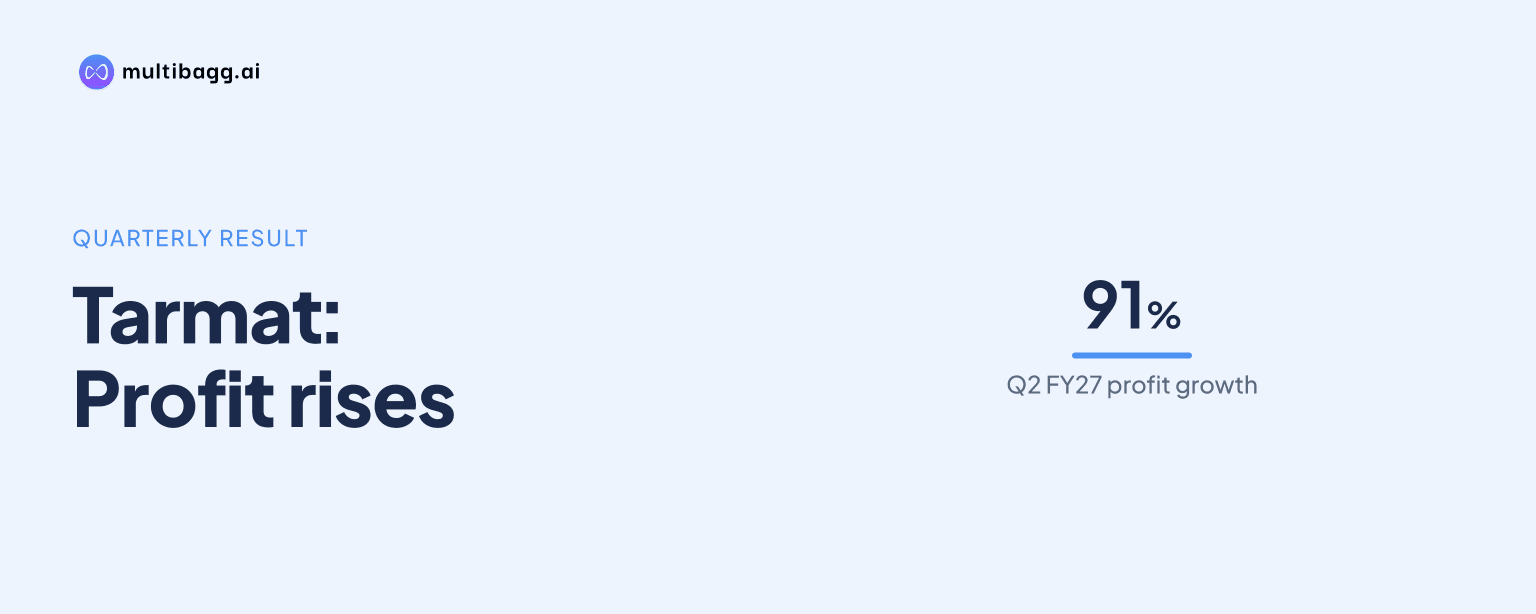
Tarmat Limited reported consolidated Q2 FY27 revenue of ₹37.49 crore and net profit of ₹2.81 crore for the quarter ended September 30, 2026, representing year-on-year increases of 65% and 91%, respectively. The profit increase outpaced revenue growth as the net profit margin improved to 7.5% from 4.3% in the preceding quarter.
Know Tarmat inside out
Results, valuation, peers and who's buying, in one view.
What did Tarmat report for Q2 FY27?
Tarmat reported consolidated revenue of ₹37.49 crore and profit after tax of ₹2.81 crore in Q2 FY27. The results were approved by the board on November 14, 2026, along with the unaudited standalone and consolidated financial statements for the quarter and half year ended September 30, 2026.
The company’s quarterly filing also reported a 7.5% net profit margin. This was higher than the 6.5% margin reported in Q2 FY26 and the 4.3% margin in Q1 FY27. The margin movement is significant because profit rose more rapidly than revenue during the quarter.
How did revenue and profit change from earlier periods?
Tarmat’s Q2 FY27 revenue increased 65% from ₹22.67 crore in Q2 FY26 to ₹37.49 crore. On a sequential basis, revenue rose 5% from ₹35.81 crore in Q1 FY27, indicating that the company maintained revenue momentum into the September quarter.
Net profit rose 91% year-on-year from ₹1.47 crore and 84% sequentially from ₹1.53 crore. The gap between sequential revenue growth and profit growth points to a meaningful improvement in the company’s quarterly profitability. Profit before tax in another disclosed comparison rose to ₹2.39 crore from ₹1.90 crore, while revenue increased to ₹37.56 crore from ₹35.87 crore. These figures are presented in lakhs in the underlying disclosure and have been converted to crore.
What drove Tarmat’s higher profit margin?
Tarmat’s net profit margin increased by 320 basis points from 4.3% in Q1 FY27 to 7.5% in Q2 FY27. The reported figures indicate that the 84% sequential increase in net profit was substantially higher than the 5% increase in revenue, reflecting improved operating efficiency during the quarter.
A tax credit of ₹0.43 crore also supported the bottom line, according to the company’s filing. This item provided a one-time benefit to quarterly profit. Investors assessing the result should distinguish between the contribution from operational improvement and the impact of this tax-related credit.
Got a follow-up? Ask IRIS
What do the standalone results and audit observation show?
Tarmat’s standalone Q2 FY27 revenue was reported at ₹38.60 crore, up 70% year-on-year, while standalone net profit was ₹3.50 crore compared with ₹1.50 crore a year earlier. The difference between standalone and consolidated figures reflects the reporting basis and should be considered when comparing headline numbers from different disclosures.
The auditors also drew attention to the unassessed ₹7.80 crore investment in Backbone-Tarmat-Al Fara'a JV. The filing stated that the joint venture had not been consolidated, describing this as non-compliance with Ind AS requirements. It further said that the effect on consolidated profit, earnings per share and other equity could not be determined from the information available.
Why do Tarmat’s Q2 FY27 results matter to investors?
The Q2 numbers show that Tarmat achieved higher revenue while expanding its reported net profit margin. For an infrastructure contractor, execution volumes, project costs, collections and tax items can all affect quarterly profitability. The rise in revenue from ₹22.67 crore to ₹37.49 crore gives context to the company’s improved profit outcome.
At the same time, the audit observation concerning the joint venture is relevant to users of the consolidated accounts. The filing does not quantify the possible impact of non-consolidation on profit or net worth. No share-price movement or market reaction was provided in the available material, so the results themselves and the audit disclosure remain the key disclosed considerations for investors.
Conclusion
Tarmat delivered a stronger reported Q2 FY27, with consolidated revenue rising 65% year-on-year to ₹37.49 crore and net profit increasing 91% to ₹2.81 crore. The company’s 7.5% net profit margin, compared with 4.3% in the prior quarter, was supported by improved operational performance and a ₹0.43 crore tax credit.
The next point to watch is whether Tarmat can sustain its margin improvement without similar tax benefits and whether it provides further clarity on the ₹7.80 crore Backbone-Tarmat-Al Fara'a JV investment. The board has approved the September-quarter results, making future financial filings the relevant source for updates on the joint venture’s accounting treatment and operating performance.