










Tata Motors Takes 89.42% Iveco Stake for €3.43 Billion
Key highlights
- Tata Motors acquired 89.42% of Iveco Group for approximately €3.43 billion on October 30, 2026.
- TML CV Holdings B.V. acquired 238,157,212 Iveco common shares at €14.40 per share.
- The combined Tata Motors and Iveco commercial vehicle enterprise reports revenue of €21 billion.
- Tata Motors is exploring semi-knocked-down assembly of selected Iveco vehicles in India.
powered by IRIS
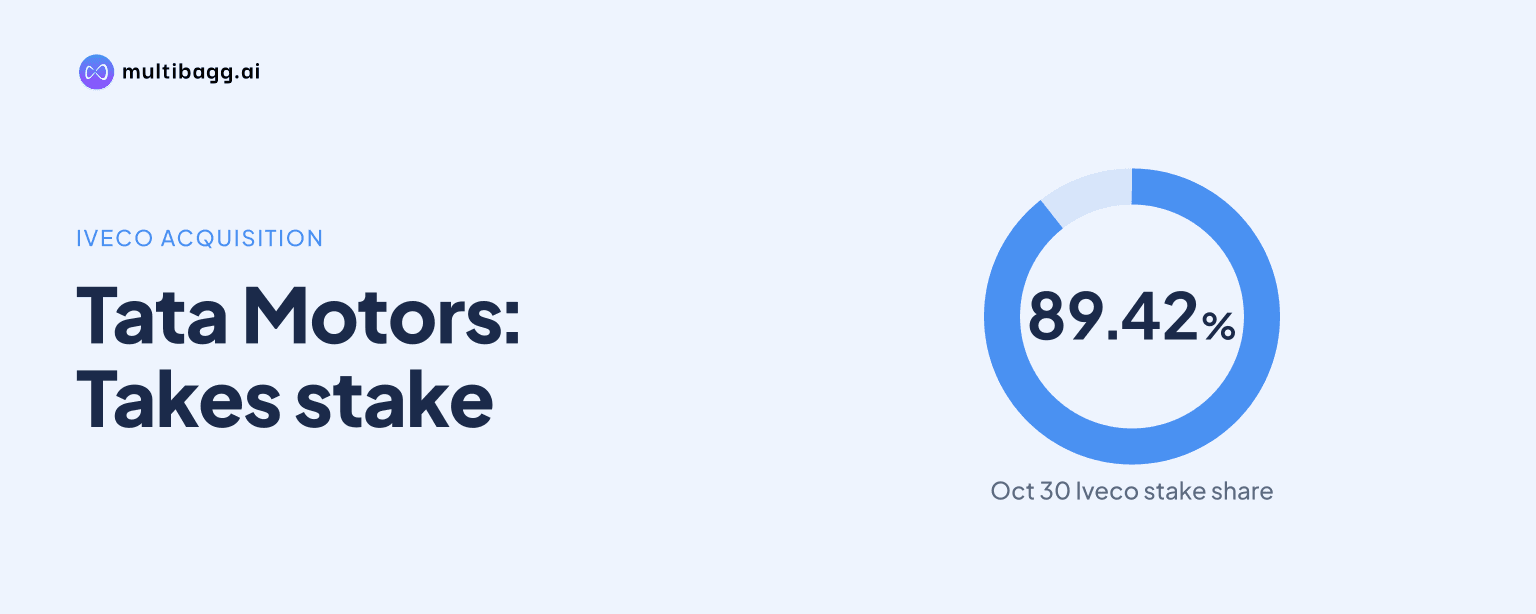
Tata Motors Limited completed the initial settlement of its cash tender offer for Iveco Group N.V. on October 30, 2026, acquiring an 89.42% stake for approximately €3.43 billion and making the Italian commercial vehicle maker an indirect subsidiary. The transaction gives Tata Motors control of 238,157,212 Iveco shares and combines businesses reporting €21 billion in revenue.
Know Tata Motors inside out
Results, valuation, peers and who's buying, in one view.
How did Tata Motors acquire control of Iveco Group?
Tata Motors acquired control through a voluntary tender offer made by TML CV Holdings B.V., an indirect wholly owned subsidiary of the company. The offer was for all issued common shares of Iveco Group at €14.40 per share in cash, cum dividend. The settlement following the acceptance period was completed on October 30, 2026.
TML CV Holdings B.V. received 238,157,212 common shares in the initial settlement. This represents approximately 89.42% of Iveco's common share capital after excluding treasury shares. Tata Motors and Iveco Group confirmed that, following this settlement, Iveco Group had become part of Tata Motors.
The transaction followed an offer document published on September 4, 2026, an amendment notice issued on October 9, and a notice on final results dated October 27. Tata Motors said the purchase process continues for the remaining shares as it moves towards delisting Iveco Group.
The acquisition was executed through the Dutch holding entity rather than directly by Tata Motors. This structure means Iveco Group is now an indirect subsidiary of Tata Motors, while the Indian company holds the controlling economic interest through TML CV Holdings B.V.
What are the key figures in the Iveco transaction?
The central transaction figure is Tata Motors' 89.42% holding in Iveco Group, acquired for approximately €3.43 billion. The tender offer price was €14.40 for each common share, and the acquired holding comprised 238,157,212 shares.
The companies said their combined enterprise would rank as the world's fourth-largest commercial vehicle maker by revenue. The reported €21 billion revenue base reflects the combination of Tata Motors' commercial vehicle operations and Iveco's international commercial vehicle, bus and powertrain business.
For Tata Motors, the deal is its largest acquisition since its 2008 purchase of Jaguar Land Rover from Ford, according to reports cited in the source material. The purchase adds a European-headquartered commercial vehicle business to Tata Motors' established position in India and other emerging markets.
Got a follow-up? Ask IRIS
Why does Iveco Group matter to Tata Motors?
Iveco Group brings an established presence in Europe and Latin America, while Tata Motors has a strong commercial vehicle position in India and emerging markets. The companies have described the combination as a global commercial mobility enterprise with broader scale, market reach and capabilities across technology cycles.
Iveco operates in commercial vehicles, buses and powertrains. Its Italian heritage and international operating footprint complement Tata Motors' existing portfolio of trucks, buses, utility vehicles and pick-ups. The combination therefore extends Tata Motors' access to overseas markets where Iveco already has a presence.
The transaction also creates a larger platform for product discussions across the two companies' markets. Tata Motors is exploring local assembly of select Iveco vehicles in India through the semi-knocked-down, or SKD, route. The companies are identifying opportunities to introduce products from each business into the other's markets.
No specific vehicle models, production volumes, investment commitments or assembly timeline were disclosed in the information provided. The SKD proposal remains an area under exploration rather than a confirmed manufacturing programme.
How does the deal affect Tata Motors investors and operations?
The acquisition places Iveco's operations under Tata Motors' control and makes the European company an indirect subsidiary. For investors, the disclosed transaction establishes the purchase consideration, the controlling stake and the tender offer mechanism, while the acquisition of the remaining shares and planned delisting remain ongoing matters.
The combined revenue figure of €21 billion indicates the scale of the commercial vehicle platform after the transaction. Tata Motors' existing India and emerging-market operations will sit alongside Iveco's European and Latin American presence, widening the group's geographic commercial vehicle footprint.
Operationally, the companies have indicated that they intend to examine cross-market product opportunities. Potential local assembly in India could be relevant to Iveco products if the exploration progresses, but no execution plan has been announced. The immediate confirmed change is ownership: Iveco is now part of Tata Motors.
The transaction was marked publicly on November 3, 2026, when Tata Motors and Iveco described the combination as a new beginning as a global commercial mobility enterprise. Their statement focused on scale, reach and capabilities, without setting financial synergy targets or providing a timetable for operational integration.
Conclusion
Tata Motors has secured control of Iveco through the acquisition of 89.42% of its share capital for approximately €3.43 billion. The initial settlement brings 238,157,212 shares under Tata Motors' indirect ownership and joins commercial vehicle businesses with reported combined revenue of €21 billion.
Investors will next watch the continuing acquisition of Iveco's remaining shares, the proposed delisting process and any formal decisions on assembling selected Iveco vehicles in India through the SKD route. The companies have confirmed their intent to identify cross-market product opportunities, but have not disclosed product, investment or integration targets.