










UFlex Q2 profit rises 683% as normalized margin reaches 15.6%
Key highlights
- UFlex reported Q2 FY27 normalized net profit after non-controlling interests of Rs 210.6 crore, up 682.8% year on year.
- Q2 FY27 normalized EBITDA rose 94.8% to Rs 758.8 crore and the margin increased 550 basis points to 15.6%.
- Q2 FY27 revenue from operations was Rs 4,820.9 crore, up 25.8% year on year but down 10.2% from Q1 FY27.
- UFlex commissioned its bags manufacturing plant in Mexico during the September 2026 quarter.
powered by IRIS
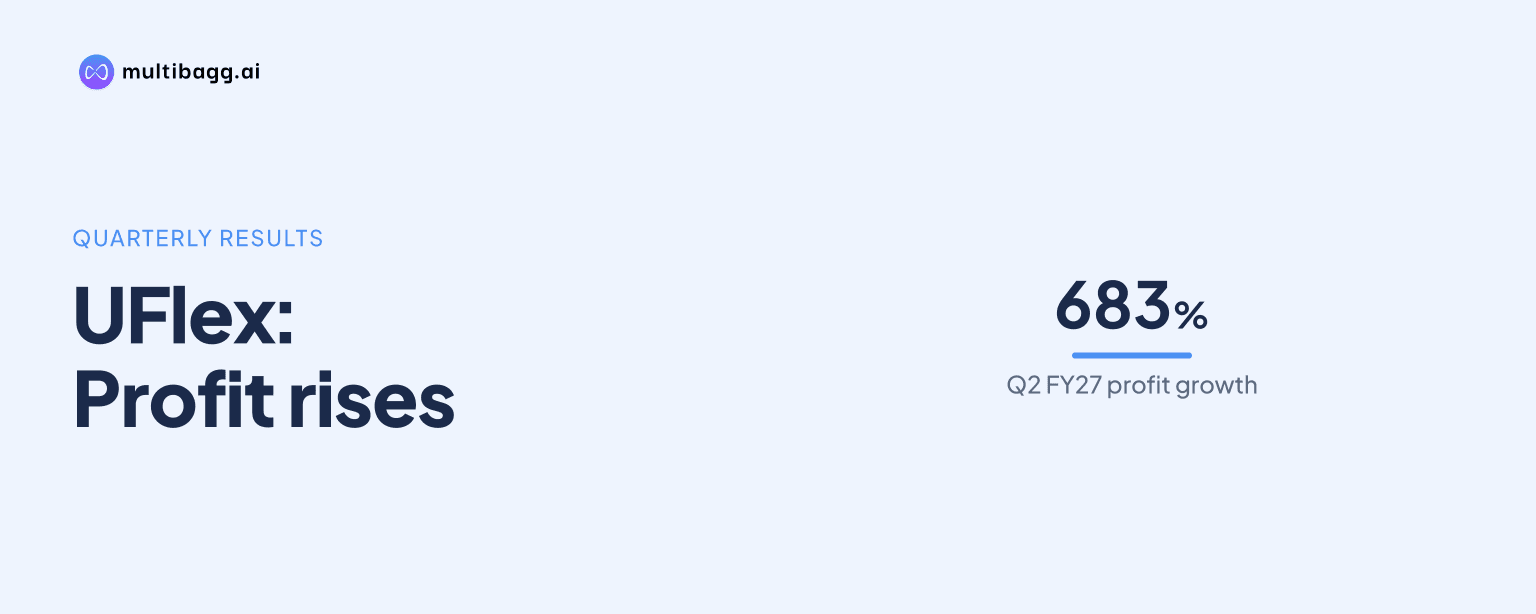
UFlex Limited reported normalized net profit after non-controlling interests (NCI) of Rs 210.6 crore in the second quarter of fiscal 2027 (Q2 FY27), up 682.8% year on year, as normalized earnings before interest, tax, depreciation and amortization (EBITDA) margin expanded 550 basis points to 15.6%. Revenue increased 26.1% to Rs 4,869.4 crore.
Know Uflex inside out
Results, valuation, peers and who's buying, in one view.
How much did UFlex profit grow in Q2 FY27?
UFlex's normalized net profit after NCI rose to Rs 210.6 crore in Q2 FY27 from Rs 26.9 crore in Q2 FY26, a 682.8% year-on-year increase. The normalized profit margin reached 4.3%, compared with 0.7% a year earlier, an expansion of 360 basis points. A basis point is one-hundredth of a percentage point.
Reported profit after tax was Rs 215 crore, up 609.7% year on year from Rs 30.3 crore, while reported net profit after NCI was Rs 210.6 crore. Profit before tax rose 527.0% to Rs 258.5 crore from Rs 41.2 crore, although it was lower than Rs 490.5 crore in the first quarter of fiscal 2027 (Q1 FY27) as quarterly revenue and earnings declined sequentially.
What drove UFlex's EBITDA margin expansion?
UFlex reported normalized EBITDA of Rs 758.8 crore for Q2 FY27, an increase of 94.8% from Rs 389.5 crore in Q2 FY26, and its normalized EBITDA margin increased to 15.6% from 10.1%. Reported EBITDA was Rs 712.6 crore, up 70.2% year on year, with a reported margin of 14.6%.
The difference between normalized and reported EBITDA was a Rs 46.2 crore foreign-exchange loss in Q2 FY27, compared with a Rs 29.3 crore foreign-exchange gain in Q2 FY26. Finance costs increased 23.7% year on year to Rs 232.7 crore and depreciation and amortization increased 16.9% to Rs 221.5 crore, but both grew more slowly than normalized EBITDA.
Why did UFlex revenue fall from the previous quarter?
UFlex's Q2 FY27 revenue from operations was Rs 4,820.9 crore, down 10.2% from Rs 5,366 crore in Q1 FY27, while total income declined 9.8% sequentially to Rs 4,869.4 crore. Even after this quarter-on-quarter reduction, revenue from operations was 25.8% above Rs 3,832 crore in Q2 FY26.
Packaging films, including chips, generated Rs 3,263.4 crore in Q2 FY27, down 11.5% from Rs 3,687.9 crore in Q1 FY27 but up 34.3% from Rs 2,430.7 crore a year earlier. Value-added products contributed Rs 1,557.4 crore, down 7.2% sequentially and up 11.1% year on year; within that group, flexible packaging revenue fell 14.7% sequentially to Rs 1,131 crore.
Got a follow-up? Ask IRIS
Which business segments supported UFlex's quarter?
UFlex's flexible packaging activities recorded segment revenue of Rs 4,681.8 crore in Q2 FY27, compared with Rs 3,735.7 crore in Q2 FY26, while engineering activities generated Rs 168.7 crore versus Rs 129.9 crore. Flexible packaging remained the principal consolidated segment, accounting for nearly all of the Rs 4,820.9 crore revenue from operations after inter-segment revenue.
Flexible packaging segment profit before exceptional items, tax and interest was Rs 453.8 crore, up from Rs 250.3 crore a year earlier, but below Rs 733.7 crore in Q1 FY27. Engineering segment profit rose to Rs 37.4 crore from Rs 22.4 crore year on year, while the unallocable segment loss narrowed to Rs 48.6 crore from Rs 72.3 crore.
What operating trends did UFlex report across markets?
UFlex reported Q2 FY27 sales volume of 163,532 metric tonnes, up 1.5% year on year, with packaging films representing 78.9% and packaging representing 21.1%. India domestic packaging-film volume rose 0.5% year on year and 12.1% sequentially to 32,857 metric tonnes, which UFlex attributed to dealer and client inventory replenishment, pre-festive stocking and lower imports.
In the Middle East and Africa (MEA), local sales volume increased 8.2% year on year, while first-half volume rose 11.6% to 75,630 metric tonnes. UFlex said Europe local-market sales increased 31% year on year, and the share of value-added films in Hungary rose 37% year on year to 52.8%; its United States and Mexico plants operated at more than 90% capacity utilisation.
What does UFlex expect for the rest of FY27?
Management said its FY27 growth outlook is supported by recently commissioned facilities, including the recycling plant in Noida Sector 155 and the bags manufacturing plant in Mexico, plus an upcoming aseptic-packaging facility in Egypt. The Mexico bags manufacturing plant was successfully commissioned during the September 2026 quarter.
Management also expects a higher-value-added product portfolio, improved product mix and operational efficiencies to support realisations and margins. It noted that domestic flexible-packaging volumes may be affected during portfolio rationalisation as product approvals and customer onboarding proceed, while improved shipping conditions could aid aseptic export volumes after delays in the MEA region.
Conclusion
UFlex delivered a much faster increase in Q2 FY27 normalized profit than in revenue: normalized EBITDA rose 94.8% to Rs 758.8 crore against a 26.1% increase in total income to Rs 4,869.4 crore. The resulting 15.6% normalized EBITDA margin and Rs 210.6 crore normalized net profit after NCI marked substantial year-on-year improvement, despite a 10.2% sequential decline in revenue from operations.
The next reported milestones are the ramp-up of the Noida recycling and Mexico bags facilities, and progress on the planned Egypt aseptic-packaging facility. Management's FY27 outlook also depends on its stated shift to higher-value products, completion of domestic flexible-packaging portfolio rationalisation, and the recovery of aseptic export deliveries affected by MEA shipping disruption.