










Veranda Learning Solutions Q2 Revenue Rises 17% to ₹50.6 Crore
Key highlights
- Veranda reported Q2 FY27 revenue of ₹50.6 crore, up 17% year-on-year.
- Government test-prep revenue grew 31% year-on-year in Q2 FY27.
- Q2 FY27 EBITDA rose 28% to ₹12.7 crore and EBITDA margin reached 25%.
- Veranda retained FY27 guidance of ₹175 crore revenue, ₹46 crore EBITDA and about ₹32 crore PAT.
powered by IRIS
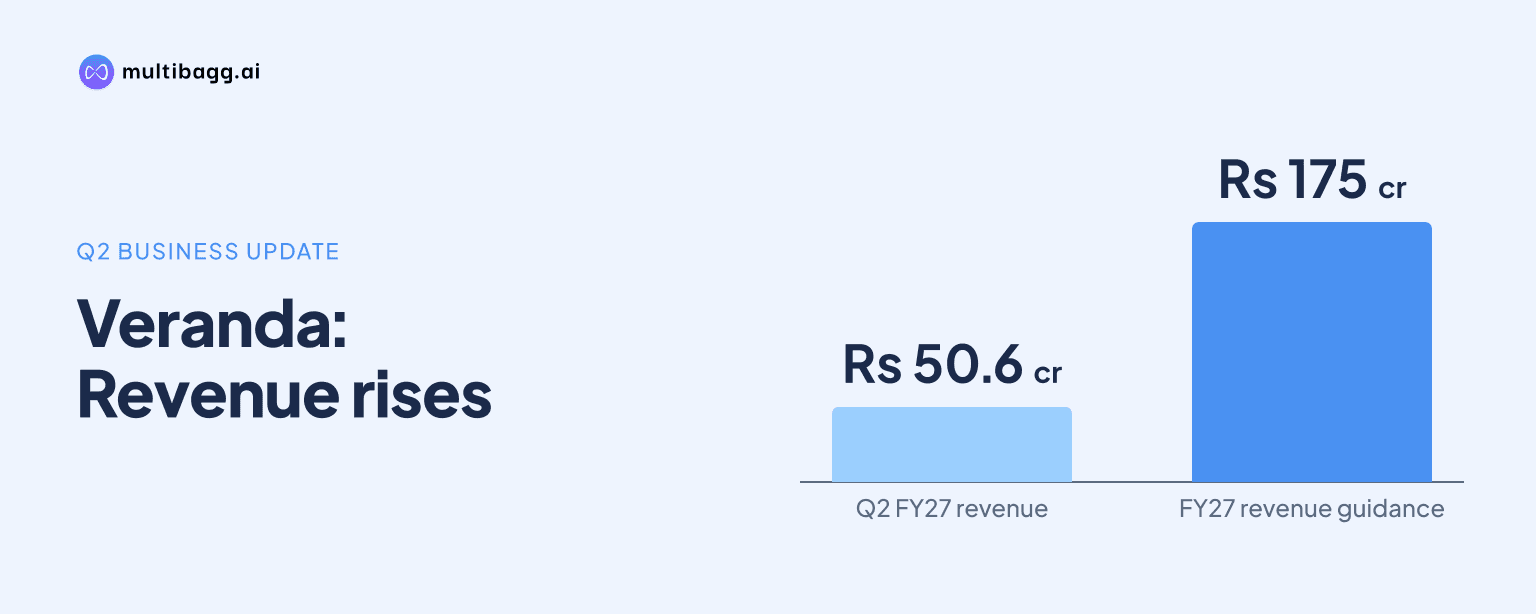
Veranda Learning Solutions Limited reported Q2 FY27 revenue of ₹50.6 crore, up 17% year-on-year, while EBITDA rose 28% to ₹12.7 crore and margin expanded to 25%, supported by 31% growth in its government test-prep business after the commerce-business demerger.
Know Veranda Learning Solutions inside out
Results, valuation, peers and who's buying, in one view.
What did Veranda report for Q2 FY27?
Veranda reported revenue from operations of ₹50.6 crore in the quarter ended September 2026, compared with the corresponding quarter a year earlier. Management said the increase was driven by enrolment and admission traction in government test preparation, along with sustained demand in academic segments.
Reported EBITDA increased 28% year-on-year to ₹12.7 crore. The EBITDA margin was 25%, compared with 23% in the preceding Q1 FY27 quarter. Gross profit rose 12% to ₹28.2 crore, while the gross margin stood at 56%.
The company reported profit after tax of ₹13.4 crore for Q2 FY27, against a net loss of ₹12.8 crore in Q2 FY26. The earnings-call summary noted that the quarterly PAT included a tax credit, which is important when comparing the reported profit with operating earnings.
How did the commerce-business demerger affect the results?
Veranda's Q2 FY27 financial results reflect continuing operations after its commerce business was demerged into JK Shah Commerce Education Limited. The National Company Law Tribunal-sanctioned composite scheme became effective on September 1, 2026, according to management's remarks on the earnings call.
The continuing operations now include government test preparation and academics. This makes the current-period figures less directly comparable with historical consolidated performance that included the commerce business. Management described the quarter as a profitability turnaround for the continuing business, with a focus on the remaining operating verticals.
The demerger also changes the business mix investors need to assess. Government test preparation was the principal reported growth driver during the quarter, while the company said it was continuing investments in its K-12 and managed-schools platform. No separate quarterly revenue figure for each continuing segment was provided in the call material.
What is driving Veranda's operating performance?
Government test preparation is driving Veranda's reported growth, with the segment posting 31% year-on-year top-line growth in Q2 FY27. Management linked this performance to healthy enrolments and admissions, indicating that demand in government competitive examinations remained a meaningful contributor to the continuing business.
The company also reported that collections rose 17% and enrolments increased 12% during the first half of FY27. These indicators provide context for the quarterly revenue growth, although Veranda did not disclose absolute collection or enrolment figures in the earnings-call material.
Alongside test preparation, Veranda is expanding its academic business into new geographies and developing managed schools. Management said these areas, together with operating leverage, are expected to support the continuing business. The call did not provide a timetable, investment amount, or individual financial targets for the K-12 and managed-schools platform.
Got a follow-up? Ask IRIS
What guidance has Veranda retained for FY27?
Veranda retained its FY27 guidance for the continuing business at ₹175 crore of revenue, ₹46 crore of EBITDA and about ₹32 crore of PAT. Management said the targets are based on expansion in government test preparation, academic-business scaling, managed schools and continued operating leverage.
The guidance places the Q2 revenue and EBITDA results within the company's stated full-year plan. However, the company did not revise the targets during the call or provide quarterly guidance for the remaining periods of FY27. Investors will therefore need to monitor whether growth in government test preparation and the newer education platforms continues at a pace consistent with the annual objectives.
The balance sheet was also a focus of the call summary, which referred to deleveraging through lower-cost debt refinancing. While management highlighted the importance of the capital structure, the supplied call material did not specify the amount refinanced, interest-cost savings, or debt outstanding after the refinancing.
Why do these results matter to investors?
The Q2 performance provides an early operating reference point for Veranda's continuing business after the commerce-business demerger. Revenue growth of 17%, EBITDA growth of 28% and a 25% EBITDA margin show that profit growth exceeded revenue growth during the quarter, while the government test-prep segment recorded faster growth than the company-level top line.
For investors, the reported PAT of ₹13.4 crore should be viewed alongside the disclosed tax credit and the underlying EBITDA figure of ₹12.7 crore. The distinction matters because tax-related items can affect quarterly net profit without representing a recurring change in core operating performance.
The retained FY27 guidance gives the market measurable benchmarks for the rest of the financial year. Execution in government test preparation, academic expansion and managed schools, as well as any further disclosures on debt refinancing and segment economics, will be relevant to evaluating progress in the post-demerger structure.
Conclusion
Veranda's Q2 FY27 results showed a 17% rise in revenue to ₹50.6 crore and a 28% increase in EBITDA to ₹12.7 crore, led by 31% growth in government test preparation. The quarter also marked the reporting transition to continuing operations after the demerger of the commerce business, making operating mix and comparable financial analysis particularly important.
The next key reference point is delivery against FY27 guidance of ₹175 crore in revenue, ₹46 crore in EBITDA and about ₹32 crore in PAT. Investors will also watch for updates on the scaling of academics and managed schools, the pace of government test-prep demand, and more detailed disclosures on the company's debt refinancing and balance-sheet deleveraging.