










Whirlpool of India Q2 FY27 Profit Falls 40% Despite Revenue Growth
Key highlights
- Whirlpool of India’s Q2 FY27 revenue rose 13.71% year-on-year to ₹1,873.12 crore.
- Whirlpool of India’s Q2 FY27 net profit fell 40% year-on-year to ₹25.08 crore.
- Whirlpool of India reported Q2 FY27 EBITDA of ₹40 crore, with a 2.1% margin that was 140 basis points lower year-on-year.
- Retail investor ownership in Whirlpool of India increased to 15.37% in the September 2026 quarter from 13.58%.
powered by IRIS
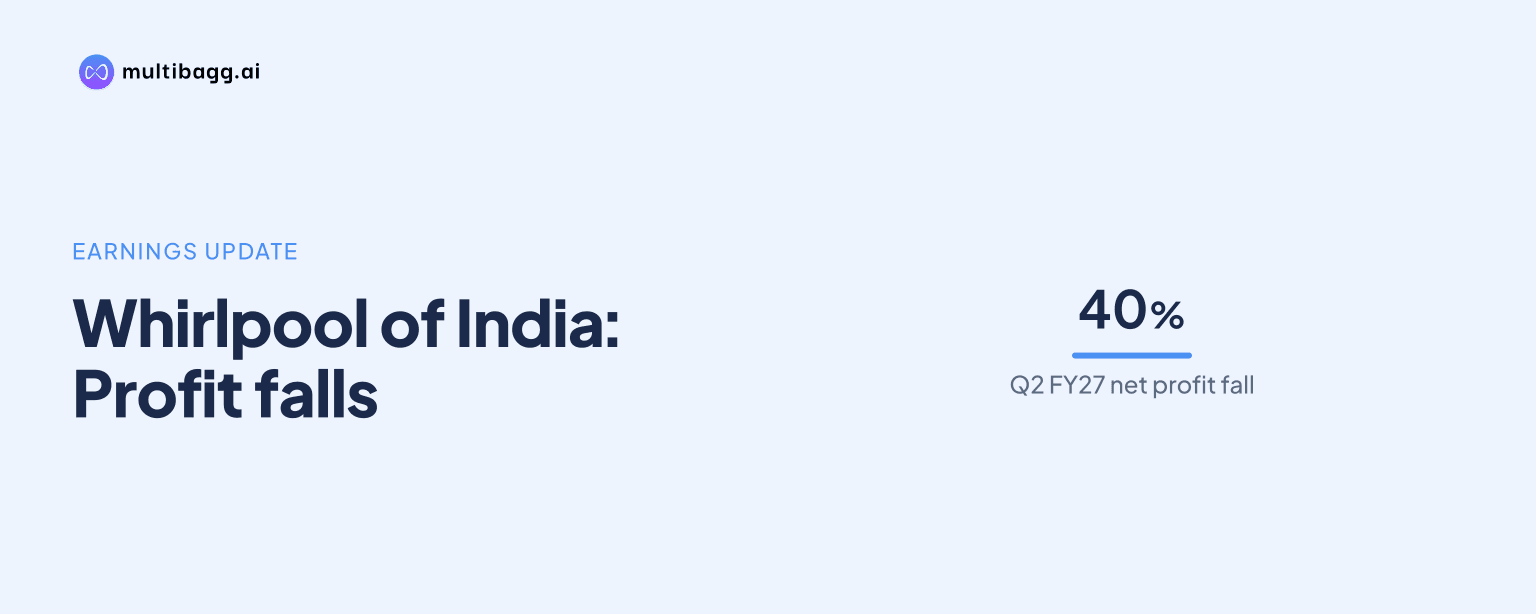
Whirlpool of India Limited reported a 40% year-on-year fall in Q2 FY27 consolidated net profit to ₹25.08 crore, even as revenue from operations rose 13.71% to ₹1,873.12 crore for the quarter ended September 30, 2026. The results show that higher sales did not offset pressure from commodity costs, currency depreciation, regulatory expenses and product-launch investments.
Know Whirlpool of India inside out
Results, valuation, peers and who's buying, in one view.
Why did Whirlpool of India’s Q2 FY27 profit decline?
Whirlpool of India’s profit declined because its margins narrowed despite higher revenue. Consolidated net profit fell from ₹41.80 crore in Q2 FY26 to ₹25.08 crore in Q2 FY27. Profit before tax, before exceptional items, stood at ₹34 crore, with a margin of 1.8%, down 110 basis points from the corresponding quarter a year earlier.
The company said profitability was affected by commodity inflation linked to geopolitical instability, higher crude oil prices and currency depreciation. It also cited additional costs arising from new energy regulations in refrigerator and air-conditioner categories. Investments related to the launch of Luxuriem added to the cost pressure during the quarter.
Revenue growth was supported by industry volume growth, strategic pricing actions and continued premiumisation of the product portfolio, according to the company. However, operating profit did not keep pace with sales. The result underlines the difference between revenue expansion and earnings conversion when input and compliance costs increase.
What were Whirlpool of India’s key Q2 FY27 financial figures?
Whirlpool of India reported consolidated revenue of ₹1,873.12 crore in Q2 FY27, compared with ₹1,647.27 crore in Q2 FY26. Operating profit declined to ₹39.90 crore from ₹57.82 crore, while net profit fell to ₹25.08 crore from ₹41.80 crore.
EBITDA was reported at ₹40 crore, representing a 2.1% margin. The margin was 140 basis points lower than in the year-earlier period. Cost of materials consumed was ₹1,246.07 crore, down 12.68% year-on-year, while employee benefits expense declined 3.15% to ₹235.28 crore. Total expenses were ₹1,887.15 crore, down 28.57% year-on-year as reported.
Sequentially, the company’s performance was weaker. Revenue was down 31.31% quarter-on-quarter, net profit declined 75.62%, and PBT fell 75.28%. The reported quarter-on-quarter fall should be distinguished from the 13.71% year-on-year increase in revenue.
When did the board approve Whirlpool of India’s results?
Whirlpool of India’s board approved the unaudited standalone and consolidated financial results for the quarter and half year ended September 30, 2026, on November 9, 2026. The statutory auditor, S.R. Batliboi & Co. LLP, reviewed the results.
The company had informed exchanges that the board meeting would consider the quarterly and half-yearly results. It subsequently announced that extracts of the financial results would be published in Financial Express and the Pune edition of Loksatta. Whirlpool of India also scheduled a conference call for November 19, 2026, at 4:30 PM IST to discuss the Q2 FY27 results.
The quarter covers the July to September period. The company’s earnings summary reported first-half consolidated revenue of ₹4,599.87 crore and net profit of ₹127.96 crore. These figures provide the broader half-year context, although the Q2 result indicates a sharper sequential moderation in profitability.
Got a follow-up? Ask IRIS
How did the Q2 result affect Whirlpool of India investors?
Whirlpool of India shares rose 0.35% to ₹838.05 in the market update associated with the results. The modest movement came as investors weighed revenue growth against the decline in operating profitability and net profit.
For investors, the central metric from the quarter is the lower EBITDA margin of 2.1%. Revenue growth of 13.71% indicates continued demand and pricing support, but the fall in operating profit and profit after tax indicates that costs absorbed a larger share of sales. The company’s stated cost factors will remain relevant to the assessment of future margins.
Retail investor ownership increased to 15.37% in the September 2026 quarter from 13.58% previously. Separately, Whirlpool of India declared a dividend of ₹5.00 per share for the quarter ending March 2026, which was stated to translate into a dividend yield of 0.60%.
What does the quarter indicate for the consumer durables industry?
Whirlpool of India’s Q2 FY27 performance illustrates the cost challenges facing consumer durables manufacturers even when sales volumes and product mix support revenue. Commodity inflation, crude-linked costs, exchange-rate movements and energy-efficiency regulations can affect profitability across appliance categories.
The company operates in the consumer durables sector and is headquartered in Gurgaon. Its focus on premiumisation and strategic pricing supported revenue during the quarter, while new regulations in refrigerator and air-conditioner categories increased the cost burden. The combination shows why sales growth alone may not result in higher profit in a cost-intensive quarter.
The reported financial data also show that the company is balancing near-term profitability with product and brand investments. Spending linked to Luxuriem was specifically identified as a margin factor. No target or timeline for margin recovery was disclosed in the provided results material.
Conclusion
Whirlpool of India delivered higher Q2 FY27 revenue but lower profit, with consolidated revenue increasing 13.71% to ₹1,873.12 crore and net profit declining 40% to ₹25.08 crore. Higher commodity and crude-related costs, currency depreciation, regulatory expenditure and launch investments reduced margins, leaving EBITDA margin at 2.1%.
Investors will watch the company’s November 19, 2026, conference call for management commentary on demand, pricing, input costs and the expenses associated with energy regulations and Luxuriem. The disclosed results do not provide a margin-recovery target, making subsequent quarterly cost and profitability trends important for assessing the business performance.