










WildWorks shelves Animal Jam Roblox game as Go Slinky waits
Key highlights
- WildWorks shelved the Animal Jam Roblox game after its traction failed to meet management’s internal bar.
- Kitsune generated the highest daily revenue in the existing game’s lifetime during the quarter.
- Go Slinky Go! remains in soft launch while WildWorks works to improve early retention through product iterations planned for October and November.
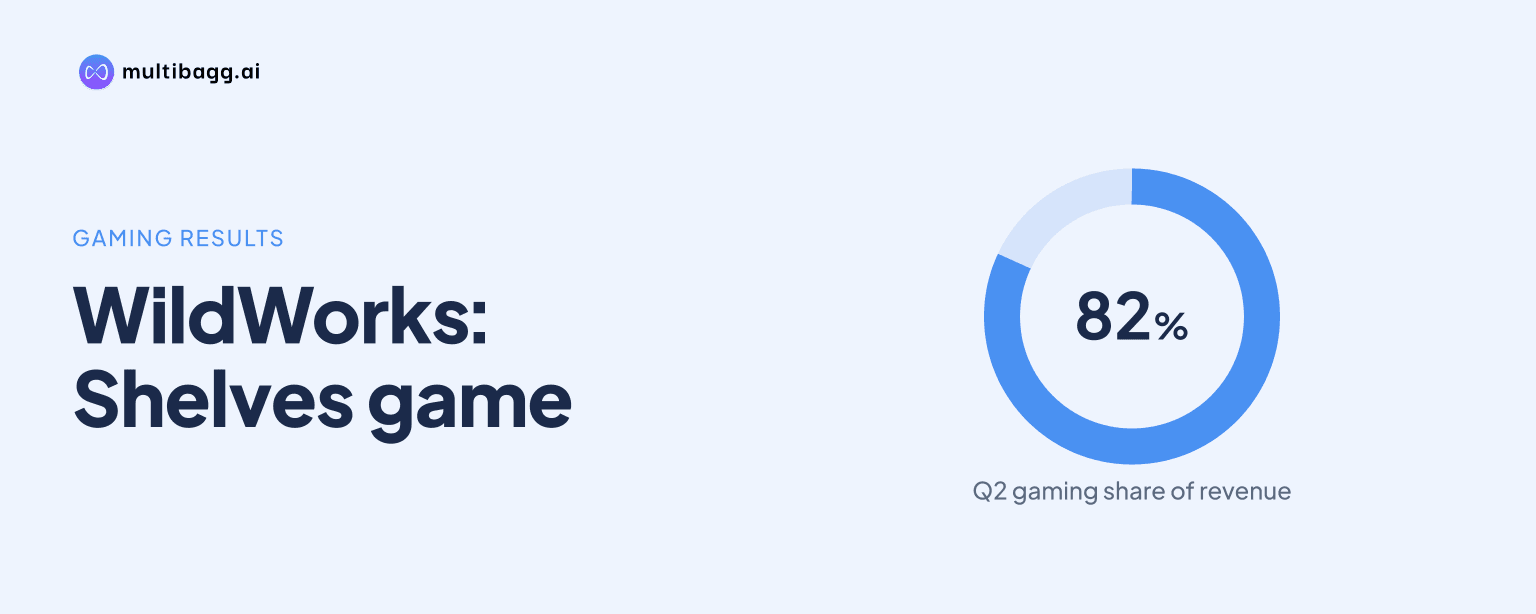
- Gaming accounted for 82% of group revenue and 100% of earnings before interest, tax, depreciation and amortisation before corporate costs in Q2.
powered by IRIS
WildWorks has shelved its Animal Jam Roblox game after traction failed to meet management’s internal bar, while Go Slinky Go! remains in soft launch because early retention is below the required level. The contrast followed a strong content quarter in which Kitsune generated the highest daily revenue in the existing game’s lifetime.
Know Nazara Technologies inside out
Results, valuation, peers and who's buying, in one view.
Why did WildWorks shelve the Animal Jam Roblox game?
WildWorks shelved the Animal Jam Roblox game for now because its observed traction did not meet the company’s required bar. Management disclosed the outcome when asked about the planned Roblox release, but did not provide player numbers, downloads, revenue, or the specific performance threshold that the title missed.
The decision was a pause rather than a disclosed permanent cancellation or relaunch plan. WildWorks said it will put user acquisition, or UA, and capital behind titles only where data supports investment, making the Roblox decision a product-allocation action based on observed performance.
What supported WildWorks revenue during the quarter?
WildWorks’ content launches supported revenue during the quarter, with Kitsune producing the highest daily revenues in the existing game’s lifetime. Management also cited the Monster High integration, the Mythical Jam tournament and new pets as contributors to the quarter’s revenue performance.
Kitsune’s lifetime daily-revenue record contrasts with the insufficient traction of the Roblox title. Management did not disclose revenue attributable to Kitsune, Monster High, the tournament or new pets, and did not state whether the record daily result produced a record quarterly revenue outcome.
What must Go Slinky Go! achieve before scaling?
Go Slinky Go! must improve its early soft-launch retention metrics before WildWorks scales the game. Management said several iterations and features were under way through October and November, and that broader deployment will occur only when key performance indicators, or KPIs, clear internal green-light gates.
WildWorks did not disclose the retention period measured, the retention percentage, soft-launch markets or the KPI threshold required for approval. It said the team will keep refining Go Slinky Go! until its metrics meet threshold requirements, rather than committing to a public launch date.
Got a follow-up? Ask IRIS
How is WildWorks allocating capital to new games?
WildWorks will direct UA and capital to titles where the data supports further investment. The Roblox game missed the traction test and was shelved, whereas Go Slinky Go! remains in development because its retention results are being addressed through product iterations.
Management said WildWorks will also benefit from an artificial-intelligence creative advertising engine and an IEC prioritisation framework. IEC means Impact, Effort and Confidence, and management presented the framework as a way to prioritise work and advertising decisions rather than as a quantified revenue or profit target.
How does WildWorks fit the wider gaming strategy?
WildWorks operates within a gaming-focused group strategy, with management saying gaming accounted for 82% of revenue and 100% of earnings before interest, tax, depreciation and amortisation before corporate costs in Q2. Management identified mobile, PC and console, and offline gaming as its three gaming pillars.
Management has not issued numerical revenue guidance for WildWorks, the Roblox game or Go Slinky Go!. Its stated approach is to adapt marketing allocation to data and seasonality, while using content launches and new-game tests to determine where capital should be deployed.
Conclusion
WildWorks’ two newer-game decisions show different responses to different performance measures. The Animal Jam Roblox game was shelved after traction fell below management’s bar, while Go Slinky Go! remains in soft launch because retention has not yet reached the KPI threshold. Meanwhile, Kitsune’s record daily revenue indicates that established-game content remains the clearest disclosed revenue driver.
The next item to watch is the Go Slinky Go! product work scheduled through October and November, followed by management’s decision on whether retention KPIs clear the green-light gates for scaling. Management’s planned use of the AI creative advertising engine and IEC framework will also shape how WildWorks prioritises UA and capital across titles.