










Zen says counter-drone fast-track orders may slip into FY28
Key highlights
- Zen said Q4 FY2027 is the earliest likely period for FTP counter-drone awards, with possible spillover to Q2 FY2028.
- Zen's consolidated order book stood at Rs 1,375.7 crore on September 30, 2026, including Rs 995 crore of equipment orders.
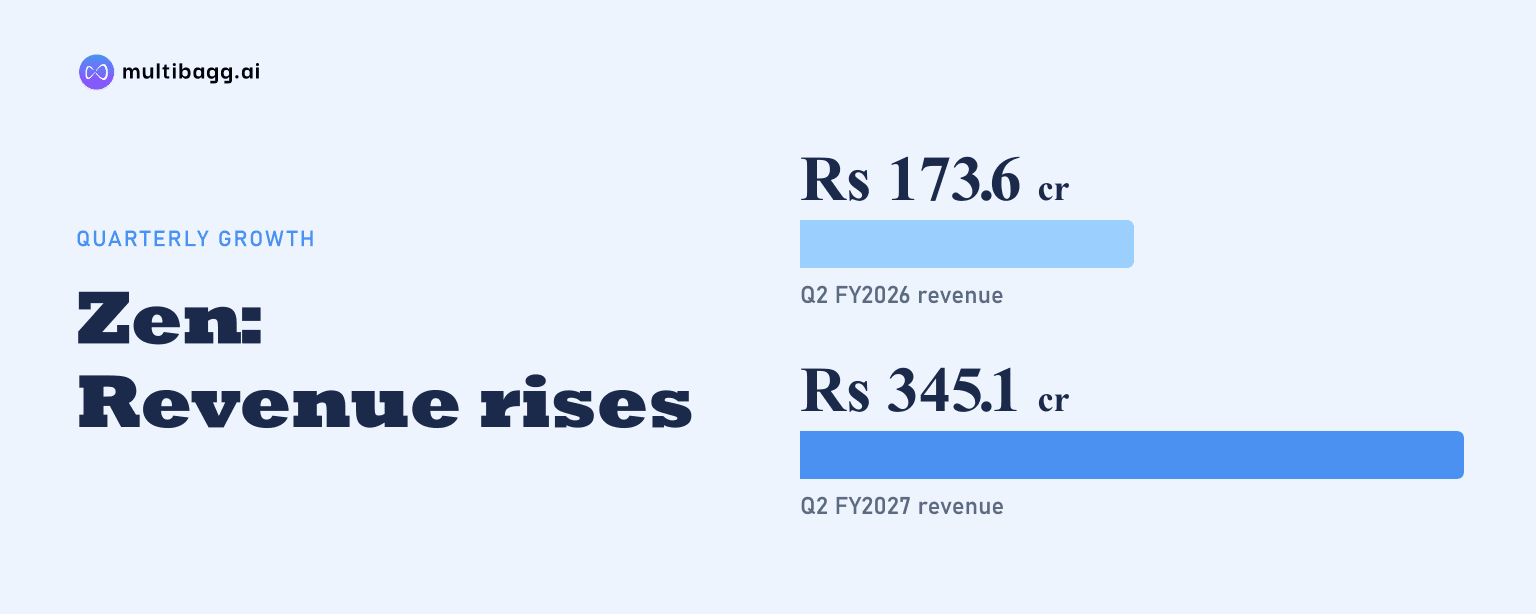
- Q2 FY2027 revenue was Rs 345.1 crore, up 98.8% from Rs 173.6 crore in Q2 FY2026.
- Zen received Rs 481.8 crore of Q2 FY2027 order inflows, exceeding quarterly revenue of Rs 345.1 crore.
powered by IRIS
Zen Technologies Limited said counter-drone system orders through Fast Track Procurement, or FTP, are earliest likely in Q4 FY2027 and could slip into Q1 or Q2 FY2028 if procurement misses its March 31, 2027 deadline. The company had Rs 1,375.7 crore of consolidated orders at September 30, 2026, but pending counter-drone tenders were not part of that booked order base.
Know Zen Technologies inside out
Results, valuation, peers and who's buying, in one view.
When could Zen receive counter-drone fast-track orders?
Zen said Q4 FY2027 is the earliest period in which counter-drone, or C-UAS, orders under FTP could be awarded. Chairman and Managing Director Ashok Atluri said FTP approvals had occurred, but requests for proposal, or RFPs, still had to be issued and responses evaluated. Management expected tenders in the next few weeks or months, with March 31, 2027 being the normal deadline for completing the FTP process.
Zen also outlined the risk of a later award date. Atluri said orders could move into Q1 FY2028 if FTP is not completed by March 31, 2027, or into Q2 FY2028 in the worst case. He said the process had not historically gone beyond Q2, but Zen cannot estimate tender values, identify awards or assess its likely wins until RFPs specify the requirements.
Why is the C-UAS procurement timeline uncertain?
Zen said C-UAS procurement remains uncertain because specifications are still evolving and tenders have not yet been floated. Management said authorities are considering whether systems should use Indian intellectual property or involve overseas collaborators reselling foreign products. Atluri said this evolving requirement has delayed FTP even though management sees a substantial counter-drone need and cites the use of its systems in Operation Sindoor.
The company identified two routes with different timelines. FTP could generate tenders in FY2027, while capital acquisition may take two to three years before orders are placed, according to management. Zen said no C-UAS orders had been placed because tenders had not come out. This distinguishes the potential opportunity from its September 30, 2026 order book, which contained executed and contracted work rather than anticipated tender awards.
What revenue support does Zen have before new C-UAS awards?
Zen said its existing Rs 1,375.7 crore consolidated order book provides the base for near-term execution without relying on C-UAS FTP awards. The total comprised Rs 995 crore of equipment orders and Rs 380.7 crore of annual maintenance contract, or AMC, orders, as of September 30, 2026. Management said equipment contracts typically take 12 to 18 months to execute and expects the next couple of quarters to be healthy based on work already in hand.
Zen reported Q2 FY2027 consolidated revenue of Rs 345.1 crore, up 98.8% from Rs 173.6 crore in Q2 FY2026 and more than double Rs 141.6 crore in Q1 FY2027. H1 FY2027 revenue was Rs 486.8 crore, against Rs 331.8 crore a year earlier. Management attributed the quarterly increase to order-book execution, streamlined operations and some execution that moved from Q1 into Q2, while saying there was no deferment from Q2.
For FY2027, Atluri said Zen was comfortable delivering Rs 1,200 crore to Rs 1,300 crore of revenue and expected to achieve somewhat more. With Rs 486.8 crore delivered in H1 FY2027, the remaining revenue would be executed across Q3 and Q4. Management also said it was reasonably sure of more than Rs 400 crore of simulator orders, though those orders were taking time to materialise and were separate from the pending C-UAS process.
Got a follow-up? Ask IRIS
How do margins and execution capacity affect the timing risk?
Zen said its ability to execute contracted work has improved, but incoming C-UAS order timing still determines when that capacity can be used. Management said it could execute a major portion during FY2028 if FTP orders arrive in Q1 FY2028, while orders arriving in Q2 FY2028 would leave less time for delivery in the same year. The company said it now typically expects 12 to 18 months for execution after receiving orders.
Q2 FY2027 operational earnings before interest, tax, depreciation and amortisation, or EBITDA, were Rs 132 crore, producing a 38.2% margin. That compared with 37.3% in Q2 FY2026 and 27.3% in Q1 FY2027, while H1 FY2027 margin was 35.1%. Zen maintained its full-year operational EBITDA margin guidance in the mid-30s and said margins vary with the mix between simulator and anti-drone products, with simulators generally carrying a higher margin profile.
How much of the counter-drone market can Zen address?
Zen said it can address about 70% to 80% of the C-UAS market, excluding lower-end products such as anti-drone guns for shops or farmhouses. Management said it focuses on armed-forces systems and that its participation will depend on individual tender specifications. The company therefore does not treat the entire counter-drone market as directly contestable, even though management described the broader market as growing.
Zen said its detector, radar, jammer, camera, remote-controlled weapon station and command-and-control components are developed and owned by Zen and its subsidiaries. Management also said active electronically scanned array, or AESA, radars are made in-house, and the company is working to make command-and-control functions artificial-intelligence native. It said the armed forces could see a materially changed product over the next three to six months, but gave no order forecast linked to those upgrades.
Conclusion
Zen’s Q2 FY2027 execution and Rs 1,375.7 crore order book provide a contracted base for revenue, while the possible C-UAS catalyst remains unbooked. Q2 inflows of Rs 481.8 crore exceeded Rs 345.1 crore of revenue, increasing the order book during the quarter. However, tender release, final specifications, contract values and award outcomes remain unresolved.
The next item to watch is the issue of FTP RFPs and whether procurement concludes by March 31, 2027. Management’s stated earliest case is a Q4 FY2027 award, while its disclosed downside is a move to Q1 or Q2 FY2028. Separately, Zen expects more than Rs 400 crore of simulator orders and has budgeted Rs 150 crore of capital expenditure in FY2027 and a similar amount in FY2028.