



Actions
Action Type



Welcome to Multibagg AI
Log in to access personalized features
IRIS
Multibagg AI is an AI powered stock research and analysis platform. We provide data, information, content, and analytics for publicly traded Indian companies listed on NSE and BSE. AI can make mistakes, check important information.
Prices might be delayed by a few minutes.
Join our Exclusive Community


Join our Exclusive Community
Made with 💙 in India. © Finsky Technologies Pvt Ltd. 2026


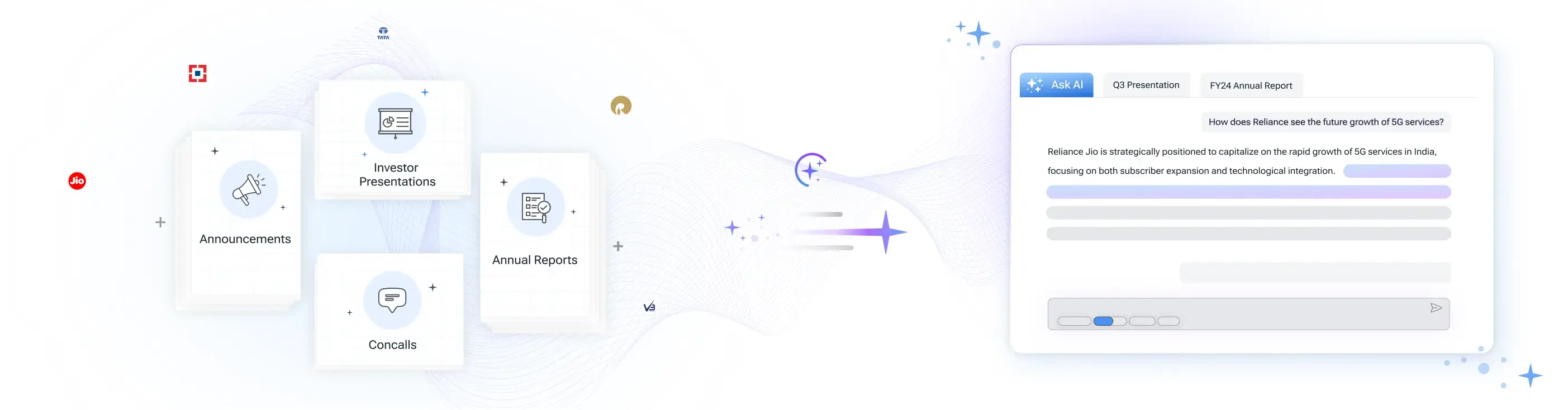
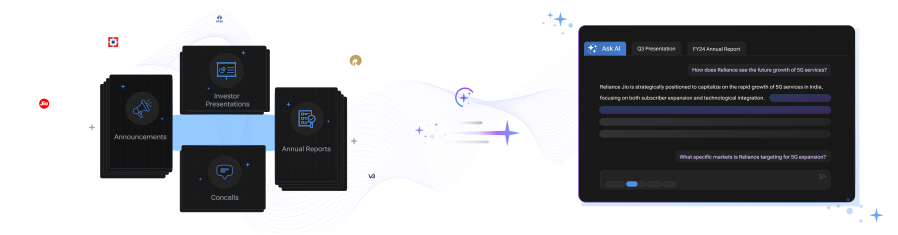
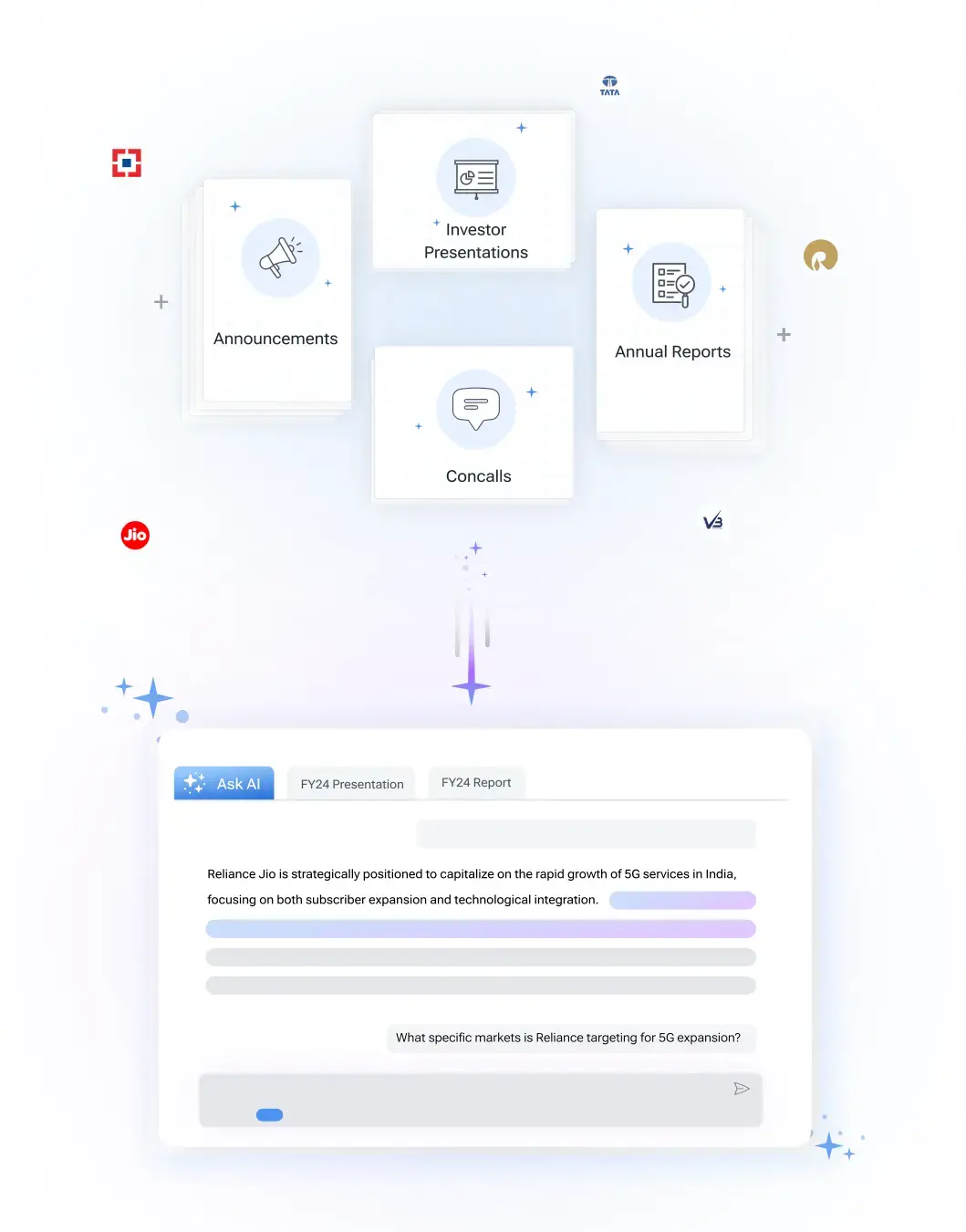
Get instant AI-powered insights about company performance, financials, and strategy. Ask questions about trends, competition, and developments while receiving responses backed by official documents and market data, with clear attribution to source documents.

 Discovery themes featuring this stock
Bearish
3
Neutral
4
Bullish
7
Bearish
33
Neutral
4
Bullish
9
Bearish
30
Neutral
0
Bullish
2
Bearish
30
Neutral
0
Bullish
2
Bearish
30
Neutral
0
Bullish
2
Bearish
30
Neutral
0
Bullish
2



Chavda Infra Limited is an Ahmedabad‑based integrated EPC construction company delivering end‑to‑end planning, design, engineering, procurement, construction, and quality assurance services primarily for residential, commercial and institutional clients in Gujarat, operating through listed parent Chavda Infra and promoter‑owned Chavda RMC LLP and Chavda Developers.
Q1 FY27 showed strong top‑line traction with revenue from operations rising 81.1% year‑on‑year to ₹84.0 crores and PAT doubling to ₹3.9 crores, signalling healthy demand conversion despite margin pressure; EBITDA was ₹11.4 crores with a 13.6% margin reflecting temporary cost and labour headwinds in the quarter.
Orderbook stood at ₹812.4 crores (order book to sales ~2.4x) with the company highlighting capability to execute projects up to ~₹785 crores and a portfolio of ongoing high‑rise jobs in Ahmedabad, GIFT City, Gandhinagar and Rajkot which underpin multi‑quarter revenue visibility and client repeat business.
Management has materially de‑levered the balance sheet with Net Debt to Equity improving to 0.6x from 1.4x in FY25, while working capital intensity rose—debtor days at 134 and working capital days at 135—indicating a focus on execution and backlog conversion but requiring attention on cash conversion.
Chavda Infra Limited has pursued vertical integration and productivity investments—two RMC plants, refurbishing yard, logistics fleet and international formwork systems costing ~₹80+ crores in aggregate—aimed at faster construction cycles, improved margins and differentiation as a one‑stop high‑rise EPC provider in Gujarat.
Construction
Civil Construction
294 Cr
High Risk
14.1
21.6
1.3
1.3
84.00
40.30
Sales CAGR
Profit CAGR
ROE
ROCE



Investor Presentation
Q4 FY26
Investor Presentation
Q4 FY25
Investor Presentation
Q4 FY25
Investor Presentation
Q4 FY25
Investor Presentation
Q2 FY25
Investor Presentation
Q4 FY24
Discovery themes featuring this stock



Chavda Infra Ltd (CHAVDA) is currently trading at 45.00 per share. Stock prices fluctuate during market hours on NSE and BSE based on demand, company updates, and overall market conditions. Refer to the live price chart above for the most recent price movement.
Chavda Infra Limited is an Ahmedabad‑based integrated EPC construction company delivering end‑to‑end planning, design, engineering, procurement, construction, and quality assurance services primarily for residential, commercial and institutional clients in Gujarat, operating through listed parent Chavda Infra and promoter‑owned Chavda RMC LLP and Chavda Developers. Q1 FY27 showed strong top‑line traction with revenue from operations rising 81.1% year‑on‑year to ₹84.0 crores and PAT doubling to ₹3.9 crores, signalling healthy demand conversion despite margin pressure; EBITDA was ₹11.4 crores with a 13.6% margin reflecting temporary cost and labour headwinds in the quarter. Orderbook stood at ₹812.4 crores (order book to sales ~2.4x) with the company highlighting capability to execute projects up to ~₹785 crores and a portfolio of ongoing high‑rise jobs in Ahmedabad, GIFT City, Gandhinagar and Rajkot which underpin multi‑quarter revenue visibility and client repeat business. Management has materially de‑levered the balance sheet with Net Debt to Equity improving to 0.6x from 1.4x in FY25, while working capital intensity rose—debtor days at 134 and working capital days at 135—indicating a focus on execution and backlog conversion but requiring attention on cash conversion. Chavda Infra Limited has pursued vertical integration and productivity investments—two RMC plants, refurbishing yard, logistics fleet and international formwork systems costing ~₹80+ crores in aggregate—aimed at faster construction cycles, improved margins and differentiation as a one‑stop high‑rise EPC provider in Gujarat.
Over the past 52 weeks, Chavda Infra Ltd has traded between a low of ₹40.30 and a high of ₹84.00. The 52-week high and low indicate the stock’s price range over the last year and help investors understand its volatility and recent trading levels.
Chavda Infra Ltd has a market capitalization of approximately 292.92. Market capitalization represents the total value of a company’s outstanding shares and helps investors understand its size, stability, and relative risk compared to other listed companies.
Chavda Infra Ltd’s investment profile depends on its business fundamentals, valuation, and long-term outlook. The stock currently trades at a PE ratio of 14.03 and operates in the its sector sector. Investors typically assess financial performance, growth prospects, and individual risk tolerance before making investment decisions.
Based on its market capitalization of 292.92 Cr, Chavda Infra Ltd is classified as a Small Cap stock. Large-cap stocks are generally more stable, while mid-cap and small-cap stocks tend to offer higher growth potential along with higher price volatility.
Chavda Infra Ltd operates in the its sector sector. Sector classification matters because companies in the same sector are often affected by similar economic conditions, regulatory changes, and competitive dynamics, which can influence overall stock performance.
The Price-to-Earnings (PE) ratio of Chavda Infra Ltd is 14.03. The PE ratio compares a company’s share price to its earnings and is commonly used to assess valuation. Comparing the PE ratio with sector peers and historical levels provides better context.
The company disclosed a 1:1 bonus issue, meaning shareholders would receive one bonus equity share for every one existing share held, subject to approvals and clearances.
| Symbol | Watchlist | Price | Market Cap | P/E | P/B | Div Yield (%) | ROE (%) | ROCE (%) | ROA (%) |
219.90 | 307 Cr | 22.62 | 4.47 | 0.00 | 17.05 | 22.46 | 12.80 | ||
24.46 | 303 Cr | -1.54 | 0.48 | 0.00 | -23.83 | -8.05 | -10.45 | ||
19.89 | 301 Cr | -19.59 | 0.31 | 0.00 | -1.05 | 2.32 | -0.52 | ||
45.00 | 293 Cr | 14.03 | 1.33 | 0.00 | 7.71 | 11.87 | 3.40 | ||
6.25 | 286 Cr | 10.40 | 0.65 | 0.00 | 8.87 | 10.01 | 2.79 | ||
184.70 | 281 Cr | -14.16 | 0.82 | 0.00 | -0.60 | 0.86 | -3.71 | ||
| Median: 6 Co. | — | 34.73 | 297 Cr | 4.43 | 0.73 | 0.00 | 3.55 | 6.16 | 1.13 |


