

Board Meeting
Zenith Exports Schedules Board Meeting
Zenith Exports will hold a board meeting on 13 November 2026 to approve unaudited financial results for the quarter and half year ended 30 September 2026.





IRIS
Multibagg AI is an AI powered stock research and analysis platform. We provide data, information, content, and analytics for publicly traded Indian companies listed on NSE and BSE. AI can make mistakes, check important information.
Prices might be delayed by a few minutes.
Join our Exclusive Community


Join our Exclusive Community
Made with 💙 in India. © Finsky Technologies Pvt Ltd. 2026


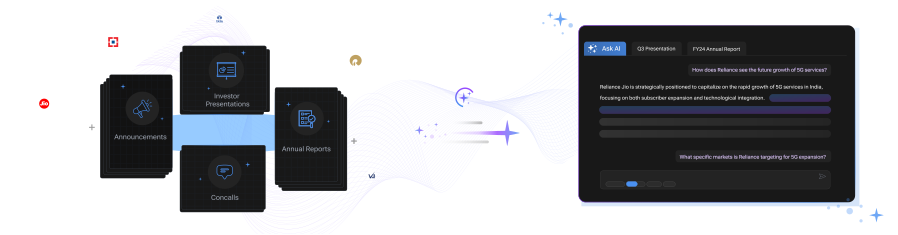
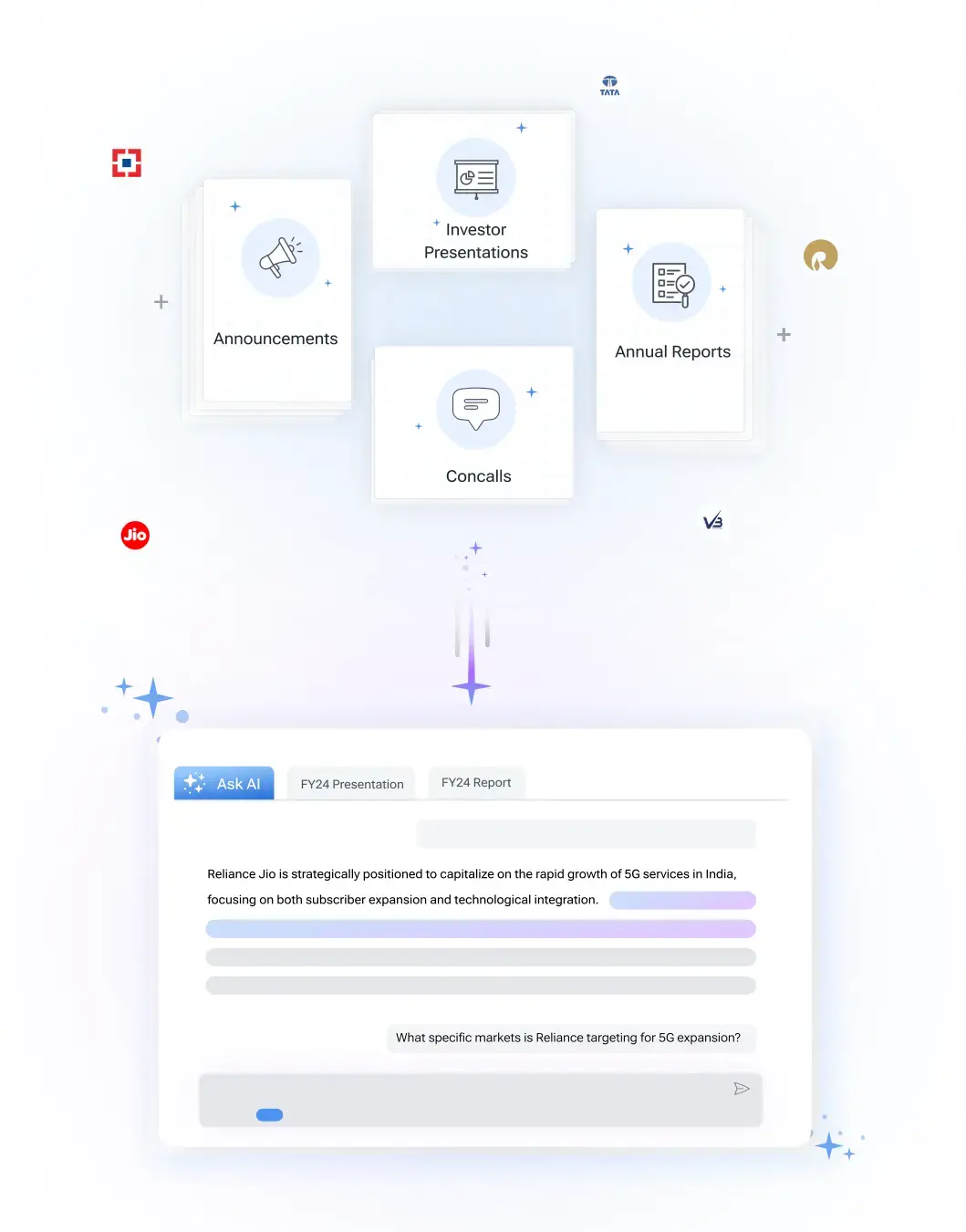
Get instant AI-powered insights about company performance, financials, and strategy. Ask questions about trends, competition, and developments while receiving responses backed by official documents and market data, with clear attribution to source documents.





Investor Presentation
Q2 FY26
Upcoming Result Date: Nov 13, 2026
 Discovery themes featuring this stock
Bearish
2
Neutral
7
Bullish
5
Bearish
24
Neutral
15
Bullish
7
Bearish
22
Neutral
8
Bullish
2
Bearish
22
Neutral
8
Bullish
2
Bearish
22
Neutral
8
Bullish
2
Bearish
22
Neutral
8
Bullish
2



Zenith Exports Limited manufactures and exports textile fabrics (notably silk and velvet made-ups) and industrial leather hand gloves, operating manufacturing units including Zenith Textiles at Nanjangud and Zenith Spinners at Dholka; the company has historically targeted export markets and runs an EOU silk fabric unit focused on fashion and home-furnishing segments since the 1990s.
Financially, H1 (six months ended 30 Sep 2025) total income was Rs. 3,963 lakhs, up from Rs. 3,455 lakhs a year earlier; profit before tax swung to Rs. 302 lakhs versus a loss of Rs. 252 lakhs in H1 prior, producing standalone PAT of Rs. 224 lakhs and basic EPS of Rs. 4.15 for the period.
Segment performance shows industrial leather hand gloves as the largest revenue contributor with Rs. 2,671 lakhs in H1 while silk fabrics and EOU silk together contributed about Rs. 1,070 lakhs; the silk fabric segment yields stronger per-unit profitability while gloves deliver scale, reflecting a mixed portfolio of volume-led and value-led products across export markets.
Balance sheet and liquidity indicators are robust relative to size: cash and cash equivalents and bank balances total ~Rs. 2,287 lakhs at 30 Sep 2025, inventories are Rs. 2,475 lakhs and trade receivables Rs. 1,686 lakhs; borrowings have declined to modest levels (current borrowings Rs. 301 lakhs), indicating limited financial leverage for the reporting period.
Consumer Durables
Leather And Leather Products
97 Cr
Low Risk
333.3
43.7
25.2
1.2
257.00
179.00
Sales CAGR
Profit CAGR
ROE
ROCE

Zenith Exports Ltd (ZENITHEXPO) is currently trading at 179.05 per share. Stock prices fluctuate during market hours on NSE and BSE based on demand, company updates, and overall market conditions. Refer to the live price chart above for the most recent price movement.
Zenith Exports Limited manufactures and exports textile fabrics (notably silk and velvet made-ups) and industrial leather hand gloves, operating manufacturing units including Zenith Textiles at Nanjangud and Zenith Spinners at Dholka; the company has historically targeted export markets and runs an EOU silk fabric unit focused on fashion and home-furnishing segments since the 1990s. Financially, H1 (six months ended 30 Sep 2025) total income was Rs. 3,963 lakhs, up from Rs. 3,455 lakhs a year earlier; profit before tax swung to Rs. 302 lakhs versus a loss of Rs. 252 lakhs in H1 prior, producing standalone PAT of Rs. 224 lakhs and basic EPS of Rs. 4.15 for the period. Segment performance shows industrial leather hand gloves as the largest revenue contributor with Rs. 2,671 lakhs in H1 while silk fabrics and EOU silk together contributed about Rs. 1,070 lakhs; the silk fabric segment yields stronger per-unit profitability while gloves deliver scale, reflecting a mixed portfolio of volume-led and value-led products across export markets. Balance sheet and liquidity indicators are robust relative to size: cash and cash equivalents and bank balances total ~Rs. 2,287 lakhs at 30 Sep 2025, inventories are Rs. 2,475 lakhs and trade receivables Rs. 1,686 lakhs; borrowings have declined to modest levels (current borrowings Rs. 301 lakhs), indicating limited financial leverage for the reporting period.
Over the past 52 weeks, Zenith Exports Ltd has traded between a low of ₹179.00 and a high of ₹257.00. The 52-week high and low indicate the stock’s price range over the last year and help investors understand its volatility and recent trading levels.
Zenith Exports Ltd has a market capitalization of approximately 96.66. Market capitalization represents the total value of a company’s outstanding shares and helps investors understand its size, stability, and relative risk compared to other listed companies.
Zenith Exports Ltd’s investment profile depends on its business fundamentals, valuation, and long-term outlook. The stock currently trades at a PE ratio of 333.31 and operates in the its sector sector. Investors typically assess financial performance, growth prospects, and individual risk tolerance before making investment decisions.
Based on its market capitalization of 96.66 Cr, Zenith Exports Ltd is classified as a Small Cap stock. Large-cap stocks are generally more stable, while mid-cap and small-cap stocks tend to offer higher growth potential along with higher price volatility.
Zenith Exports Ltd operates in the its sector sector. Sector classification matters because companies in the same sector are often affected by similar economic conditions, regulatory changes, and competitive dynamics, which can influence overall stock performance.
The Price-to-Earnings (PE) ratio of Zenith Exports Ltd is 333.31. The PE ratio compares a company’s share price to its earnings and is commonly used to assess valuation. Comparing the PE ratio with sector peers and historical levels provides better context.
| Symbol | Watchlist | Price | Market Cap | P/E | P/B | Div Yield (%) | ROE (%) | ROCE (%) | ROA (%) |
151.66 | 163 Cr | 34.37 | 0.35 | 0.54 | 0.79 | 4.35 | 0.55 | ||
179.05 | 97 Cr | 333.31 | 1.15 | 0.00 | 2.72 | 4.53 | 0.30 | ||
19.00 | 95 Cr | -113.51 | 1.85 | 0.00 | -3.23 | -1.27 | -2.86 | ||
7.80 | 86 Cr | 12.32 | 0.78 | 0.63 | 6.12 | 7.31 | 2.36 | ||
5.35 | 58 Cr | 17.61 | 0.65 | 0.00 | 3.69 | 5.32 | 2.00 | ||
14.00 | 28 Cr | 5.90 | 0.50 | 0.00 | 8.08 | 9.40 | 3.93 | ||
1.80 | 20 Cr | 82.79 | 1.51 | 0.00 | 1.70 | 5.24 | 0.38 | ||
| Median: 7 Co. | — | 14.00 | 86 Cr | 17.61 | 0.78 | 0.00 | 2.72 | 5.24 | 0.55 |


