










Aether moves R&D to 24/7 operations with more than 65 CRAMS projects
Key highlights
- Aether started shifting R&D from 24/6 to 24/7 in Q2 FY27 and expected completion over the following month.
- Aether is working on more than 65 CRAMS projects in its R&D and pilot plant.
- Aether plans agrochemical CEM production of 200 to 250 tonnes a year from Q4 FY27, rising to about 600 tonnes a year over time.
- Aether has line of sight on 14 of Magnum’s 16 blocks, including 12 earmarked for CEM and two for LSM.
powered by IRIS
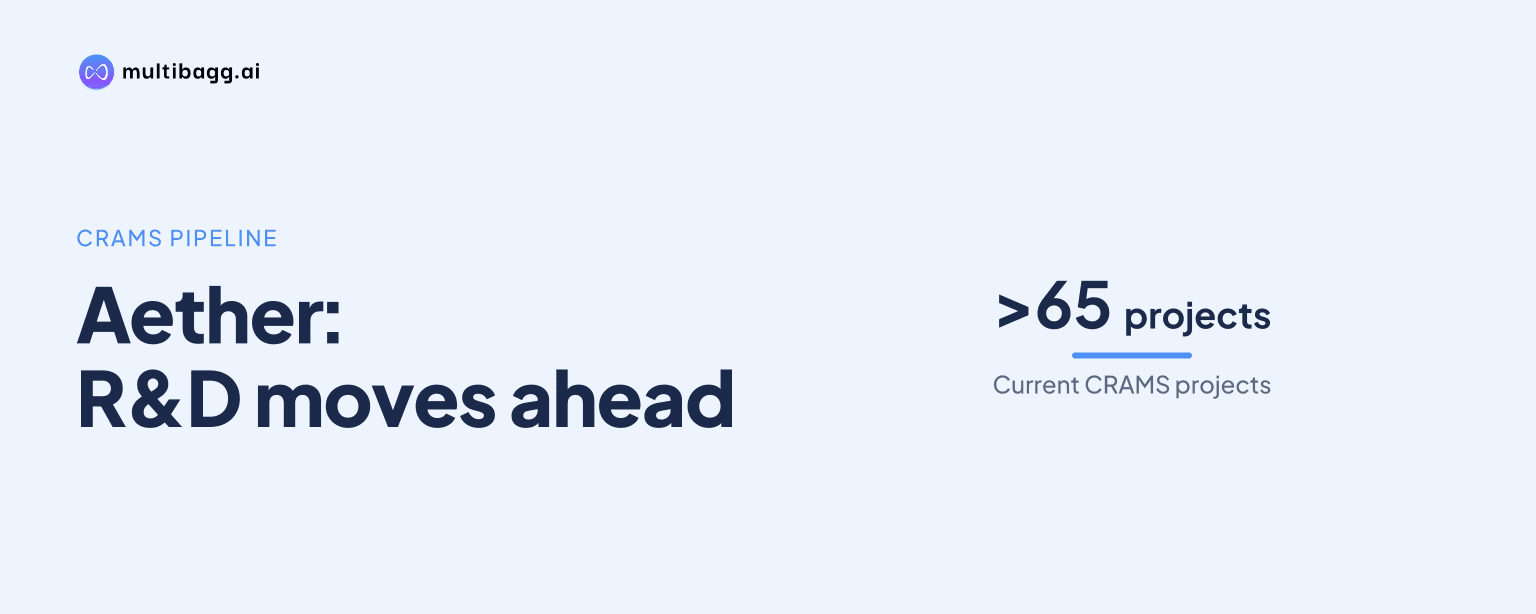
In the second quarter of fiscal year 2027 (Q2 FY27), Aether Industries Limited moved research and development toward 24/7 operations while managing more than 65 contract research and manufacturing services (CRAMS) projects in its R&D and pilot plant. Management linked the expanded operating model to faster project execution and a manufacturing pipeline at Magnum.
Know Aether Industries inside out
Results, valuation, peers and who's buying, in one view.
Why is Aether moving R&D to 24/7 operations?
Aether began moving its R&D operations from 24/6 to 24/7 in Q2 FY27 and expected to complete the transition over the following month. Dr. Aman Desai said this was Aether’s first 24/7 R&D model, intended to provide faster customer responses, quicker project execution and stronger engagement with customers.
The operating change coincides with expansion work at Magnum and the R&D facility. Rohan Desai said both projects were on track and, in several areas, ahead of schedule, while Dr. Aman Desai said the R&D and manufacturing infrastructure was on schedule. The call did not disclose the investment in the R&D expansion or a date for its full commissioning.
Aether said its research work combines chemistry, chemical engineering and technology. In response to an analyst question on knowledge retention, Dr. Aman Desai said the company had eight research group leaders with doctorates, four chemistry group leaders and four chemical-engineering group leaders, or 12 in total, each with more than 10 years at Aether.
How broad is Aether’s CRAMS project pipeline?
Aether is working on more than 65 CRAMS projects across its R&D and pilot plant. Management did not give a comparable project count for Q1 FY27 or FY26, so the disclosed figure establishes the current pipeline size but not its rate of growth.
The company said its nuclear magnetic resonance, or NMR, analytical capabilities have broadened work with global majors and enabled deeper work in customer development pipelines. During Q2 FY27, Aether began new CRAMS engagements with an automotive ancillary major, a global mining company and a separate oil-and-gas major.
Management described the automotive ancillary and mining engagements as serious long-term commercial opportunities that started through the R&D-led CRAMS model. Oil and gas accounted for 33% of Aether’s sales, while CRAMS and contract exclusive manufacturing (CEM) together contributed more than 65% of sales, showing that the new projects are being added alongside a material existing oil-and-gas business.
Aether said it assesses opportunities against its core chemistry and technology competencies, described as an “8x8 matrix,” as well as commercial criteria. Dr. Aman Desai said the company declines inquiries, requests for quotation and product suggestions regularly, sometimes responding within two days, and specifically excludes hydrofluoric acid, fluorine and hydrogen sulfide chemistries.
Got a follow-up? Ask IRIS
How is Aether converting CRAMS work into Magnum output?
Aether has signed an exclusive CEM contract with a leading global agrochemical innovator, and production is planned at Magnum’s fourth production block from Q4 FY27. Management said the new chemical entity completed customer qualification over the preceding 12 to 16 months.
The agrochemical programme is planned to start at 200 to 250 tonnes a year in Q4 FY27, with a projected path to about 600 tonnes a year over time. Management did not disclose contract pricing or revenue because pricing is confidential. It said the project began in R&D, moved through process development and pilot-plant validation, and is now scheduled for commercial manufacture at Magnum.
Aether also said it added 16 new customers and completed more than 20 customer and certification audits in the first half of FY27. The call did not divide these additions and audits among CRAMS, CEM, large-scale manufacturing or individual end markets, but the figures indicate customer qualification activity alongside the Magnum build-out.
The agrochemical contract is separate from Aether’s semiconductor programme. Aether had started its first commercial semiconductor shipments from existing facilities in Q2 FY27, although management described volumes as modest, while a dedicated Magnum production block was being equipped for commercial production from Q4 FY27.
What does Magnum’s planned capacity allocation show?
Aether has line of sight on 14 of Magnum’s 16 production blocks, with two earmarked for large-scale manufacturing (LSM) products and 12 earmarked for CEM contracts. Management expects the 12 CEM blocks to be commercialised over the next two to three years.
The planned allocation places more identified Magnum blocks in CEM than LSM, at 12 versus two. However, Aether did not disclose capacity by block, capital expenditure, utilisation or commissioning dates for individual blocks. Management said its confidence in filling Magnum capacity was increasing month by month as it negotiated contracts.
Magnum and Aether’s Strata site serve separate disclosed manufacturing activities. In Q2 FY27, Aether shipped a new set of oilfield industrial chemicals for Baker Hughes after making minor modifications to one Strata production stream, whereas Magnum is being prepared for the agrochemical contract, semiconductor production, CEM contracts and LSM products.
Aether is also conducting a multiyear research programme with Dow to develop advanced silicones manufacturing technology in India. Following the July 31 announcement, management said both teams were working full time on the programme, whose immediate goal is to design, build and operate a pilot unit to provide data for a multi-kiloton, potentially multi-tens-of-kilotons commercial plant.
Conclusion
Aether’s Q2 FY27 disclosures show a research platform being expanded in operating hours while feeding a larger commercial manufacturing plan. More than 65 CRAMS projects, three new CRAMS engagements, 16 new customers in the first half and an agrochemical CEM contract illustrate activity from customer development through to planned Magnum output. The allocation of 12 of 14 identified Magnum blocks to CEM further connects that pipeline to commercial capacity.
The next disclosed milestones are completion of the 24/7 R&D transition in the month following Q2 FY27 and commercial production of the agrochemical and semiconductor programmes in Q4 FY27. Management also expects to conclude several contracts during FY27 and commercialise Magnum’s 12 CEM blocks over two to three years; conversion rates, utilisation and project-level economics remain undisclosed.