










AKI India Limited reports 64.4% Q1 FY27 revenue growth, profit rises
Key highlights
- AKI India reported Q1 FY27 consolidated revenue of ₹29.04 crore, up 64.4% year on year.
- Q1 FY27 consolidated net profit rose to ₹0.51 crore from ₹0.23 crore in Q1 FY26.
- Consolidated revenue declined from ₹36.58 crore in Q4 FY26 to ₹29.04 crore in Q1 FY27.
- FY26 revenue was ₹118.31 crore, while net profit was ₹1.93 crore.
powered by IRIS
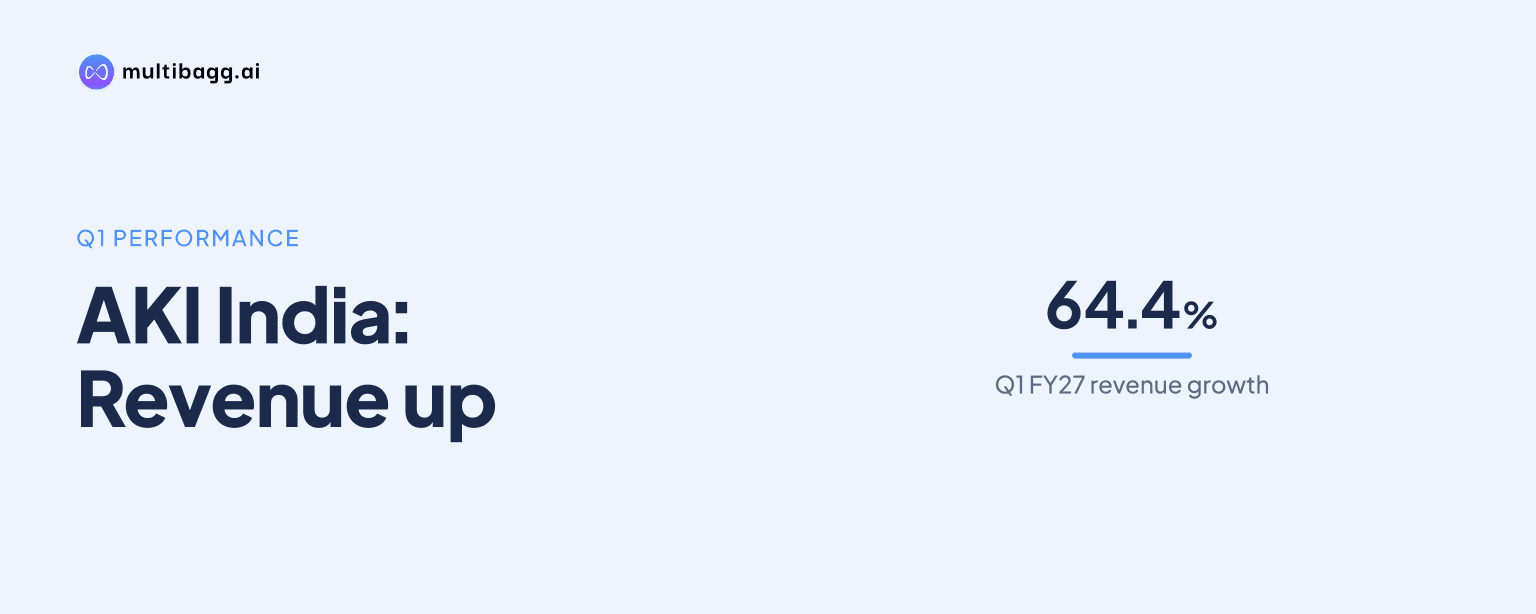
AKI India Limited reported consolidated revenue of ₹29.04 crore in the June 2026 quarter, a 64.4% increase from ₹17.66 crore a year earlier, while consolidated net profit rose to ₹0.51 crore from ₹0.23 crore. The result marks a year-on-year improvement in the company’s first-quarter financial performance, although revenue and profit declined from the preceding March quarter.
Know AKI India inside out
Results, valuation, peers and who's buying, in one view.
What did AKI India report for Q1 FY27?
AKI India reported consolidated revenue from operations of ₹29.04 crore and consolidated net profit of ₹0.51 crore for the quarter ended June 30, 2026, the first quarter of FY27. Revenue increased from ₹17.66 crore in Q1 FY26, while net profit increased from ₹0.23 crore in the comparable previous-year quarter.
The June-quarter result was released on August 11, 2026. Total consolidated income was ₹30.84 crore, including other income of ₹1.80 crore. Consolidated profit before tax was ₹0.72 crore, compared with ₹0.33 crore in Q1 FY26. Basic consolidated earnings per share stood at ₹0.05, compared with ₹0.02 a year earlier.
The year-on-year profit increase was supported by revenue growth and higher contributions from associates, according to the results summary provided. The reported figures distinguish consolidated performance from the company’s standalone operations, which recorded a lower profit for the period.
How did the June quarter compare with March 2026?
AKI India’s consolidated revenue declined by about 20.1% from ₹36.58 crore in the March 2026 quarter to ₹29.04 crore in the June 2026 quarter. Consolidated net profit fell by about 33.2% sequentially from ₹0.76 crore in Q4 FY26 to ₹0.51 crore in Q1 FY27.
Standalone revenue was ₹18.68 crore in Q1 FY27, down from ₹21.68 crore in the preceding quarter but above ₹11.36 crore in Q1 FY26. Standalone profit before tax was ₹0.23 crore, compared with ₹0.89 crore in the March quarter and ₹0.30 crore a year earlier.
Standalone net profit was ₹0.15 crore, down 28.6% from ₹0.21 crore in Q1 FY26. The supplied results summary attributed the lower standalone profitability partly to margin pressure and an exceptional item of ₹0.07 crore. This contrasts with the consolidated net-profit growth, which reflects the effect of associate contributions in addition to the company’s own operations.
What was AKI India’s FY26 financial performance?
AKI India reported revenue of ₹118.31 crore for FY26, compared with ₹87.48 crore in FY25, representing annual growth of 35.24%. Operating profit rose marginally to ₹2.71 crore from ₹2.67 crore, while net profit increased to ₹1.93 crore from ₹1.68 crore.
The difference between revenue growth and operating-profit growth is notable. Revenue expanded by more than one-third in FY26, but operating profit increased by only 1.50%. Net profit grew by 14.88%, indicating that the increase in sales did not translate proportionately into operating profit during the year.
The company operates in the leather goods segment, where manufacturers can face changes in raw-material costs, export demand, product mix and customer ordering patterns. The information supplied on AKI India also flags persistent challenges for leather manufacturers, though it does not quantify their direct impact on the company’s FY26 results.
Got a follow-up? Ask IRIS
Why do the consolidated and standalone figures matter to investors?
The gap between consolidated and standalone earnings matters because the two measures capture different parts of AKI India’s financial position. Consolidated results include the company’s associates and other entities included under consolidation, while standalone results reflect the reporting entity’s own operations.
For Q1 FY27, consolidated net profit of ₹0.51 crore was higher than standalone net profit of ₹0.15 crore. The company’s consolidated profit increased year on year, whereas its standalone profit declined. Investors assessing the June-quarter performance may therefore consider both measures rather than relying on one profit figure alone.
The quarter also showed that the revenue base was lower than in the preceding March quarter. Consolidated revenue decreased by ₹7.54 crore quarter on quarter, and consolidated net profit decreased by ₹0.25 crore. The annual FY26 figures similarly show that revenue growth and operating-profit growth moved at very different rates.
When are AKI India’s next quarterly results due?
AKI India’s Q2 FY27 results will cover the period from July 1, 2026 to September 30, 2026, and the results date had not been confirmed by the exchanges as of September 9, 2026. The source noted that Indian listing rules set an outer publication deadline of November 14, 2026 for the September-quarter results.
The September 2026 quarter will be compared with Q2 FY26, when AKI India reported revenue of ₹28.92 crore and profit of ₹0.62 crore. The June-quarter revenue of ₹29.04 crore and net profit of ₹0.51 crore provide the immediate sequential reference point for the next filing.
Conclusion
AKI India’s Q1 FY27 results showed strong year-on-year consolidated revenue growth of 64.4% and a rise in consolidated net profit to ₹0.51 crore. However, both revenue and profit were lower than in the March 2026 quarter, while standalone profitability declined from the prior-year period. The results underline the importance of separating consolidated gains from standalone operating performance.
The next disclosed checkpoint is the Q2 FY27 filing for the quarter ended September 2026. Investors will watch the reported revenue, consolidated and standalone profitability, and any company disclosures on margins or associate contributions when the results are released within the stated reporting timeline.