










Alstone Textiles (India) plans ₹300 crore NCPS conversion
Key highlights
- Alstone Textiles scheduled a board meeting for 4 November 2026 at 4:00 p.m. to consider the proposed allotment.
- The proposed issue comprises 300 crore 2% NCPS of ₹1 each, issued at par, for ₹300 crore.
- The NCPS allotment is proposed against conversion of an existing ₹300 crore unsecured loan.
- The transaction would use 60% of Alstone Textiles' ₹500 crore authorised preference capital.
powered by IRIS
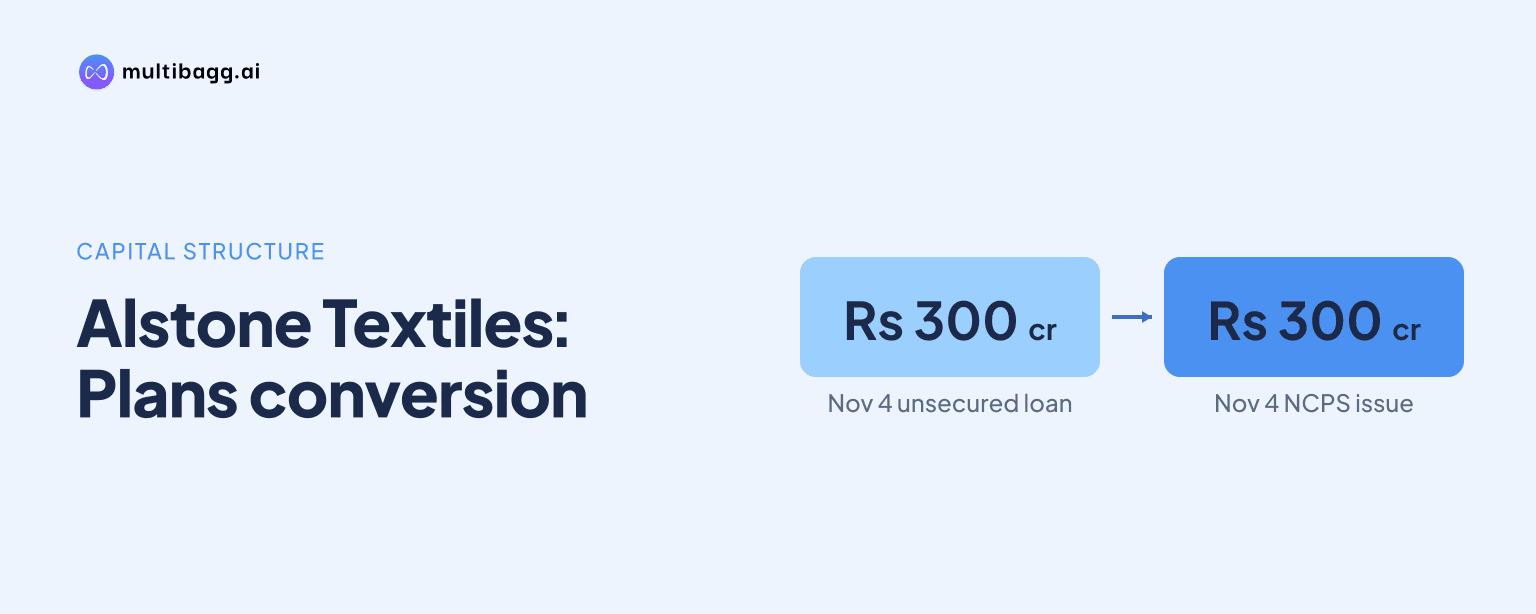
Alstone Textiles (India) Ltd has scheduled a 4 November 2026 board meeting to consider allotting ₹300 crore of 2% Non-Convertible Preference Shares against an equivalent unsecured loan, using 60% of its ₹500 crore authorised preference capital. The proposed transaction would replace the stated unsecured borrowing with preference share capital.
Know Alstone Textiles (India) inside out
Results, valuation, peers and who's buying, in one view.
What did Alstone Textiles announce for 4 November 2026?
Alstone Textiles informed the stock exchange on 31 October 2026 that its board would meet on Wednesday, 4 November 2026, at 4:00 p.m. to consider the allotment of Non-Convertible Preference Shares, or NCPS. The central agenda is an allotment valued at ₹300 crore through the conversion of an existing unsecured loan of the same amount.
The company said the proposed issue comprises 300 crore NCPS with a face value of ₹1 each, issued at par. The shares carry a 2% rate and are described as non-convertible, meaning the disclosure does not indicate a conversion of these preference shares into ordinary equity shares.
The meeting notice was issued under Regulation 29(1)(d) of the SEBI Listing Obligations and Disclosure Requirements Regulations. The notice was digitally signed by Managing Director Deepak Kumar Bhojak. It also allowed for consideration of other business with the Chairman's permission.
How will the ₹300 crore NCPS allotment work?
The proposed allotment is structured as a direct conversion of ₹300 crore of unsecured loans into 300 crore NCPS. Rather than receiving new cash through the allotment, Alstone Textiles would settle the disclosed loan amount by issuing preference shares to the lender or lenders associated with that borrowing.
The issue price is ₹1 per NCPS, equal to the face value. Therefore, the stated value of 300 crore shares at ₹1 each is ₹300 crore. The disclosure identifies the instrument as 2% NCPS, introducing a stated preference dividend rate while changing the form of the company’s obligation from unsecured debt to preference capital.
The available information does not disclose the identity of the loan provider, the interest rate on the unsecured loan before conversion, the redemption terms of the NCPS, or the detailed rights attached to the instruments. Those details would be relevant for assessing the full financial effect of the restructuring.
Why is the authorised preference capital important?
The proposed ₹300 crore allotment would be made from Alstone Textiles' authorised preference capital of ₹500 crore. On the disclosed figures, the issue would use 60% of that authorised amount, leaving ₹200 crore of authorised preference capital not used by this transaction.
Authorised capital represents the ceiling up to which a company can issue a specific class of shares without first increasing that authorised limit through the required corporate process. In this case, the company has stated that the proposed NCPS issue fits within its existing ₹500 crore authorised preference capital.
A clarification filed on 2 November regarding the earlier 41st annual general meeting notice stated that the unsecured loan proposed for conversion was ₹300 crore, not ₹500 crore. This distinction aligns the planned conversion amount with the board-meeting intimation and the stated NCPS allotment value.
Got a follow-up? Ask IRIS
What disclosures preceded the proposed allotment?
Alstone Textiles' 31 October filing gave prior notice of the board meeting and its proposed agenda. The company’s announcements also recorded the matter as a fundraise or allotment-related development, although the transaction is specifically a conversion of an existing liability rather than a disclosed cash fundraising exercise.
The supplied announcements also refer to the board's approval of unaudited financial results on 7 October 2026 and procedural regulatory filings, including a certificate under SEBI Regulation 74(5). They further refer to withdrawal of an earlier filing under Regulation 32. The available information does not link those procedural disclosures to a separate new capital issue.
The company’s announcements list an allotment-related update dated 4 November 2026. However, the detailed material provided for this report is the 31 October meeting intimation, under which the board was scheduled to consider and approve the proposed allotment. The exchange filing following the meeting is the relevant record for formal confirmation and final terms.
What could the loan conversion mean for investors and operations?
If approved and allotted as proposed, the transaction would remove the stated ₹300 crore unsecured loan from the form of unsecured borrowing and replace it with preference share capital. This changes the composition of Alstone Textiles' capital structure, while the amount involved remains ₹300 crore based on the disclosed conversion terms.
The 2% NCPS rate is a key feature for investors because it defines the stated return attached to the new preference instrument. Applying 2% to the ₹300 crore issue value gives a ₹6 crore annual preference dividend amount before considering payment conditions or other terms that have not been disclosed. The company has not provided a comparison with the previous interest cost on the unsecured loan.
Existing shareholders should distinguish between preference capital and equity share capital. The company’s materials note that increased share capital may potentially dilute existing equity, but the proposed instrument is NCPS and the supplied disclosure does not set out any conversion into equity shares. Investors would need the final allotment terms, voting rights, redemption conditions and the effect on paid-up capital to evaluate that issue fully.
Conclusion
Alstone Textiles has proposed a ₹300 crore restructuring in which an existing unsecured loan would be converted into 300 crore 2% NCPS issued at ₹1 each. The transaction would use ₹300 crore of the company’s ₹500 crore authorised preference capital and change the form of the disclosed liability from unsecured debt to preference capital.
The immediate item to watch is the company’s exchange filing after the 4 November 2026 board meeting. That disclosure should confirm whether the allotment was approved and provide any final details on the shares, their holders, redemption terms, rights and the resulting capital structure.