










Arihant Padi project holds about 58% of residential GDV
Key highlights
- Project Padi has Rs 5,000 crore of GDV, about 58% of Arihant’s Rs 8,625 crore residential portfolio.
- Project Padi covers 36 lakh square feet, about 62% of Arihant’s 58.31 lakh-square-foot residential area.
- Arihant’s economic interest in Project Padi is Rs 2,500 crore, about 53% of its Rs 4,716.8 crore residential total.
- Padi’s Rs 5,000 crore GDV exceeds the Rs 3,625 crore combined GDV of Arihant’s other nine listed residential projects.
powered by IRIS
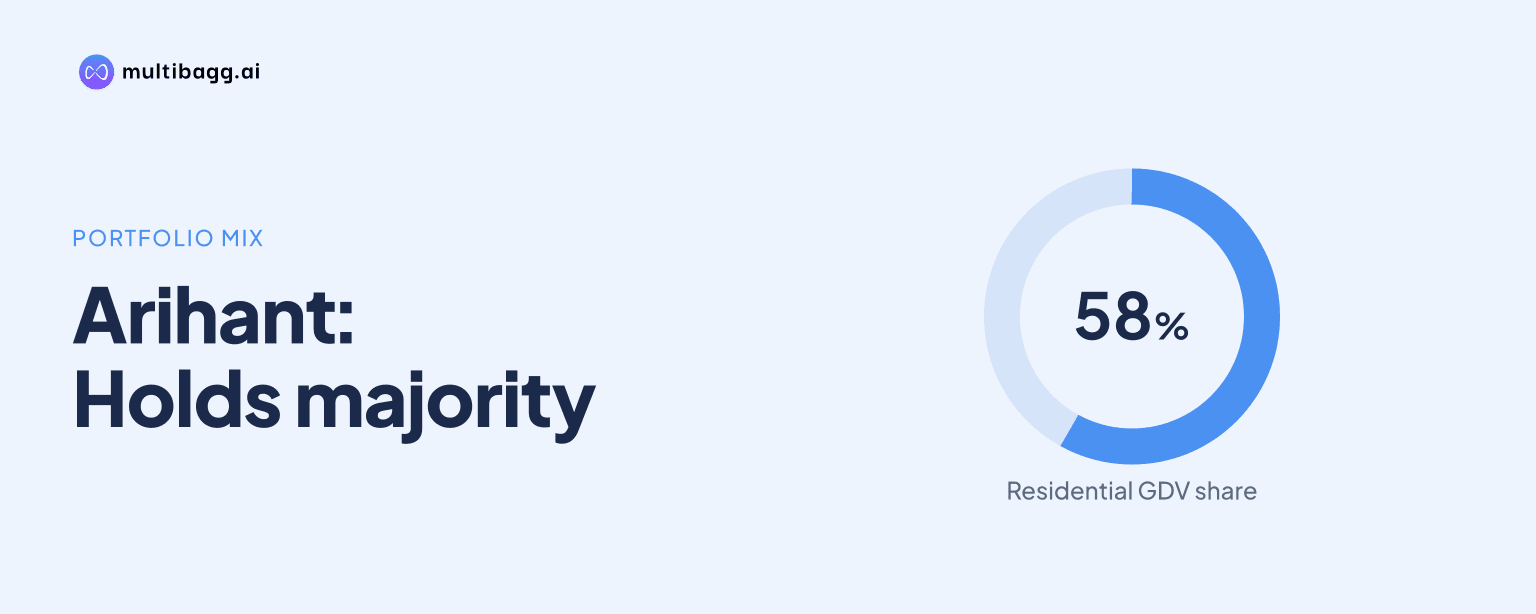
Arihant’s Project Padi holds about 58% of its Rs 8,625 crore residential gross development value (GDV), with Rs 5,000 crore of GDV, Rs 2,500 crore of economic interest and 36 lakh square feet within a 10-project portfolio.
Know Arihant Foundations & Housing inside out
Results, valuation, peers and who's buying, in one view.
How large is Arihant’s Padi project in the residential portfolio?
Project Padi is Arihant’s largest listed residential development by area, GDV and economic interest. The Padi project in Padi has 36 lakh square feet of area, Rs 5,000 crore of GDV and Rs 2,500 crore of Arihant economic interest, according to the residential project table.
Arihant’s 10 residential projects together have 58.31 lakh square feet of area, Rs 8,625 crore of GDV and Rs 4,716.8 crore of economic interest. Based on these disclosed figures, Padi accounts for about 58% of GDV, about 62% of area and about 53% of Arihant’s economic interest. GDV is the project’s stated development value, while Arihant labels its share as economic interest.
How does Padi compare with Arihant’s other residential projects?
Padi is larger than Arihant’s remaining nine listed residential projects combined on each of the three disclosed measures. The other projects collectively represent Rs 3,625 crore of GDV, Rs 2,216.8 crore of economic interest and 22.31 lakh square feet after subtracting Padi’s figures from the portfolio totals.
Park Street in Velechery is the second-largest listed residential project by GDV at Rs 1,600 crore, followed by Here & Now in Perungudi at Rs 1,200 crore. Padi’s Rs 5,000 crore GDV is more than three times Park Street’s value and more than four times Here & Now’s. Its 36 lakh square feet also exceed the combined 14.10 lakh square feet reported for those two projects.
Padi’s share of economic interest is lower than its share of portfolio GDV. Its Rs 2,500 crore economic interest equals about 53% of the Rs 4,716.8 crore residential total, compared with its nearly 58% contribution to Rs 8,625 crore of GDV. The presentation provides project-level economic-interest figures but does not explain the commercial terms behind the differences between individual projects.
Which projects make up Arihant’s residential value outside Padi?
The nine non-Padi projects contain Rs 3,625 crore of GDV across locations including Poes Garden, Abhirampuram, Saligramam, Perungudi, Velechery and Pattipulam on East Coast Road (ECR). Arihant describes the 10-project group as luxury residential and plotted-layout projects, with Reserve 16 identified as the plotted-layout project.
Park Street contributes Rs 1,600 crore of GDV and Rs 800 crore of economic interest, while Here & Now contributes Rs 1,200 crore of GDV and Rs 840 crore of economic interest. These two projects together account for Rs 2,800 crore of GDV, or most of the Rs 3,625 crore represented by the portfolio excluding Padi.
Got a follow-up? Ask IRIS
How does Arihant’s residential portfolio compare with other categories?
Arihant’s residential portfolio is larger than its separately disclosed senior-housing and commercial portfolios by GDV, area and economic interest. Residential GDV of Rs 8,625 crore compares with Rs 706 crore for two senior-housing projects and Rs 1,790 crore for seven commercial projects.
Residential area totals 58.31 lakh square feet, compared with 10.79 lakh square feet in senior housing and 9.70 lakh square feet in commercial projects. Arihant’s residential economic interest of Rs 4,716.8 crore also compares with Rs 287 crore in senior housing and Rs 930 crore in commercial projects.
Padi alone has Rs 2,500 crore of economic interest, exceeding the Rs 930 crore stated for Arihant’s seven commercial projects and the Rs 287 crore stated for its two senior-housing projects. The project’s Rs 5,000 crore GDV also exceeds the combined Rs 2,496 crore GDV of the disclosed commercial and senior-housing portfolios.
What does Arihant disclose about Padi’s execution status?
Arihant discloses Project Padi as part of 10 ongoing residential projects, but the portfolio page does not provide a completion date, construction stage, launch date, sales figure or cost estimate. The disclosed project data are its Padi location, 36 lakh-square-foot area, Rs 5,000 crore GDV and Rs 2,500 crore economic interest.
The presentation does not identify the Rs 5,000 crore figure as booked sales, recognised revenue, profit or cash flow. It presents that amount as GDV and separately identifies Rs 2,500 crore as Arihant’s economic interest. It also does not give project-level unit counts, funding details, approvals or collections for Padi.
Arihant’s broader ongoing-project area mix allocates 74% to residential, 14% to senior living and 12% to commercial. The detailed project tables list 58.31 lakh square feet of residential area, 10.79 lakh square feet of senior housing and 9.70 lakh square feet of commercial space, placing Padi’s 36 lakh square feet within the company’s largest disclosed development category.
Conclusion
Arihant’s disclosed residential pipeline is concentrated in Project Padi. Its Rs 5,000 crore GDV represents about 58% of the Rs 8,625 crore residential total, while its Rs 2,500 crore economic interest represents about 53% of the Rs 4,716.8 crore portfolio interest. Padi also accounts for about 62% of the 58.31 lakh-square-foot residential area.
The key unresolved matter is Padi’s execution and monetisation timetable. Arihant identifies Padi within its 10 ongoing residential projects but does not disclose a launch schedule, construction progress, sales, costs, funding or completion date, leaving subsequent project-specific disclosures as the relevant development to watch.