










AWEL targets FY29 gas after DGH clears ONGC facility use
Key highlights
- DGH approved AWEL’s use of ONGC facilities for Mumbai-block gas evacuation and processing in July 2026.
- AWEL expects production from its Mumbai block to start in FY29.
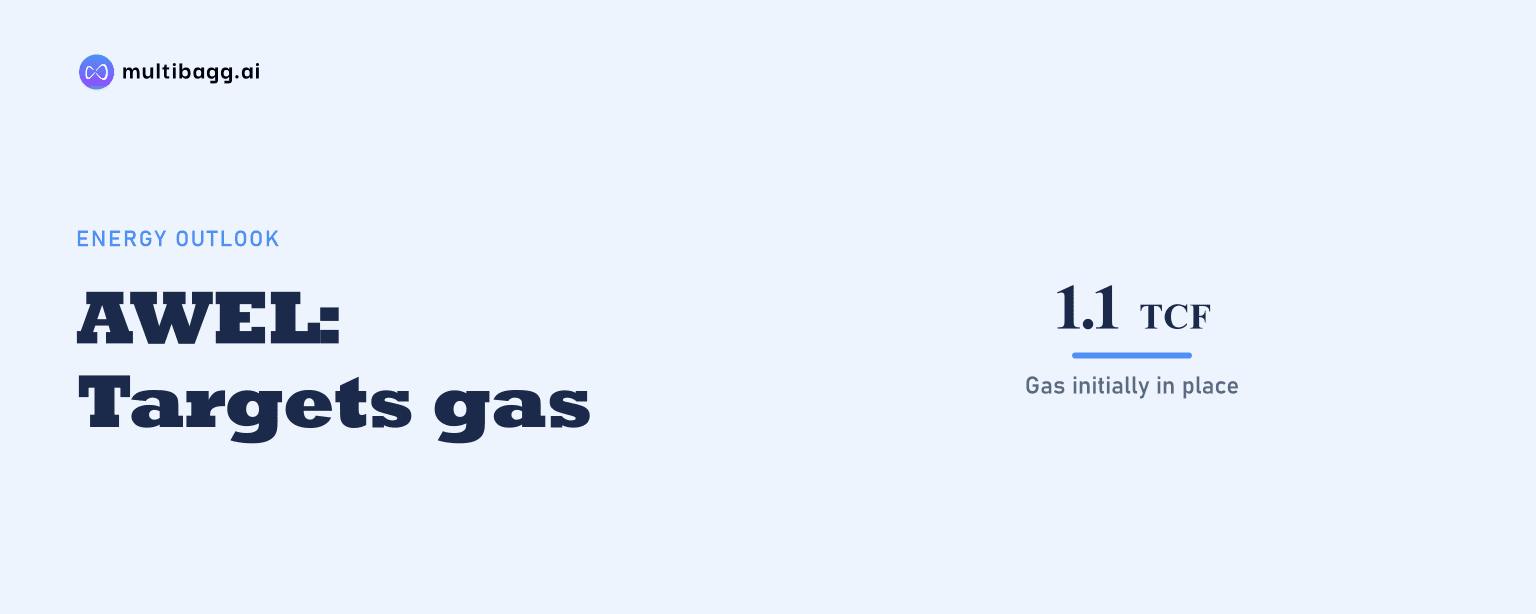
- AWEL reports approximately 1.1 TCF of collective gas initially in place across its blocks.
- Welspun Enterprises had an Rs 18,708 crore order book as of September 30, 2026.
powered by IRIS
Adani Welspun Exploration Ltd (AWEL) targets FY29 production from its Mumbai block after the Directorate General of Hydrocarbons approved use of Oil and Natural Gas Corporation facilities in July 2026, a toll-based plan that management says will reduce capital investment and project risk.
Know Welspun Enterprises inside out
Results, valuation, peers and who's buying, in one view.
What did DGH approve for AWEL’s Mumbai block?
The Directorate General of Hydrocarbons, or DGH, approved AWEL’s use of Oil and Natural Gas Corporation, or ONGC, existing facilities to evacuate and process gas from the Mumbai block on a toll basis. Welspun Enterprises Limited management said in its Q2 FY27 presentation that the arrangement should substantially reduce AWEL’s risk and capital investment while accelerating progress towards first production.
The project update records the DGH order for the Mumbai block in July 2026 and identifies the evacuation plan as being via ONGC’s network. AWEL is therefore planning to use established third-party infrastructure for both evacuation and processing, rather than disclosing a separate proprietary system in the presentation.
The presentation does not state the tolling charge, ONGC network capacity, agreement duration or AWEL’s remaining development expenditure. These terms are material unresolved items because the stated FY29 production target depends on the disclosed evacuation and processing route being available for the Mumbai-block gas.
When does AWEL expect to start gas production?
AWEL expects production to start in FY29, according to the project update on page 14 of the Q2 FY27 presentation. The expected start follows the July 2026 DGH order and the plan to evacuate gas through ONGC’s network.
The company does not provide a quarter within FY29 for first production, a daily gas-production target or a field-development schedule. It also does not disclose drilling, subsea connection, commissioning or gas-sales milestones between the July 2026 approval and the FY29 target.
The project timeline includes legislation in April 2025 and an order under the Petroleum and Natural Gas Rules, 2025 in December 2025. Those policy dates precede the July 2026 DGH order, while FY29 remains AWEL’s disclosed forward-looking operating milestone rather than reported production.
How much gas has AWEL identified across its blocks?
AWEL reports approximately 1.1 trillion cubic feet, or TCF, of collective gas initially in place, or GIIP, across its blocks. GIIP identifies gas estimated to be initially present in reservoirs; the presentation does not describe the 1.1 TCF as recoverable reserves, marketable volumes or expected FY29 output.
The map identifies MB B-9 and C-37 and shows Mumbai and Hazira, alongside distance labels of 148 kilometres and 189 kilometres. However, AWEL does not allocate the 1.1 TCF GIIP figure between individual blocks or specify the share associated with the Mumbai block covered by the July 2026 DGH order.
AWEL is a 65:35 joint venture between the Adani Group and Welspun Enterprises Limited and is described as the investment vehicle. The presentation does not disclose AWEL’s funding commitments, separate financial results, development-well count or a recovery factor that would translate the 1.1 TCF GIIP estimate into saleable gas volumes.
Got a follow-up? Ask IRIS
How does AWEL differ from Welspun Enterprises’ core operations?
AWEL is an upstream gas-development venture, while Welspun Enterprises’ reported order book is concentrated in infrastructure segments. As of September 30, 2026, the parent’s Rs 18,708 crore order book comprised water at 54%, transport at 30%, tunnel projects at 11% and other activities at 6%; AWEL is not included in that disclosed segment split.
The contract mix also differs from AWEL’s toll-based facility plan. Engineering, procurement and construction, or EPC, represented 42% of the September 2026 order book, while operations and maintenance, or O&M, and build-operate-transfer, or BOT, each represented 29%; hybrid annuity model, or HAM, work represented 1%.
Welspun Enterprises reported consolidated revenue from operations of Rs 1,808 crore in H1FY27, compared with Rs 1,629 crore in H1FY26, an 11% increase. Consolidated earnings before interest, tax, depreciation and amortisation, or EBITDA, rose 53% to Rs 610 crore, while the EBITDA margin increased to 32.4% from 23.9%.
These H1FY27 results do not establish revenue or profit from AWEL, whose stated production target is FY29. Management also reported cash and cash equivalents of Rs 1,432 crore and net worth of Rs 3,581 crore as of September 30, 2026, but the presentation does not connect either figure to a specific AWEL capital budget.
Conclusion
The July 2026 DGH approval gives AWEL a disclosed route to evacuate and process Mumbai-block gas through ONGC facilities on a toll basis. Together with the FY29 production target and approximately 1.1 TCF of collective GIIP across AWEL blocks, the arrangement marks the project’s stated move from exploration towards execution, while leaving commercial and development details undisclosed.
The next disclosed milestone is AWEL’s expected FY29 start of production. Investors can watch for progress against that target and for any company disclosure on the operating terms of ONGC facility access, remaining capital requirements, Mumbai-block recoverable volumes or expected production rates.