










Dachepalli caps e-commerce at 100 schools amid constraints
Key highlights
- Dachepalli expects about Rs 50 crore of turnover from its capped base of 100 e-commerce schools in the coming academic year.
- Dachepalli has another 20 schools in its pipeline but is limiting onboarding because warehouse dispatch capacity could affect fulfilment.
- E-commerce PAT is currently below 10% because 40% of products sold through the channel are traded rather than manufactured in-house.
- PageCraft is expected to generate about Rs 20 crore to Rs 25 crore of notebook turnover, within current machinery capacity of about Rs 30 crore to Rs 40 crore.
powered by IRIS
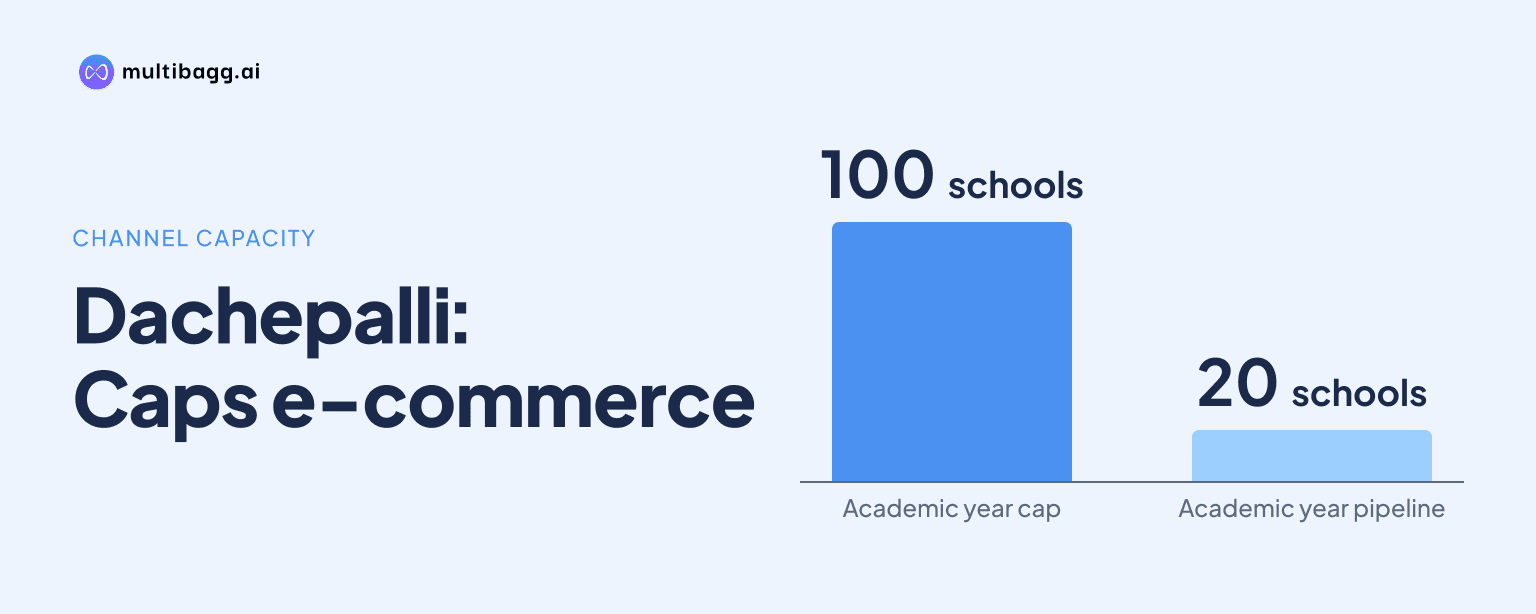
Dachepalli Publishers Limited has capped its school e-commerce rollout at about 100 schools, leaving another 20 in the pipeline because warehouse packing and distribution capacity could constrain timely fulfilment. Dachepalli expects the 100-school base to generate about Rs 50 crore of turnover, while the channel’s profit after tax remains below 10%.
Know Dachepalli Publishers inside out
Results, valuation, peers and who's buying, in one view.
Why has Dachepalli capped e-commerce onboarding at 100 schools?
Dachepalli has capped onboarding at about 100 schools because warehouse capacity must support packing and on-time distribution before it adds more accounts. Management said it had signed and onboarded about 100 schools this year and had another 20 schools in the pipeline, but chose to restrict the rollout until it could fulfil the seasonal workload reliably.
The constraint relates to the school operating cycle and the need to have products ready before reopening. Management said some school counters can begin in March and others in April, while schools reopen in June. It also said textbooks must be produced two to three months before the season, since a school cannot wait for stock to be manufactured after placing its order.
Management described the capacity requirement in dispatch terms. During the seasonal period, it said stock worth Rs 1 crore to Rs 3 crore may need to be dispatched each day across the country. If stock is unavailable, management said schools can place orders with another supplier, making warehouse handling and inventory readiness relevant to retaining the existing 100-school base.
What turnover does Dachepalli expect from 100 schools?
Dachepalli expects about Rs 50 crore of turnover from the 100-school e-commerce base, compared with about Rs 25 crore from roughly 50 schools last year. The comparison shows that the school count and expected turnover have both doubled, implying broadly similar expected turnover per school across the two bases.
The Rs 50 crore estimate applies to the coming academic year rather than a stated financial-year revenue period. Management explained that some counters may start before March while others start in April, although schools reopen in June. Revenue associated with the school base may therefore span the calendar described by management rather than align neatly with one financial year.
The e-commerce plan forms part of a wider turnover target of about Rs 150 crore, plus or minus 10%, for the current year. Management also stated a subsequent-year turnover target of Rs 225 crore to Rs 230 crore. It did not provide a business-line split of the Rs 150 crore target, so the proportion ultimately contributed by e-commerce was not specified.
Why is Dachepalli’s e-commerce PAT below 10%?
Dachepalli said e-commerce profit after tax, or PAT, is below 10% because 40% of the products sold through the channel are traded rather than produced in-house. Management said the remaining 60% is in-house product, leaving the current margin dependent on a mixed manufacturing and trading model.
Notebooks are the main product through which Dachepalli intends to change that mix. Management said e-commerce schools previously received notebooks sourced from outside suppliers, but the company now plans to introduce notebooks from its PageCraft division. It described the move as a shift from traded to manufactured products, intended to raise margins rather than necessarily create entirely incremental e-commerce revenue.
At an illustrative Rs 25 crore of e-commerce turnover, management said Rs 3 crore to Rs 4 crore came from notebooks traded from outside. It separately said traded notebooks in Pelican accounted for around Rs 4 crore to Rs 5 crore, while notebook trading in supplies was additional. These figures identify the product category that management expects to replace with internal production.
The channel-specific PAT figure is distinct from Dachepalli’s company-wide margin guidance. Management reiterated an overall PAT margin expectation of about 14% to 16%, saying marketing and sales spending is higher in the first two quarters and turnover is expected to increase in the following two quarters. That expectation is management guidance, while the below-10% PAT applies to the present e-commerce mix.
Got a follow-up? Ask IRIS
Can PageCraft increase Dachepalli’s in-house product mix?
PageCraft can increase Dachepalli’s in-house notebook mix, although management presented its turnover estimates as expectations rather than confirmed orders. It expects notebook turnover of about Rs 20 crore to Rs 25 crore, including sales obtained by converting a share of notebook requirements from existing customers.
Management said current notebook machinery can manufacture about Rs 30 crore to Rs 40 crore of output. It said more machinery may be needed beyond that level. The expected Rs 20 crore to Rs 25 crore notebook turnover is therefore within the stated current machinery range, but actual delivery depends on order timing and execution.
Notebook requirements differ across states, according to management, which cited 80-page, 160-page and 172-page formats. It said notebooks are produced after orders are received and must be delivered by the required date. That product customisation means manufacturing capacity alone does not determine whether Dachepalli can convert more demand into delivered sales.
Management also said stationery remains a traded category because it has not reached the scale for its own production. It would consider white-labelling selected stationery products from China only after reaching 100% capacity at a level sufficient to support stationery manufacturing. For now, PageCraft notebooks are the disclosed route for raising the in-house share of school products.
How do inventory and receivables affect the 100-school plan?
Dachepalli is building inventory for its Rs 150 crore turnover target because school orders require rapid seasonal dispatch rather than production on demand. Management said it had purchased 90% of the raw material needed for that target, with some material delivered and some in transit. The final 10% is to be ordered according to demand for particular products.
The advance purchase was partly intended to manage paper costs. Management said it bought most paper at Rs 78 to Rs 81, compared with a then-current price of Rs 93, and estimated the remaining 10% could cost Rs 100. It also said it planned a 10% increase in maximum retail prices, while characterising the resulting PAT outcome as an expectation rather than a realised inventory gain.
Receivables remain material in the seasonal operating model. At September-end, an analyst referred to receivables of Rs 87.55 crore, and management said amounts older than six months would be only about Rs 5 crore to Rs 6 crore. Management expected newer receivables to be collected within 30 to 90 days, while acknowledging that new invoices from the second quarter had added to the balance.
Management said it was offering customers cash discounts to accelerate collections and was seeking positive operating cash flow for the year. It also said inventory would be ready for about Rs 150 crore of business. These measures connect the school cap with working-capital execution: products must be stocked before the season, then converted into cash through dispatches and collections.
Conclusion
Dachepalli’s 100-school e-commerce limit reflects an operational choice to prioritise fulfilment over further account additions. The planned base is expected to generate about Rs 50 crore, double the about Rs 25 crore generated from 50 schools last year, but current channel PAT remains below 10% because 40% of its product mix is traded.
The next points to watch are whether PageCraft replaces traded notebooks within the school channel, whether the expected Rs 20 crore to Rs 25 crore of notebook turnover is delivered, and whether collections occur within the stated 30-to-90-day window. Management’s stated plan also depends on dispatching inventory prepared for about Rs 150 crore of turnover during the coming school season.