










Dalmia Bharat Q2 FY27 Results: 3 Key Metrics to Watch
Key highlights
- Dalmia Bharat will report Q2 FY27 results on October 26, 2026, with an analyst call at 5:30 pm IST.
- Q1 FY27 consolidated revenue was ₹3,890 crore, up 6.99% year on year but down 8.36% quarter on quarter.
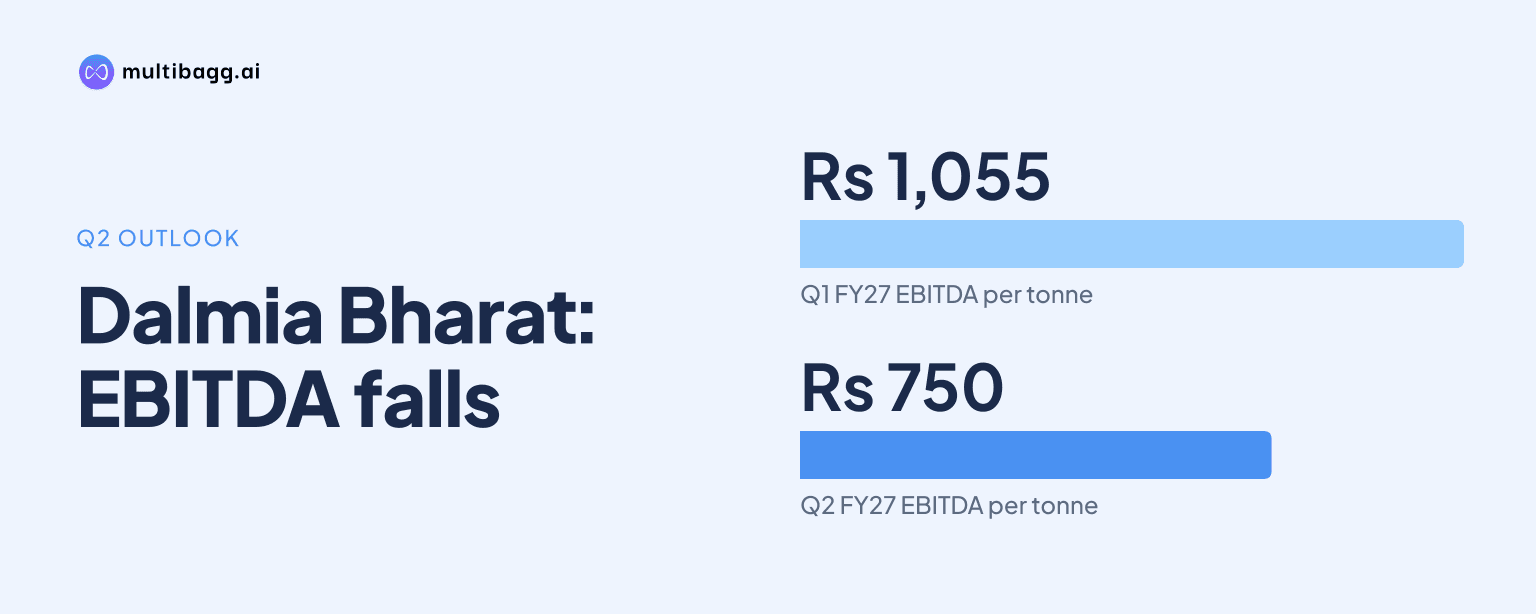
- Q2 FY27 revenue is expected at about ₹3,800 crore to ₹3,900 crore, while EBITDA per tonne is expected to fall to about ₹750 from ₹1,055 in Q1.
- Dalmia Bharat is targeting consolidated cement capacity of 75 million tonnes per annum by FY28 and plans a ₹4,000 crore FY27 capital expenditure run rate.
powered by IRIS
Earnings day puts cement sector in focus
Know Dalmia Bharat inside out
Results, valuation, peers and who's buying, in one view.
Dalmia Bharat is scheduled to report its unaudited standalone and consolidated financial results for the quarter and half year ended September 30, 2026, on October 26. The cement maker is among companies releasing July-September quarter earnings on the day, alongside names including Mankind Pharma, APL Apollo Tubes and Aegis Logistics. For Dalmia Bharat investors, the immediate focus is not only the reported profit figure but also the trend in demand, operating costs and capacity additions. The September quarter is typically influenced by monsoon conditions, which can affect construction activity and cement dispatches in several markets. Management commentary on the second half of FY27 will therefore carry significance. The company has scheduled an investors and analysts conference call at 5:30 pm IST on October 26.
What the available Q1 figures show
Dalmia Bharat reported consolidated revenue of ₹3,890 crore in Q1 FY27. This was 8.36% lower sequentially than ₹4,245 crore in the preceding quarter, while it was 6.99% higher year on year. The company reported gross profit of ₹444 crore for the June quarter, down 17.32% quarter on quarter. Q1 FY27 profit was ₹188 crore, translating into a profit margin of 4.83%. Volume growth during the quarter was reported at 9% year on year. These figures provide the base from which investors will assess the September-quarter performance.
Revenue expectations for the September quarter
Market expectations cited in the available information place Dalmia Bharat's Q2 FY27 revenue in a range of about ₹3,800 crore to ₹3,900 crore. That range is close to the ₹3,890 crore reported in Q1 FY27. Seasonal disruption during the monsoon is expected to weigh on the quarter's revenue and volumes. The available estimate points to low single-digit year-on-year volume growth. Such a performance would indicate that demand remained present but was moderated by the normal seasonal pattern. The results and management call will clarify whether regional demand conditions differed across the company's operating markets.
EBITDA per tonne is the key margin measure
The central profitability metric to watch is EBITDA per tonne. The available expectation is for EBITDA per tonne of about ₹750 in Q2 FY27, compared with ₹1,055 in Q1 FY27. This would represent a substantial sequential reduction in unit profitability. The cited reason is a ₹70 to ₹80 per tonne increase in operating costs, along with marginally lower net sales realisation. Investors will look for the company to quantify input-cost changes and explain whether the pressure arose from fuel, freight or other operating expenses. Any discussion of price realisation will also be relevant to the near-term margin outlook.
Expansion plan remains an important strategic factor
Dalmia Bharat is working towards a consolidated capacity target of 75 million tonnes per annum by FY28. The company is expected to maintain a capital expenditure run rate of ₹4,000 crore in FY27, with a similar level indicated for FY28. According to the available information, expansion assets are expected to begin coming online during Q3 and Q4. The pace of commissioning and the expected contribution of these assets will be important topics on the earnings call. Capacity expansion can support volume growth, but it also requires disciplined execution and demand absorption.
Got a follow-up? Ask IRIS
Management guidance and the second-half test
Management has guided for 11% to 12% volume and EBITDA compound annual growth through FY29. The Q1 result, which included 9% year-on-year volume growth and 7% revenue growth, provided an early reference point for that objective. The Q2 outcome will show how much seasonal demand and higher costs have affected the trajectory. The cited market view is that current margin pressure reflects input-cost inflation rather than a collapse in demand. Still, the eventual recovery in profitability will depend on costs, realisations and the ramp-up of new capacity. The second half of FY27 is expected to be particularly relevant as central-region assets come online.
Key data at a glance
What investors should assess on October 26
The first item to assess will be whether revenue is within the indicated ₹3,800 crore to ₹3,900 crore range. The second will be the extent of any EBITDA-per-tonne decline from the ₹1,055 reported in Q1. Third, investors will seek details on the ₹70 to ₹80 per tonne operating-cost headwind and whether management expects it to persist. Fourth, volume growth will show the effect of monsoon conditions on demand. Finally, the company’s timetable for new capacity will help indicate whether the FY28 capacity objective remains on track.
Broader relevance for the cement industry
Dalmia Bharat's result will offer another data point on September-quarter conditions in the cement sector. Cement producers are managing the interaction of seasonal volumes, energy and logistics costs, pricing, and capital expenditure. A weaker unit-margin outcome would highlight the impact of cost inflation even if sales volumes remain positive. Conversely, management commentary on the second half will help the market understand whether commissioning activity and post-monsoon demand could support improved utilisation. The earnings release alone will not settle these questions, but it will provide updated operating data and management guidance.
Conclusion
Dalmia Bharat's Q2 FY27 announcement will be closely examined for its revenue trend, volume growth and EBITDA per tonne. The October 26 analyst call is expected to provide further detail on costs, realisations and the timing of capacity additions. The company’s progress towards its 75 million tonnes per annum capacity target remains a key longer-term operating milestone.