










DCM Shriram Limited targets chlorine integration near 70%
Key highlights
- DCM Shriram expects approximately 70% chlorine integration through captive consumption and pipeline customers.
- Management said chlorine moved from around Rs 8,000 in Q1 to around negative Rs 5,000 in Q2.
- Caustic utilisation reached 88%, compared with around 79% to 80% in the same period a year earlier.
- DCM Shriram plans to add 70 to 80 megawatts of renewable power to its existing 107 megawatts of peak renewable capacity.
powered by IRIS
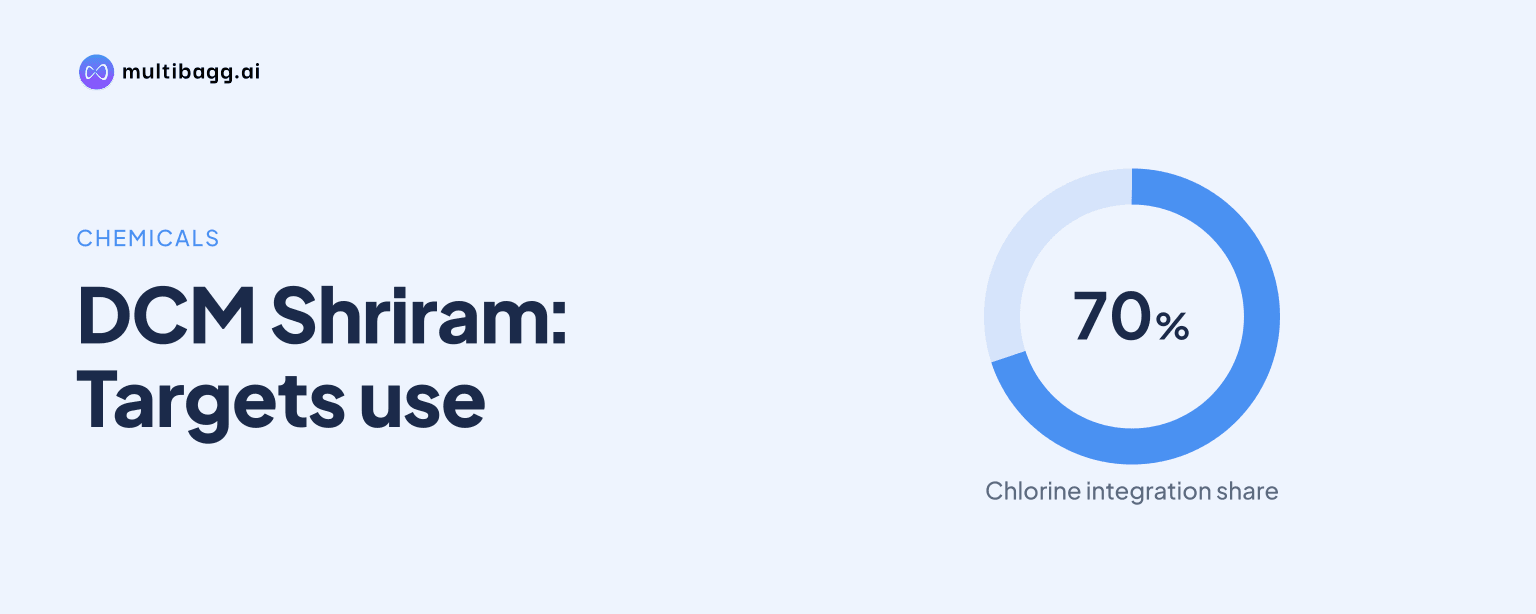
DCM Shriram expects roughly 70% of chlorine capacity to be integrated through captive consumption and pipeline customers, while caustic utilisation reached 88% in the reported quarter versus about 79% to 80% in the same period last year. Management linked the utilisation improvement to aluminium chloride and market-development activities.
Know DCM Shriram inside out
Results, valuation, peers and who's buying, in one view.
What chlorine integration level does DCM Shriram expect?
DCM Shriram expects about 70% of its chlorine capacity to be integrated when captive consumption and pipeline customers are considered together. Management described this as a combination of downstream use at its Bharuch and Kota sites and supply to connected customers, particularly in Bharuch. The company said this integration gives it a better position than it had a few years ago when chlorine market pricing is adverse.
At Bharuch, DCM Shriram expects captive chlorine consumption of 45% after its projects are commissioned. At Kota, expected captive consumption is 62%. Bharuch pipeline customers consume approximately 27% of chlorine capacity, according to management, and have developed alongside the company over about 30 years.
The site-level percentages should not be added mechanically because Bharuch and Kota are separate locations with different chlorine capacities. DCM Shriram did not give a capacity-weighted calculation, individual project commissioning dates, or a full breakdown of chlorine supplied under other regional customer arrangements. It said those arrangements exist in addition to the approximately 70% integrated capacity measure.
Why is DCM Shriram reducing merchant chlorine exposure?
DCM Shriram is expanding chlorine integration because chlorine prices turned negative while the company monitors the combined caustic soda and chlorine outcome through electrochemical unit, or ECU, pricing. Management said chlorine prices were around Rs 8,000 in Q1 and around negative Rs 5,000 in Q2. It subsequently said prices had at one point moved below negative Rs 5,000.
Management later said chlorine prices had become less negative or closer to zero, helping ECU prices improve. It described caustic soda prices as range-bound and said higher energy costs had also affected costs. DCM Shriram did not disclose exact caustic soda realisations for Q1 or Q2, nor did it provide a precise chlorine price at the time of the call.
Captive downstream consumption and pipeline supply are the mechanisms DCM Shriram cited for reducing the chlorine volume exposed to external market pricing. Management called its approach “intelligent integration” and said it was also focused on cost optimisation. The company did not forecast future chlorine prices or quantify the financial impact of reaching approximately 70% integration.
Got a follow-up? Ask IRIS
How has aluminium chloride affected DCM Shriram’s utilisation?
Aluminium chloride has helped DCM Shriram raise caustic utilisation to 88% in the reported quarter from around 79% to 80% in the same period last year. Management said the aluminium chloride plant was created to support caustic utilisation and credited market-development activities as another contributor. The year-on-year change is about 8 to 9 percentage points.
DCM Shriram described aluminium chloride as a small part of its business and did not provide its volume, plant capacity, revenue or separate profitability. Management said aluminium chloride prices are closely linked to aluminium prices because aluminium is an input cost. It added that a movement in aluminium prices can be reflected in aluminium chloride prices, although with a possible lag.
The utilisation increase does not establish that aluminium chloride alone caused the improvement from about 79% to 80% to 88%. Management explicitly attributed the result to both the plant and market-development work. Still, the 88% utilisation figure is the clearest disclosed operating result associated with the company’s chlorine-linked downstream strategy.
What cost and capacity factors will affect DCM Shriram’s plan?
Energy costs and new caustic capacity additions will affect DCM Shriram’s integration strategy. Management said chlor-alkali costs are linked to energy, while energy represents about 60% to 70% of vinyl production cost. It also said coal remains the majority of its power cost and that coal prices have risen.
DCM Shriram said its power is largely captive, sourced from coal-based and renewable generation rather than the grid. Peak renewable capacity is about 107 megawatts, while coal-based power is about 345 megawatts, excluding sugar operations. Management plans to add another 70 to 80 megawatts of renewable capacity and targets renewable energy at around one-third of total power requirements within the next year.
Management referred to two large caustic capacity additions announced for the next couple of years and said industry demand-supply mismatches can occur. It said the new capacities are expected to be integrated into polyvinyl chloride, or PVC, which could limit additional surplus chlorine entering the market. DCM Shriram also said India has become a net exporter of caustic soda after being a net importer some years ago.
Conclusion
DCM Shriram’s approximately 70% chlorine integration measure combines internal downstream consumption with pipeline customers, rather than relying only on merchant chlorine sales. The increase in caustic utilisation to 88% from around 79% to 80% a year earlier provides operating evidence that aluminium chloride and market-development efforts are supporting this model, while the shift from around Rs 8,000 chlorine pricing in Q1 to negative Rs 5,000 in Q2 illustrates the exposure being addressed.
The next items to watch are the commissioning of projects underpinning the 45% Bharuch and 62% Kota captive-consumption expectations, although management gave no dates for those projects. Management also plans to add 70 to 80 megawatts of renewable power within the next year and flagged two large industry caustic capacity additions over the next couple of years as an unresolved market factor.