










DCX ventures target 1.4 km rail visibility and defence
Key highlights
- NIART targets railway obstacle detection with track visibility of up to 1.4 km.
- ELTX is planned to develop radar and electronic-warfare systems for defence markets.
- ELTA Systems has seven decades of stated experience in radar and electronic-warfare systems.
- NIART will procure SI, cables and PCBA, while ELTX will procure sub-systems, cables and PCBA, from DCX.
powered by IRIS
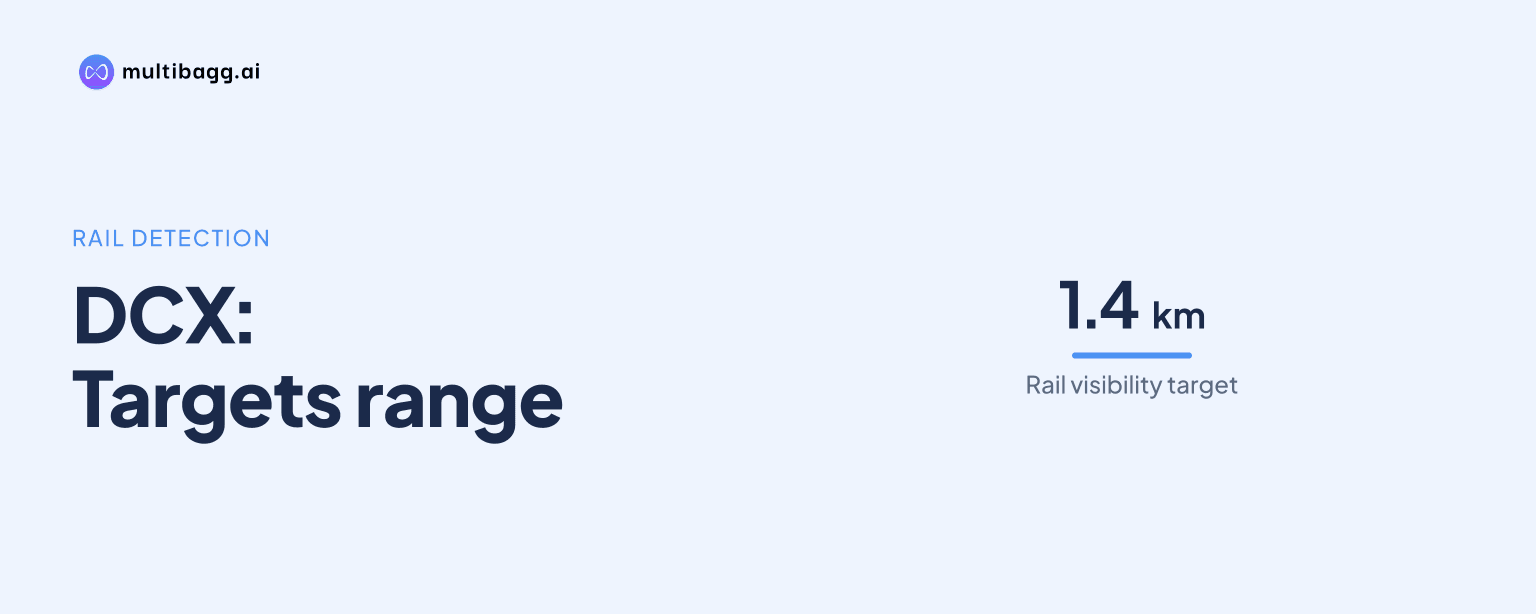
DCX has formed two ventures with ELTA Systems: NIART Systems Ltd targets railway obstacle detection with track visibility of up to 1.4 km, while ELTX Systems Ltd is planned for defence radar and electronic-warfare systems. Both ventures are intended to obtain ELTA technology transfer and procure specified manufactured inputs from DCX.
Know DCX Systems inside out
Results, valuation, peers and who's buying, in one view.
What do DCX’s two ventures with ELTA Systems do?
DCX’s two ventures address separate end markets: NIART Systems Ltd is intended to develop railway obstacle-detection solutions, while ELTX Systems Ltd is intended to develop radar and electronic-warfare, or EW, systems for defence. The joint-venture overview identifies NIART with Israel and ELTX with India. The detailed venture descriptions state that both were formed with ELTA Systems.
The common mechanism is transfer of technology, or ToT, from ELTA Systems combined with DCX manufacturing capabilities. NIART is intended to use that model for radar and optics products in the railway sector, while ELTX is intended to use it for radar and EW products in the defence sector. Both ventures target domestic as well as export markets, but their products and DCX procurement requirements differ.
How is NIART positioned in railway obstacle detection?
NIART is positioned to develop obstacle-detection solutions using radar and optics technology, with track visibility stated at up to 1.4 km. DCX describes this visibility as almost double the present industry standard. The presentation does not provide a numerical measure for that existing standard, so the 1.4 km figure is the disclosed product-performance measure.
NIART is expected to procure system integration, or SI, cables and printed circuit board assemblies, or PCBA, from DCX. This gives DCX a stated manufacturing-supply role alongside its participation in the venture. ELTA Systems is expected to provide technical know-how through ToT, while DCX is expected to leverage its manufacturing facilities for the railway radar and optics offering.
The venture’s overseas relationship is also intended to facilitate access to global markets. That export objective sits alongside NIART’s domestic railway target, rather than replacing it. DCX does not disclose a railway contract, production volume, order value, customer programme or launch timetable for NIART in the presentation.
What is ELTX Systems designed to supply?
ELTX is designed to develop radar and EW systems for domestic and export defence markets. DCX states that ELTA Systems has seven decades of experience in radar and EW systems and describes that experience as field proven. ELTX is intended to obtain ToT from ELTA Systems and use DCX manufacturing capabilities for the resulting products.
ELTX is expected to procure sub-systems, cables and PCBA from DCX. That input list is broader than NIART’s stated procurement of SI, cables and PCBA, because ELTX also includes sub-systems. The difference reflects the ventures’ separate applications: NIART is focused on railway obstacle detection, while ELTX is focused on defence radar and EW systems.
The presentation identifies domestic and export defence markets as ELTX’s targets, but does not specify individual defence platforms, customers or programmes. It also does not disclose revenue guidance, production capacity, ownership percentages, procurement quantities or order values for ELTX. The described strategy is a technology-transfer and local-manufacturing route, not a disclosed sales forecast.
What manufacturing role does DCX have in the ventures?
DCX is positioned as the manufacturing supplier to both ventures through SI, cables and PCBA for NIART, and sub-systems, cables and PCBA for ELTX. The presentation links this role to DCX’s existing build-to-print system-integration work and manufacture of cable and wire-harness assemblies for the Indian defence market. Build-to-print means manufacturing products to a customer-provided design rather than designing the product independently.
DCX identifies itself as among the larger Indian offset partners, or IOPs, for the Israel Aerospace Industries Group in the Indian defence market. Its listed offset-related work includes electronic assemblies, automatic missile-detection radars, unmanned aerial vehicle systems, Barak systems, medium-range maritime reconnaissance aircraft and short-range surface-to-air missile products. These listed capabilities provide the context for the manufacturing role described for NIART and ELTX.
The presentation also cites AS-9100:2016 certification for quality-management systems used in aviation, space and defence manufacturing. DCX further lists a defence industrial licence from the Ministry of Commerce and Industry for manufacture of key products. These credentials are presented alongside the company’s manufacturing model, although the presentation does not state that either credential alone confers a specific NIART or ELTX contract.
Got a follow-up? Ask IRIS
Which customer and operating practices support DCX’s model?
DCX lists ELTA Systems, Bharat Electronics, Israel Aerospace Industries, Elbit Systems, Lockheed Martin, L&T, Rafael, Collins Aerospace and Boeing among its key customers. The same customer list also includes Kalyani Rafael Advanced Defence Systems Ltd, Alpha-Elsec Defence & Aerospace Systems Pvt Ltd and AMETEK. The presentation does not assign any of those customers to a particular NIART or ELTX order.
DCX says it works with clients on timely execution, just-in-time inventory management and improving the quality of supplied raw materials. It also says DCX and its customers jointly monitor product quality. These operating practices are relevant to the ventures because NIART and ELTX are intended to procure manufactured content, including cables and PCBA, from DCX.
Customers provide equipment for testing and qualifying customised products, according to the presentation. DCX says customers typically reimburse costs incurred to maintain buyer-furnished equipment. The presentation also states that technology and intellectual-property rights remain with original equipment manufacturer customers, a structure consistent with DCX’s build-to-print and ToT-led manufacturing approach.
How do the railway and defence opportunities differ?
The railway opportunity is defined by NIART’s obstacle-detection application, radar and optics products, and visibility of up to 1.4 km. The defence opportunity is defined by ELTX’s radar and EW systems, supported by ELTA Systems’ stated seven decades of experience. Both ventures use ToT and target domestic and export markets, but they address different sectors and use different DCX procurement lists.
NIART is expected to procure SI, cables and PCBA, whereas ELTX is expected to procure sub-systems in addition to cables and PCBA. This is the clearest disclosed comparison between the ventures’ operating models. DCX has not supplied financial measures that would permit a comparison of either venture’s revenue potential, margin contribution, capital requirement or production scale.
The presentation places ELTX within a defence-electronics backdrop in which the cited F&S Report forecasts a 13.71% compound annual growth rate, or CAGR, for the Indian defence electronics market from CY22 to CY30. It cites a 6.61% CAGR for the global defence electronics market over the same period and a 39% CAGR for Indian defence exports from FY17 to FY25. These are sector figures, not forecasts for DCX, NIART or ELTX.
Conclusion
DCX’s disclosed venture strategy combines ELTA Systems technology with DCX manufacturing of SI, sub-systems, cables and PCBA. NIART provides a route into railway obstacle detection with a stated visibility measure of up to 1.4 km, while ELTX provides a separate route into defence radar and EW systems. The direct link to DCX is each venture’s planned procurement of defined manufacturing content.
What to watch next is whether the domestic and export targets produce disclosed customer programmes, orders or production activity. Investors can also watch for evidence that ToT has moved into local manufacture of railway radar and optics products or defence radar and EW systems, and for disclosure of ownership, order values or a commercial timetable, which the presentation does not provide.