








Delta Autocorp Limited Files H1 FY27 Transcript, PAT ₹4.33 Crore
MAX Plan at ₹4,999/yr

Find your next multibaggerBe a Pro Investor
Research stocks and track your picks on the go. Download the app.
Key highlights
- Delta Autocorp filed the transcript of its 25 November 2026 H1 FY27 earnings call on 27 November 2026.
- H1 FY27 profit after tax rose 26.9% to ₹4.33 crore from ₹3.41 crore in H1 FY26.
- Operating EBITDA increased 48.6% to ₹5.05 crore, while EBITDA margin expanded 337 basis points to 11.45%.
- Revenue from operations rose 4.9% to ₹44.09 crore and earnings per share increased to ₹2.83 from ₹2.23.
powered by IRIS
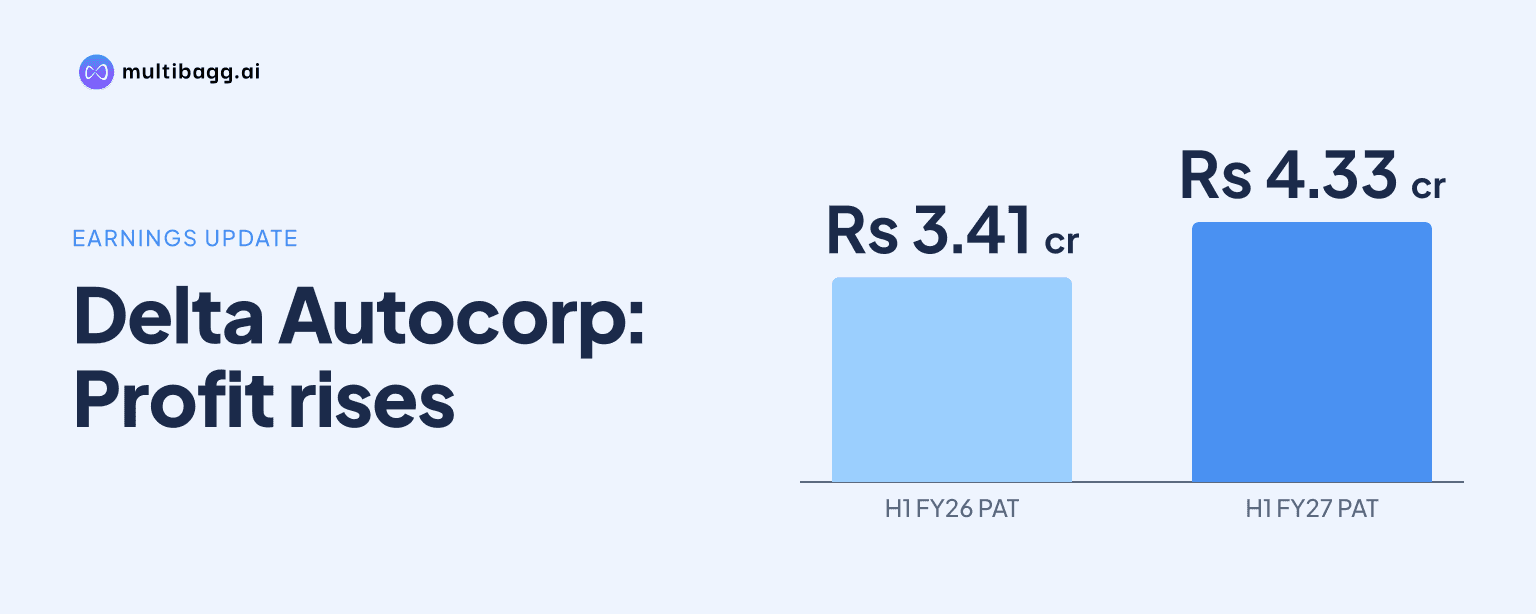
Delta Autocorp Limited filed the transcript of its 25 November 2026 H1 FY27 earnings call, reporting profit after tax of ₹4.33 crore for the half year, a 26.9% increase from ₹3.41 crore in H1 FY26. The filing documents improved operating profitability despite revenue growth of 4.9%.
Know Delta Autocorp inside out
Results, valuation, peers and who's buying, in one view.
What did Delta Autocorp file on 27 November 2026?
Delta Autocorp filed the transcript of its H1 FY27 earnings conference call held on 25 November 2026. The call was hosted by EquiBridges Advisors Private Limited and covered the company’s unaudited financial performance for the half year ended September 2026, operating developments, product plans and management responses to investor questions.
The management team on the call included Ankit Agarwal, Founder and Managing Director, Aman Alok, Vice President, and Sachin from the finance team. In his opening remarks, Agarwal said the half year reflected improved profitability, stronger two-wheeler volumes, dealer engagement, brand-building activity and progress in the upcoming product portfolio.
The transcript is relevant to shareholders because it provides management commentary alongside the reported half-year figures. It also records the company’s position on the deployment of IPO proceeds, with management stating that funds are being used in accordance with the stated objects of the issue.
What were Delta Autocorp’s H1 FY27 financial results?
Delta Autocorp reported consolidated revenue from operations of ₹44.09 crore in H1 FY27, compared with ₹42.05 crore in H1 FY26, a rise of 4.9%. Operating EBITDA increased faster than revenue, rising 48.6% to ₹5.05 crore from ₹3.40 crore a year earlier.
The operating EBITDA margin expanded to 11.45% from 8.08%, an improvement of 337 basis points. Profit before tax rose 27.1% to ₹5.80 crore, while profit after tax increased 26.9% to ₹4.33 crore. Earnings per share for the half year improved to ₹2.83 from ₹2.23.
The gap between revenue growth and EBITDA growth is the central financial point in the filing. Revenue increased by less than 5%, but the higher operating EBITDA margin supported a substantially larger increase in profit after tax. The transcript does not provide a separate numerical breakdown of the factors behind the margin movement.
Got a follow-up? Ask IRIS
What did management say about products and IPO funds?
Delta Autocorp said IPO funds were being deployed in line with the issue’s stated objects, including product-development expenditure. Management identified engineering, tooling, mould development, testing, validation and homologation milestones as areas linked to this spending.
The company also referred to progress in its upcoming product portfolio. This indicates that the reported period included continued expenditure and work on vehicle development alongside the existing business. The filing does not state a revised product-launch schedule or disclose the value of funds deployed for each development activity.
Management’s remarks put the financial results in the context of an electric-mobility business that is developing products while expanding its dealer engagement and brand presence. For investors, the transcript distinguishes between current half-year profitability and longer-cycle work involving engineering and regulatory validation.
The call included management commentary on two-wheeler volumes and the institutional or government business. However, the transcript excerpt does not provide a complete, reliable numerical revenue split for the company’s FY27 guidance. Therefore, the filing’s reported H1 financial data remains the clearest quantified basis for evaluating performance.
How does the transcript matter for investors and operations?
The transcript matters because it supplements the unaudited H1 FY27 results with management’s explanation of business priorities and capital use. The reported expansion in operating EBITDA margin to 11.45% and PAT growth to ₹4.33 crore show that profitability increased faster than revenue during the first half.
For investors, the filing provides a record of management’s statements rather than a separate change in financial guidance. No share-price movement, valuation impact or revised earnings forecast is disclosed in the material provided. Readers should therefore separate the reported H1 figures from any conclusions about future performance.
For operations, the references to product engineering, tooling, validation and homologation show that development activity remains part of the company’s execution agenda. These stages can be relevant for vehicle programmes because they precede commercial introduction, but the filing does not confirm outcomes for any individual product programme.
The company also highlighted stronger dealer engagement and increased brand-building focus. Those points are qualitative, and the transcript does not quantify their effect on revenue, market share or customer demand. The disclosed financial evidence is limited to the improvement in revenue, EBITDA, margins, profit before tax, PAT and earnings per share for H1 FY27.
Conclusion
Delta Autocorp’s 27 November filing records management’s discussion of H1 FY27 results, led by a 26.9% rise in PAT to ₹4.33 crore and a 337-basis-point improvement in operating EBITDA margin to 11.45%. Revenue from operations rose 4.9% to ₹44.09 crore, making margin expansion the more significant reported financial development for the half year.
The next disclosed areas to watch are the use of IPO proceeds for product-development milestones and management’s execution on engineering, tooling, testing, validation and homologation. Future filings and results will provide the relevant updates on these programmes and on whether the H1 profitability trend continues.

