










Delta Autocorp H1 FY27 Profit Rises 27% as Margin Expands
Key highlights
- Delta Autocorp reported H1 FY27 net profit of ₹4.33 crore, up 27% year-on-year.
- Operating profit rose 48.9% to ₹5.05 crore as operating margin increased 339 basis points to 11.45%.
- H1 FY27 sales increased 4.9% year-on-year to ₹44.09 crore.
- Delta Autocorp disclosed ₹21.84 crore of unutilised IPO proceeds and reported electric scooter sales growth of more than 200%.
powered by IRIS
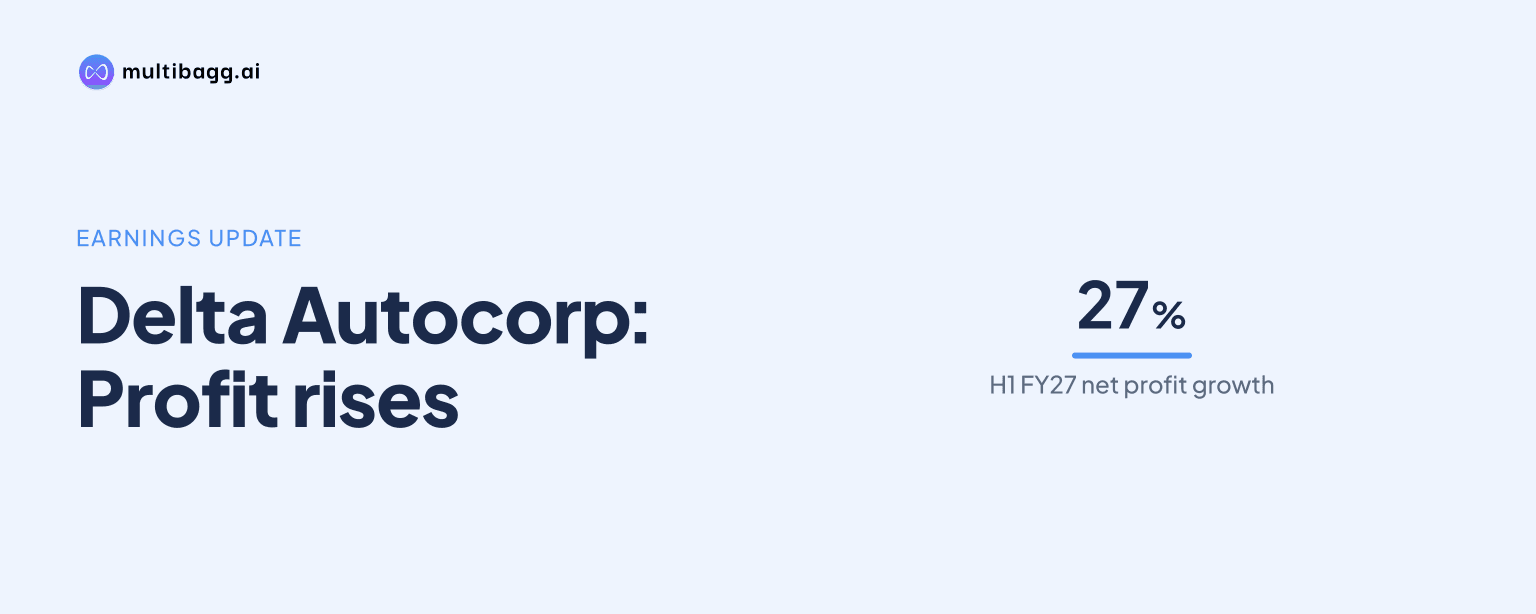
Delta Autocorp Limited reported consolidated net profit of ₹4.33 crore for H1 FY27, up 27% year-on-year, while its operating margin expanded by 339 basis points to 11.4%. The result matters because profit growth exceeded sales growth, indicating improved operating performance during the half year ended September 30, 2026.
Know Delta Autocorp inside out
Results, valuation, peers and who's buying, in one view.
What did Delta Autocorp report for H1 FY27?
Delta Autocorp reported sales of ₹44.09 crore in H1 FY27, compared with ₹42.05 crore in the year-earlier period, an increase of 4.9%. Sales were also 17.5% higher than ₹37.53 crore reported in the preceding half year ended March 2026.
Operating profit rose 48.9% year-on-year to ₹5.05 crore from ₹3.39 crore. Net profit increased to ₹4.33 crore from ₹3.41 crore, while earnings per share rose to ₹2.83 from ₹2.23. The company filed its H1 FY27 consolidated unaudited results with the NSE following board approval on November 14, 2026.
How did Delta Autocorp improve its operating margin?
Delta Autocorp improved operating margin to 11.45% in H1 FY27 from 8.06% a year earlier. The 339-basis-point increase accompanied a 48.9% rise in operating profit, materially ahead of the 4.9% increase in sales.
Expenses were ₹39.04 crore in H1 FY27, compared with ₹38.66 crore in H1 FY26. This meant the increase in expenses was lower than the growth in sales during the period. Compared with the preceding half year, operating margin increased by 420 basis points from 7.25%.
Other income declined to ₹1.12 crore from ₹1.33 crore a year earlier and from ₹2.10 crore in the preceding half year. Interest expense was ₹0.04 crore and depreciation was ₹0.34 crore in H1 FY27, according to the financial data provided with the results.
What did the company disclose about electric scooter sales?
Delta Autocorp said electric scooter sales rose by more than 200% during the half year. The release did not provide the number of scooters sold, the comparable base, or a revenue contribution from these sales.
The disclosure places electric scooters within the company’s reported operating update, but it does not establish how much of the sales increase came from that category. Investors therefore have a confirmed growth statement on scooter sales, while detailed product-wise volume and revenue data were not included in the provided results summary.
The company also reported that subsidiary Electrofine Motors Private Limited recorded total revenue of ₹0.99 crore during the period. This figure is converted from the disclosed ₹98.59 lakh to maintain a consistent crore-based presentation.
Got a follow-up? Ask IRIS
What do the profit-quality figures show?
Delta Autocorp’s reported pre-tax profit was supported primarily by core business operations. The results summary classified 81% of pre-tax profit as core and 19% as other income and one-off items, with core business contributing ₹4.7 crore to pre-tax profit of about ₹5.8 crore.
Core profit was reported to have increased 45.1% year-on-year, compared with a 27% rise in reported profit. This difference reflects the lower level of other income in H1 FY27 relative to the year-earlier period. It also shows that the operating-profit improvement was a significant component of the half-year result.
For reference, the company’s listed annual key numbers were revenue of ₹79.58 crore and net profit of ₹6.91 crore. The provided data does not specify the reporting period attached to these annual figures, so they should not be treated as a direct comparison with H1 FY27.
What are the relevant cash, debt and IPO disclosures?
Delta Autocorp reported cash from operations of ₹6.4 crore for FY26 and borrowings of ₹1.4 crore at March 2026. These figures provide context on the company’s reported balance-sheet position before the H1 FY27 period.
The board also confirmed the utilisation of IPO proceeds when approving the H1 FY27 unaudited results. A statement filed under Regulation 32 said there was no deviation in the use of IPO funds for the half year ended September 30, 2026, and the utilisation was auditor-certified.
The company disclosed ₹21.84 crore of unutilised IPO proceeds in the results update. The filing also said the board appointed an internal auditor. No further details on the intended timing or specific deployment of the unutilised proceeds were included in the supplied information.
How does the H1 FY27 result affect investors and operations?
Delta Autocorp’s H1 FY27 result shows a period in which profit, operating profit and margin grew faster than sales. For investors, the key reported indicators are the 27% increase in net profit, the 48.9% increase in operating profit and the 339-basis-point expansion in operating margin.
The results do not include a share-price reaction, forward guidance, order-book data or a capex plan. They also do not quantify the impact of electric scooter sales on total revenue or profitability. As a result, the filing provides a clear record of half-year financial performance but limited information on the pace of future operating expansion.
Conclusion
Delta Autocorp delivered H1 FY27 consolidated sales of ₹44.09 crore and net profit of ₹4.33 crore, with the stronger rise in operating profit contributing to higher margins. The company also reported electric scooter sales growth of more than 200%, although it did not provide product-level volumes or revenue.
The next disclosures to watch are the use of ₹21.84 crore in unutilised IPO proceeds, any product-wise details on electric scooter operations, and subsequent financial results. These updates would provide more evidence on how the reported margin improvement and scooter-sales growth translate into ongoing operations.