










Dilip Buildcon Limited values two assets at Rs 9,740 crore
Key highlights
- DBL signed Alpha Alternatives agreements with a combined enterprise value of about Rs 9,740 crore.
- The solar and transmission projects have a combined stated project cost of about Rs 8,430 crore before construction.
- Alpha Alternatives is expected to fund about Rs 820 crore of the Rs 1,680 crore combined equity requirement.
- DBL will retain more than Rs 7,300 crore of EPC work across the two projects.
powered by IRIS
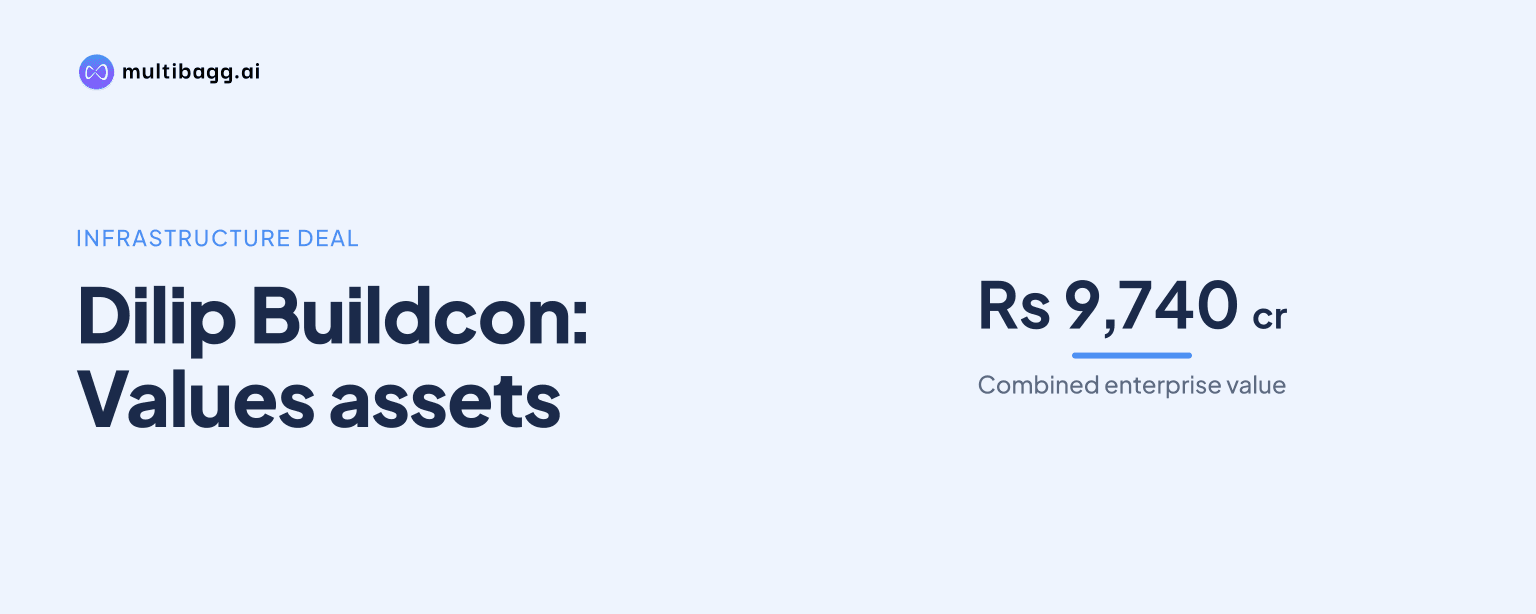
Dilip Buildcon Limited signed definitive Alpha Alternatives agreements in the first half of financial year 2027 valuing its Mekhali transmission project and 1,363 megawatt solar portfolio at Rs 9,740 crore, Rs 1,310 crore above their combined Rs 8,430 crore stated project cost before construction began, while DBL retained more than Rs 7,300 crore of EPC work.
Know Dilip Buildcon inside out
Results, valuation, peers and who's buying, in one view.
What did DBL agree with Alpha Alternatives?
DBL signed definitive agreements for Alpha Alternatives to invest in the Mekhali interstate transmission project in Karnataka and a 1,363 megawatt solar portfolio in Madhya Pradesh. Management said the agreements were completed within six weeks of the board approval for the proposed stake sales, creating signed transaction structures during the first half of financial year 2027.
The Mekhali project carries an enterprise value of about Rs 2,914 crore against a stated project cost of about Rs 2,171 crore, while the solar portfolio has an enterprise value of about Rs 6,829 crore against a project cost of about Rs 6,263 crore. DBL said the combined transaction value is about Rs 9,740 crore, compared with combined project cost of about Rs 8,430 crore, before construction starts.
How will DBL and Alpha Alternatives fund the projects?
DBL said Alpha Alternatives will co-invest for 49% of the equity during construction, contributing about Rs 820 crore of the projects’ combined Rs 1,680 crore equity requirement. DBL expects to fund the remaining Rs 850 crore, defining its equity contribution while the solar and transmission assets are built.
Alpha Alternatives is contractually expected to acquire DBL’s remaining 51% stake after commissioning. Management said this structure should let DBL recycle its invested capital in about two to three years, rather than retain its equity interest through the operating life of the two projects.
How does DBL retain EPC work after the agreements?
DBL will retain engineering, procurement and construction, or EPC, work worth more than Rs 7,300 crore across the solar and transmission projects. The arrangement leaves DBL responsible for project development and construction while Alpha Alternatives shares the construction-stage equity requirement and is set to own the assets after commissioning.
Management described the Rs 850 crore DBL equity commitment and the retained EPC scope as part of its DBL 2.0 model. Under that model, DBL intends to develop projects, execute the construction work, bring in partners for asset equity and redeploy capital after monetisation into further infrastructure opportunities.
The two agreements sit alongside DBL’s entry into oil and gas infrastructure during the quarter ended September 30, 2026. Management said that opportunity combines EPC capability with ownership of a long-term asset with a regulated revenue model, but did not disclose its transaction value on the call.
Got a follow-up? Ask IRIS
What supports DBL’s execution and cash-flow plans?
DBL’s order book stood at Rs 33,081 crore as of September 30, 2026, across 12 business verticals, with roads representing 15.6%. The company secured fresh orders of about Rs 7,321 crore in the quarter and about Rs 7,589 crore in the first half of financial year 2027, followed by about Rs 1,300 crore of additional orders after the reporting date.
Revenue grew 5.5% in the first half because projects awarded in the fourth quarter of financial year 2026, with aggregate value of about Rs 15,000 crore, were still being mobilised. Management expects these projects to start contributing from the third quarter of financial year 2027 and execution to increase in the fourth quarter; it reiterated revenue-growth guidance of about 30% to 40% from the previous year.
Mining is another planned source of cash generation. DBL produced 6.1 million tonnes of coal in the second quarter and 10.89 million tonnes in the first half, while maintaining its Siarmal production target of about 27 million tonnes for financial year 2027. Management said rail-evacuation constraints that affected the first quarter had largely been resolved and retained its annual coal-production target of about 57 million tonnes by financial year 2029.
What debt and asset-transfer targets has DBL set?
Management expects the mining business to generate annual operating cash flow of about Rs 1,000 crore at the financial year 2029 production target of 57 million tonnes. It also said Siarmal’s remaining equity requirement is expected to be funded from the special purpose vehicle’s own cash flows, with no further equity contribution expected from DBL.
Standalone net debt was Rs 2,146 crore as of September 30, 2026, compared with consolidated net debt of Rs 8,950 crore. Management reiterated a target to reduce debt by Rs 600 crore to Rs 800 crore during financial year 2027, work toward standalone net debt-free status by financial year 2028, and end financial year 2027 at about 120 working-capital days.
DBL held infrastructure investment trust, or InvIT, units worth Rs 1,578 crore across Anantam Highways Trust and Shrem InvIT as of September 30, 2026. Management expects four hybrid annuity model, or HAM, projects to transfer to Anantam Highways Trust in the next quarter, while remaining assets are expected to transfer in financial year 2028 subject to National Highways Authority of India approvals; the resulting InvIT units are expected to total about Rs 3,000 crore to Rs 3,200 crore and generate annual distributions of Rs 350 crore.
Conclusion
The Alpha Alternatives agreements establish DBL’s stated approach to asset monetisation: commit Rs 850 crore of equity, retain more than Rs 7,300 crore of EPC work and contractually sell the remaining 51% stake after commissioning. The Rs 9,740 crore combined enterprise value, against the Rs 8,430 crore combined project cost cited by management, is the disclosed measure of value established before construction.
The next developments to watch are the expected acceleration in execution from the third quarter of financial year 2027, progress toward commissioning that enables the planned stake exit in about two to three years, and the transfer of four HAM projects in the next quarter. Management’s financial year 2027 debt-reduction target of Rs 600 crore to Rs 800 crore and pending approvals for the remaining InvIT transfers are also unresolved milestones.